
In an interaction with Tube & Pipe India, Mr. Jai Saraf, Chairman, Evonith Steel, outlines the company’s integrated steel manufacturing footprint in Central India, its diversified flat steel portfolio, and plans to expand capacity. He also highlights the company’s strategic entry into ductile iron pipes, driven by rising demand from water infrastructure and government-led development projects across the country. He further discusses Evonith’s logistics advantage due to its central location, its focus on value-added steel products for key sectors, and the role of innovation, sustainability, and circular practices in shaping the company’s long-term growth strategy.
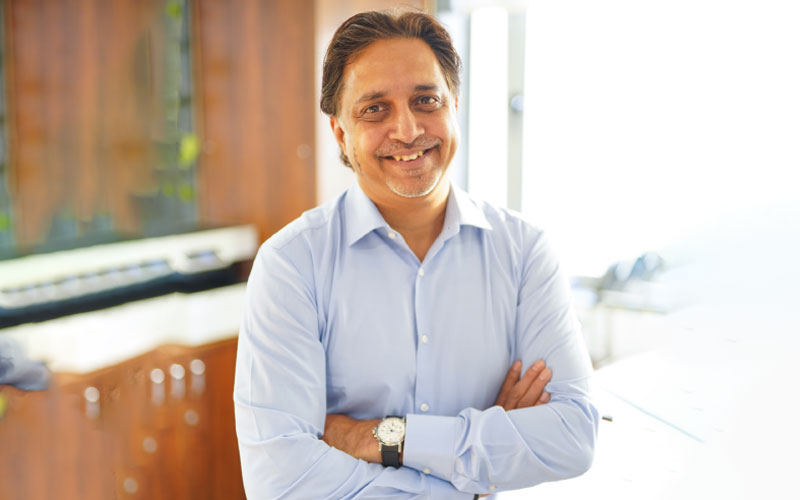
Tube & Pipe India: Please give us an overview of Evonith Steel’s market footprint, key customer segments, and how the company positions itself within India’s steel value chain.
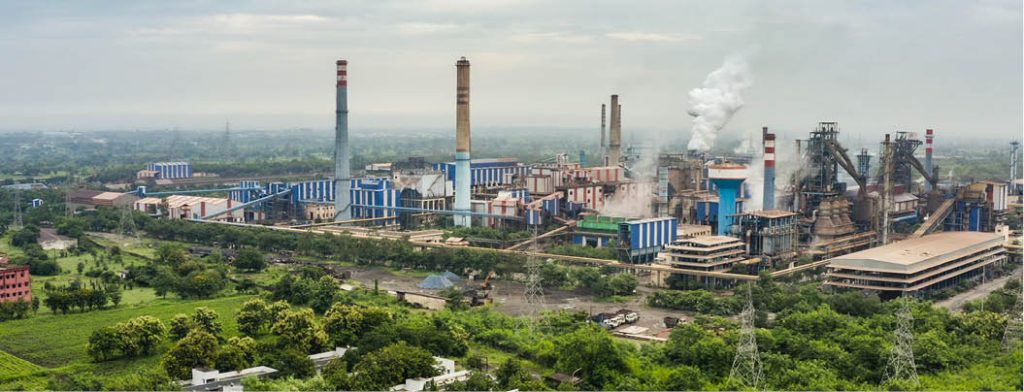
Jai Saraf: Evonith Steel (a combination of Evonith Metallics Limited and Evonith Value Steel Limited) is an integrated steel producer with a Steel Manufacturing Complex in Wardha, Maharashtra. This Complex, which is strategically located in Central India near Nagpur, is home to our manufacturing facilities along with a captive railway siding and other essential infrastructure facilities. This enables us access to all major markets across India and also provides proximity to key raw materials.
Evonith Metallics Ltd (EML) provides the hot metal/pig iron to Evonith Value Steel Limited (EVSL) and third parties to manufacture steel. EVSL manufactures value-added flat steel products such as hot rolled coils, cold rolled coils, and galvanised coils and sheets (under the brand name of Neelpankh). We have also announced our foray into ductile iron pipes (under the brand name of Nectra), which is expected to be commissioned in the coming quarter, and we have recently broken ground for our manufacturing line of colour coated products and Galvalume sheets. These products are used in various industries including automotive, general engineering, pipes & tubes, railways etc.
As we look forward, our ambition is to position Evonith Steel among the leading steel companies in India, while setting benchmarks in responsible growth. We are embarking on our plans to expand our production capacity from 1.4 MTPA to 3.5 MTPA over the next three years.
TPI: How does Evonith’s Central India location improve supply chain efficiency and service for customers pan-India?
JS: We are one of the largest integrated flat steel producers in Central India. We are well connected by roads and railways with access to all key product markets across India. Our proximity to iron ore mines helps in sourcing raw materials in a cost-efficient manner. Post commissioning of our DI pipes plant, we will be the only DI pipes manufacturer within a 300 km radius of our plant. Central India has virtually no largescale DI pipe facilities, creating a significant gap in supply for states like Maharashtra and Madhya Pradesh. Most major DI pipe manufacturing plants are concentrated in East India (West Bengal, Jharkhand) and Gujarat, often thousands of kilometers from project sites in Central India. This geographic imbalance leads to longer transportation distances, higher logistics costs and frequent delivery delays for government and urban infrastructure projects.
TPI: Evonith Steel has a diversified product portfolio spanning hot rolled, cold rolled, and galvanised steel. How does this portfolio cater specifically to the requirements of the metal pipes and tubes industry?
JS: Currently, we produce over 1.2 Million MT of iron and steel products. The OEM customers include BHEL and large pipes, tubes and cylinder makers. We also produce galvanised steel, sold to OEMs tapping into the Indian Railways and non-exposed automotive industries. Going forward, we aim to establish ourselves as a leading DI pipe manufacturer in India, backed by a proven track record of quality, reliability and customer-centric service. Evonith Steel, under its brand portfolio of Nectra, aspires to become a preferred supplier for government bodies, EPC companies, contractors, and infrastructure developers with its range of ductile iron pipes.
We have announced India’s first centrally located, state-of-the-art ductile iron pipe manufacturing facility with a capacity of 300,000 TPA in Wardha, Maharashtra. With plans to build a strong PAN-India presence, our centrally located manufacturing base enables faster turnaround times, optimized logistics, and enhanced customer reach.
TPI: Your entry into ductile iron pipes with a planned capacity of 300,000 TPA marks a strategic diversification. What demand trends and market opportunities are driving this move, and how do you plan to differentiate in this segment?
JS: Ductile Iron (DI) pipes are the preferred solution for drinking water supply, sewage, and high-pressure industrial projects due to their durability, strength, and corrosion resistance. Our entry into ductile iron pipes is driven by strong and sustained demand from water infrastructure, irrigation, and urban development projects across India. Government initiatives focused on water supply and sanitation, along with the replacement of aging pipelines, are creating long-term growth opportunities in this segment. Schemes such as the Jal Jeevan Mission, AMRUT 2.0, Interlinking of Rivers, Swachh Bharat Mission, and various major irrigation and industrial development programs have led to a rapid increase in DI pipe demand in India in recent years.
As part of our long-term vision to diversify and deepen our presence in infrastructure-driven sectors, we have announced India’s first centrally located, state-of-the-art ductile iron pipe manufacturing facility with a capacity of 300,000 TPA in Wardha, Maharashtra. With plans to build a strong PAN-India presence, our centrally located manufacturing base enables faster turnaround times, optimized logistics, and enhanced customer reach.
Entering the DI pipes segment is a natural extension of our commitment to nation-building and sustainable industrial growth. This strategic diversification also helps create a more balanced and resilient product portfolio by adding a stable, long-term demand segment aligned with public infrastructure investments.
TPI: DI pipes industry has many established players with large volumes and market penetration. How do you plan to differentiate in this segment?
JS: We are the first ductile iron pipe plant in Central India, which provides us with a significant logistical advantage. This central positioning enables us to serve key markets across Central, West, and South India more efficiently, resulting in reduced transportation costs, faster delivery timelines, and improved service responsiveness for our customers. By optimizing freight costs and turnaround time, we aim to offer a more competitive and reliable supply proposition, particularly for government and infrastructure projects where timely execution is important.
TPI: The company has outlined plans to expand capacity from 1.4 million TPA to 3.5 million TPA over the next three years. How have you planned for this expansion?
JS: Our growth strategy continues to focus on meeting India’s growing demand for steel, with the government of India aiming to produce 300 million tonnes of steel annually by the year 2030. The growth of the company is in line with this vision, and we aspire to be one of the leading steel companies in India. To accomplish this, the company plans to increase steelmaking capacity to 3.5 MTPA. The company further continues to investigate brownfield expansions and strategic acquisitions to improve its product range and operational footprint.
Also Read: Enlight Metals: Spotlights Key Opportunities for Indian Steel Industry in 2026
TPI: Looking ahead, what key trends, be it sustainability, quality standards, or technological adoption, do you believe will shape the future of our industry? How is Evonith Steel preparing to align with these evolving expectations?
JS: The future of steel lies in innovation, circularity, and digital integration. This year, we launched new steel grades designed for evolving market needs, while embedding circularity across our operations including recovering metallics from slag, scrap utilization, and scaling waste-to-energy initiatives.
For us, steel is not just a product but a promise to build responsibly, innovate boldly, and grow inclusively. At Evonith Steel, we are forging this promise into reality every day; one tonne, one innovation, one community at a time. Our Brand Promise ‘Here for a Better Today’ perfectly encapsulates what we stand for; Excellence, Impact and People. As we move forward, our commitment remains unwavering to produce steel that strengthens society, protects the planet, and powers progress.
Our belief that ‘no one gets left behind’ continues to be the DNA with which Evonith Steel’s blueprint functions. And our business strategy is aligned with this philosophy, which is evident in our efforts towards excellence in our operations and impact of our initiatives among local communities and our people.
We are embarking on our plans to expand our production capacity from 1.4 MTPA to 3.5 MTPA over the next three years.