
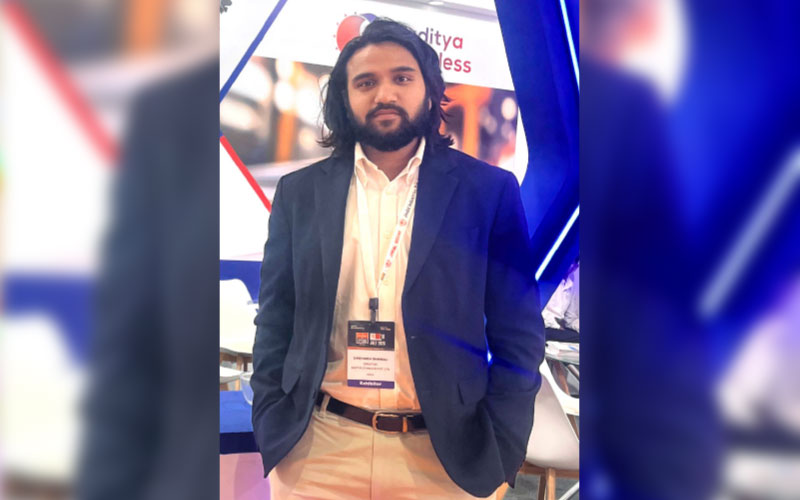
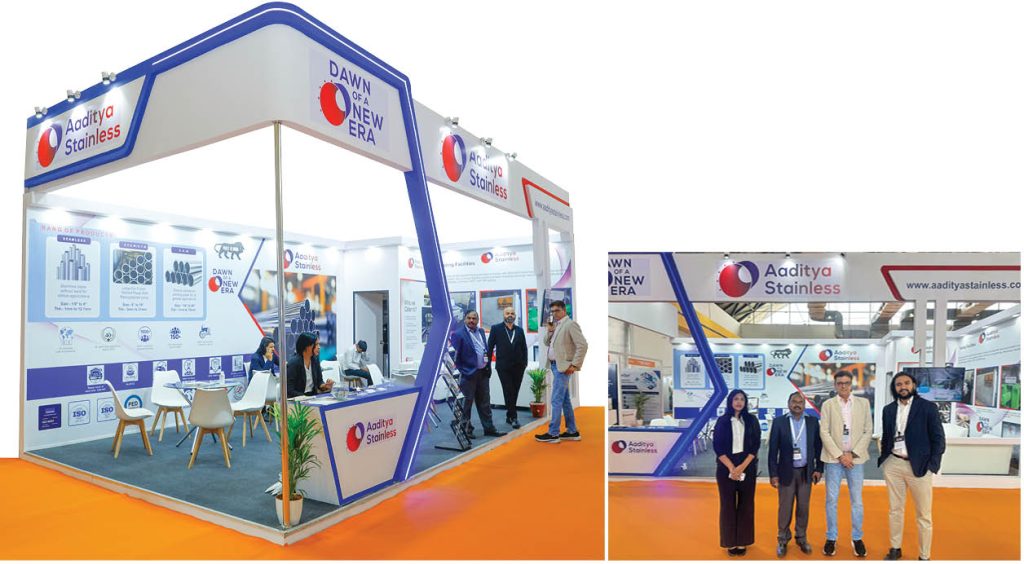
Aaditya Stainless with a production capacity of 8,000-9,000 metric tonnes per annum, established itself as a longstanding manufacturer of stainless steel pipes and tubes, serving diverse and demanding applications across oil & gas, petrochemicals, pharmaceuticals, chemicals, energy, food processing, paper and water treatment. Its portfolio includes ERW, EFW and seamless pipes and tubes in sizes ranging from 1/8 inch to 78 inches. In an exclusive interview with Tube & Pipe India, Mr. Shreyansh Bhansali, Director, Aaditya Stainless Pvt. Ltd., discusses the company’s manufacturing capabilities, recent industry approvals, growing export footprint and ongoing investments in modernisation. He also shares his views on automation, global competitiveness and emerging opportunities in applications such as data centres, aerospace and space exploration.
Tube & Pipe India: Please briefly introduce your company’s tube and pipe product portfolio and the key end-use sectors it caters to.
Shreyansh Bhansali: Our company has been in the business for over 38 years, having been established in 1988. We are one of the oldest manufacturers of stainless steel pipes and tubes in India, with a production capacity of 8,000-9,000 MTPA. While our initial focus was primarily on traders and a limited customer base, over the past decade we have expanded our reach by directly serving end-users across various industries. We manufacture stainless steel pipes and tubes in sizes ranging from 1/8 inch to 78 inches across three major categories—ERW (Electric Resistance Welded), EFW (Electric Fusion Welded), and seamless pipes and tubes. Our products cater to a wide range of industries, including oil & gas, petrochemicals, energy, chemicals, pharmaceuticals, food processing, paper, and water treatment.
TPI: Could you share the recent developments, innovations, and strategic initiatives your company has undertaken in the tube and pipe segment?
SB: Over the last few years, we have secured several key industry approvals, including EIL(Engineers India Limited), IOCL(Indian Oil Corporation Limited), and ADNOC (Abu Dhabi National Oil Company) among others. These approvals have enabled us to directly participate in and supply products for major oil & gas projects, which is a rapidly growing sector. Another significant development has been our focus on exports. Over the last three years, our export contribution has grown from virtually zero to nearly 20-30 percent of our business, which is a major milestone for us. We have also been consistently upgrading our manufacturing facility over the past seven to eight years by investing in machinery, improving production speeds, enhancing manpower capabilities, and continuously modernizing our shop floor.
TPI: What is currently the biggest challenge faced by the tube and pipe industry?
SB: One of the biggest challenges facing the Indian tube and pipe industry is maintaining global competitiveness, particularly in terms of cost, manufacturing efficiency, automation and scale. Continued investment in technology and process optimisation will be essential for Indian manufacturers to strengthen their position globally.
TPI: How important are automation and digitalisation in your future growth plans? Which manufacturing or quality-control improvements have delivered the most measurable benefits for your operations?
SB: Automation and digitalisation are extremely important for the future of our industry. Pipe manufacturing has traditionally been labour-intensive, but with increasing shortages of skilled manpower, automation has become essential. It will not only help improve productivity but also enable Indian manufacturers to move closer to global production benchmarks, particularly those set by China. In terms of quality, Indian manufacturers have earned a reputation for delivering reliable products. However, there is still scope to improve factory infrastructure, safety standards, and shop-floor organisation. While product quality is strong, upgrading manufacturing facilities to global standards will further strengthen India’s competitiveness.
TPI: Looking ahead, where do you see the next major growth opportunities for the tube and pipe industry over the next three to five years?
SB: The oil & gas sector will continue to remain one of the key growth drivers for the industry. Beyond that, I see significant opportunities emerging from data centres, which require extensive piping solutions for water cooling applications. Another promising area is space exploration and aerospace engineering, where demand for high-quality stainless steel tubes and pipes is expected to grow steadily over the coming years.
Also Read: Tube & Pipe India Emagazine Jul-Sep Issue 2026
TPI: What are your expectations from TPF Hyderabad 2026, and what opportunities do you see in the Indian market?
SB: Hyderabad is a major hub for the pharmaceutical industry, making TPF Hyderabad an excellent platform for us to connect with leading pharmaceutical manufacturers and explore new business opportunities. India’s pharmaceutical sector, including bulk drugs, organic chemicals, and formulation plants, is growing rapidly, and these applications rely extensively on stainless steel piping systems. We believe the exhibition will provide an ideal opportunity to strengthen our presence in this important market segment.

The oil & gas sector will continue to remain one of the key growth drivers for the industry. Beyond that, I see significant opportunities emerging from data centres, which require extensive piping solutions for water cooling applications. Another promising area is space exploration and aerospace engineering, where demand for high-quality stainless steel tubes and pipes is expected to grow steadily over the coming years.