
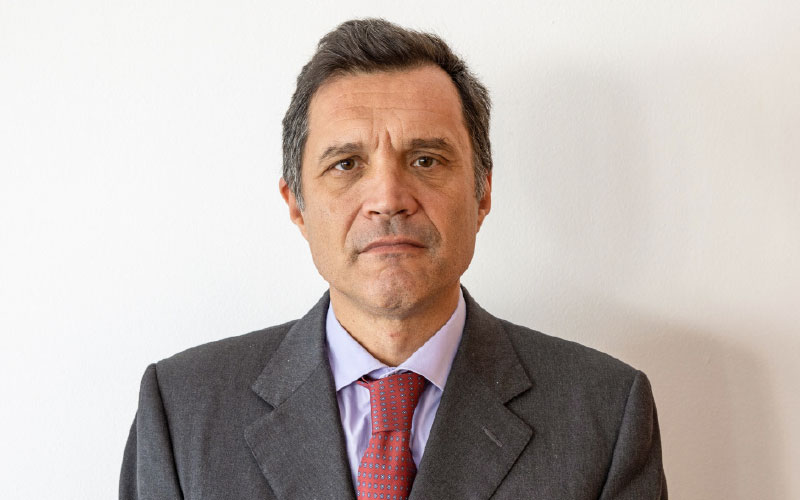
FIMIGroup is an Italian engineering and manufacturing group specialised in advanced equipment for coil processing. With decades of experience and a strong international footprint, the group supports steel producers worldwide with innovative, high-performance solutions designed to maximise productivity, quality consistency and long-term reliability. During an exclusive interaction with Tube & Pipe India, Mr. Mario Colombo, Sales Director, FIMIGroup, discussed the group’s recent ERW tube mill project for Tata Steel in Jamshedpur and shared his perspective on India’s growing strategic importance. As India accelerates infrastructure and industrial expansion, he shed some light on the shift in customer priorities: producers are increasingly investing not only to expand capacity, but also to strengthen competitiveness.
Tube & Pipe India: Please briefly outline your company’s tube and pipe product focus, including key materials, product types, and principal end-use sectors.
Mario Colombo: At FIMIGroup, our tube and pipe focus is centred on the design, manufacturing and commissioning of complete ERW tube and pipe mills, as well as dedicated tube finishing solutions. We support customers from raw coil handling through to the final packaging stage, delivering fully integrated production systems.
Our tube-related portfolio is focused on welded tubes and profiles made from hot rolled steel and other carbon steel grades. We supply solutions for square and rectangular hollow sections as well as tubes for structural and industrial applications. Depending on each customer’s strategy and product mix, our technology can be configured to support different production ranges, ensuring flexibility, repeatability and stable performance.
Our customers serve a wide spectrum of end-use sectors, including construction and infrastructure, industrial manufacturing, mechanical applications, oil & gas, and steel distribution markets requiring reliable output, high productivity and consistent quality. In addition, it is important to highlight that coil preparation is often a critical step before tube manufacturing. For this reason, FIMIGroup also designs and supplies slitting lines that allow coils to be processed into narrower strips according to the widths required for tube and profile production. This capability enables us to support customers with an even more complete approach, covering the entire workflow from coil processing to finished welded tube output.
TPI: Within your core product segments, how would you characterise current demand conditions and order visibility?
MC: From my perspective, demand conditions in the tube and pipe market remain positive, particularly driven by infrastructure expansion, industrial investment and the need for efficient steel processing across multiple regions. I also see a clear shift in customer priorities: producers are increasingly investing not only to expand capacity, but also to strengthen competitiveness through improved automation, process reliability and reduced operating costs. This is creating solid order visibility for advanced tube mill projects, especially those designed to deliver measurable improvements in productivity, yield and changeover efficiency.
More and more customers are also asking for solutions capable of supporting a broad range of products with minimal downtime, enabling them to respond quickly to evolving market demand.
TPI: Which customer or application requirements are currently exerting the greatest pressure on quality, uniformity, or on-time delivery within your product range?
MC: Across the market, tube producers are facing increasing pressure to guarantee consistent dimensional accuracy, stable weld quality and repeatability, even when processing multiple product sizes and steel grades.
At the same time, production planning is becoming more demanding: manufacturers are expected to deliver faster, reduce lead times, and maintain on-time shipments despite rising complexity in order mixes. This makes reliability, uptime and fast size changeovers key competitive factors. In this context, the real challenge is achieving high output while maintaining uniform quality, especially in high-volume environments where even small inefficiencies translate into significant losses.
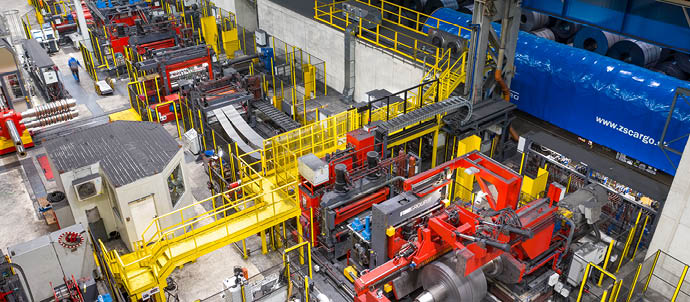
Within our portfolio, we deliver dedicated “Tube industry solutions”, designing, manufacturing and commissioning complete ERW tube and pipe mills as well as tube finishing lines. Our approach combines robust mechanical engineering, advanced automation and in-house expertise to provide customers with efficient, flexible and future-ready production systems.
TPI: How are material selection, grade complexity, or specification tightening influencing your manufacturing or quality-control practices?
MC: The tightening of specifications and the increasing variety of steel grades are reshaping manufacturing expectations. Higher strength steels, thinner gauges and stricter tolerances require more controlled forming conditions, improved process repeatability and advanced automation.
From a tube mill design standpoint, this means that stability in forming and welding is no longer optional: it is essential. Customers need equipment capable of managing grade variability while ensuring consistent product geometry and surface integrity. As a result, quality control is evolving toward integrated process monitoring, automation-driven consistency and more robust finishing solutions that guarantee compliance before product dispatch.
TPI: Which process disciplines, automation measures, or quality-assurance practices have delivered the most tangible improvements in yield or rework reduction?
MC: In my experience, the most tangible improvements in yield and rework reduction are achieved through process stability and automation, supported by high-performance cutting and handling systems. One of the strongest results comes from combining reliable mechanical engineering with advanced automation. At FIMIGroup, we deliver a fully integrated approach where engineering, roll design, mechanics, automation and service are managed in-house. This allows us to optimise each section of the line as part of a single production ecosystem.
A concrete example is our recent project for Tata Steel in Jamshedpur, India, where the tube mill solution is expected to enable production of 100,000 tonnes per year, with very low changeover times and significant operational advantages. In addition, Direct Forming Tube (DFT) technology has proven to deliver real efficiency gains by reducing tooling requirements and minimising material waste compared to traditional forming approaches.
TPI: How are cost pressures across raw materials, energy, or logistics being managed without compromising product reliability or compliance?
MC: Cost pressures are impacting every tube producer, especially in raw materials, energy consumption and logistics. However, I strongly believe the market is moving toward a mindset where competitiveness is built through efficiency, not compromise.
In this environment, modern tube mills must deliver measurable savings in terms of yield, uptime and operating stability. In the Tata Steel project, expected material savings are around 4%, corresponding to approximately 4,000 tonnes per year. This is a clear example of how optimised technology can directly reduce cost per ton.
Energy optimisation is also becoming increasingly relevant. The integration of high-frequency solid-state welding solutions, designed to optimise energy consumption while ensuring consistent weld quality, represents an important contribution to lowering operating costs without sacrificing compliance.
TPI: How are sustainability expectations from customers or regulators translating into changes in product design, manufacturing practices, or material choices?
MC: Sustainability is no longer just a general topic: it is becoming a measurable requirement across the steel and tube value chain. Customers and regulators are pushing for reduced scrap, improved material efficiency and lower energy consumption per tonne produced.
This is driving investments into modern forming solutions, automation, and optimised line layouts capable of reducing waste and stabilising production.
For example, solutions such as Direct Forming Tube (DFT) technology contribute to sustainability by reducing material waste compared to traditional forming processes, while also improving flexibility and reducing tooling requirements. Ultimately, sustainability is increasingly linked to performance: efficient production is also more environmentally responsible production.
Also Read: Crippa Srl: Reinforcing Commitment to India’s High-Technology Manufacturing Growth
TPI: Looking ahead, within your core product portfolio, which applications or performance requirements are most likely to drive incremental investment?
MC: Looking ahead, I expect investment will continue to be driven by applications requiring higher quality, tighter tolerances and more demanding production flexibility.
Key drivers include higher throughput production with stable quality repeatability, reduced changeover times to manage wider product mixes, automation-driven consistency and reduced operator dependency, enhanced welding stability and finishing performance, and integrated packaging and handling systems to support fast logistics-ready output. Manufacturers will increasingly focus on technology that generates measurable returns: improved yield, reduced downtime and predictable long-term performance.
TPI: How do you see India as a market?
MC: India is one of the most strategic and fast-growing markets globally for tube and pipe production, supported by industrial development, infrastructure expansion and increasing domestic demand. I see India not only as a high-volume market, but also as a rapidly evolving one, where producers are progressively investing in higher-quality output and more advanced manufacturing standards. Our recent installation of a new ERW tube mill project for Tata Steel in Jamshedpur is a clear demonstration of this trend. The project is part of Tata Steel’s plan to increase tube production capacity and quality, targeting both domestic and international markets.
For FIMIGroup, India represents a market where long-term partnerships, technological development and industrial growth align strongly. We see significant opportunities for advanced tube mill solutions and finishing technologies, particularly for customers aiming to compete on quality, productivity and reliability.
FIMIGroup continues to invest in technology and engineering excellence to support tube producers worldwide with reliable, efficient and high-performance solutions.
Our recent installation of a new ERW tube mill project for Tata Steel in Jamshedpur is a clear demonstration of this trend. The tube mill solution is expected to enable production of 100,000 tonnes per year, with very low changeover times and significant operational advantages.