
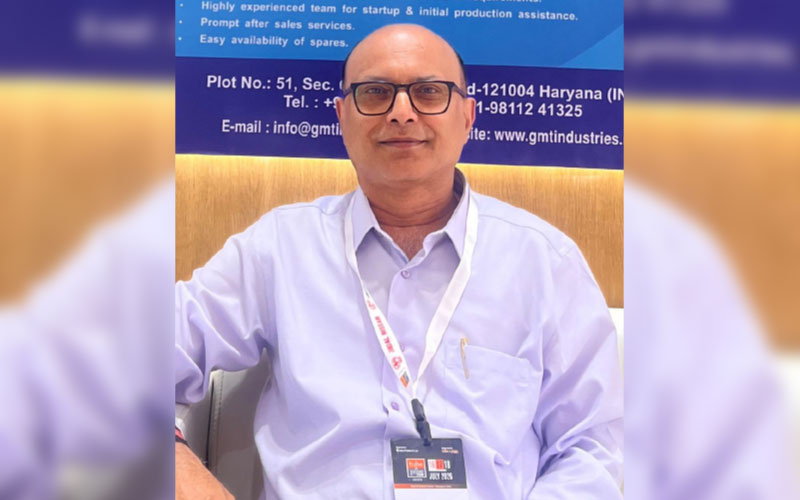
GMT Industries is focusing on higher-speed production, automation and in-house machine development to meet the evolving requirements of tube and pipe manufacturers. In an exclusive interview with Tube & Pipe India, Mr. Neeraj Dubey, Managing Director, GMT Industries Limited, discussed the company’s latest developments, growing demand for technology upgrades and its plans for greater automation and reduced human intervention.
Tube & Pipe India: Please briefly introduce your company and the technologies or solutions you are showcasing at TPF Hyderabad.
Neeraj Dubey: GMT Industries has been in the industry for around 20–25 years and has undertaken several technology developments over this period. We have recently developed a platform based on our own design for producing section pipes without changing the rolls. Our first machine was developed for 100×100 mm sections with 4.5 mm thickness, while the latest machine is designed for 6 mm thickness. We expect to install the new machine by next month. It is a highly automated solution for manufacturing section pipes.
TPI: What are customers currently prioritising most when investing in new equipment or upgrading existing facilities?
ND: Customers have become much more aware of their production costs. Therefore, they are looking for higher-speed machines and maximum production output. This is a major advantage for us. Customers are looking at both new machines and upgrades to their existing equipment. For older machines, we are supplying solutions such as accumulators and cooling systems, which can also help increase production speeds. At the same time, many customers are investing in new machines.
TPI: Which areas of tube and pipe manufacturing are seeing the highest demand for technology upgrades today?
ND: In India, there are different types of pipe manufacturers. One segment manufactures pipes from steel supplied by steel plants, while another manufactures pipes using steel sheets. The sheet-based pipe market is growing very quickly. We have supplied several machines to manufacturers in this segment. Earlier, technology adoption in this market was relatively limited. Now, manufacturers have become more familiar with advanced technology and are achieving better production. This is creating further opportunities for machine suppliers.
We have recently developed a platform based on our own design for producing section pipes without changing the rolls. Our first machine was developed for 100×100 mm sections with 4.5 mm thickness, while the latest machine is designed for 6 mm thickness.
TPI: Are you incorporating automation and AI into your solutions?
ND: We are planning to incorporate these technologies. At present, we do not have a significant level of AI integration, but this is an area we are looking at for the future.
TPI: Are customers focusing more on greenfield projects or brownfield modernisation? What trends are you observing?
ND: Greenfield projects are currently more prominent. Manufacturers are also becoming increasingly aware of environmental considerations, which is influencing their approach towards new projects.
TPI: Looking ahead, which technologies do you believe will have the greatest impact on the tube and pipe industry over the next few years?
ND: The tube line segment is growing very quickly, and manufacturers are looking for further technological improvements. In India, we still need to increase our focus on R&D. We are therefore working with several design professionals in Europe to support our technology development. Going forward, we expect to introduce more advanced machine designs with reduced human intervention. We are looking at further developments that could come to the market over the next year.
Also Read: Tube & Pipe India Emagazine Jul-Sep Issue 2026
TPI: What are your expectations from TPF Hyderabad, and what opportunities do you see in the Indian market?
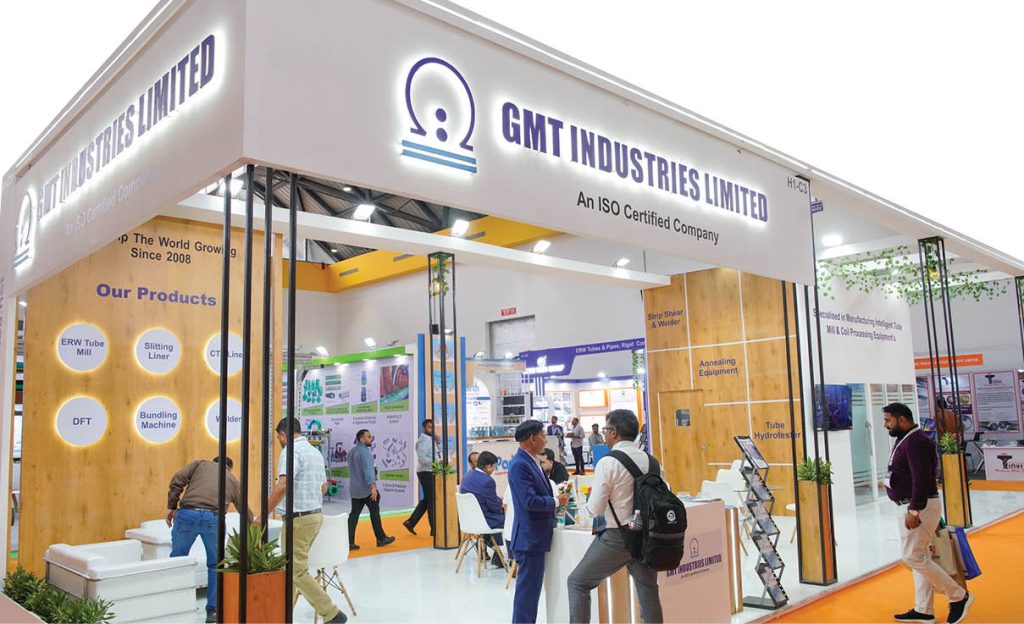
ND: Hyderabad is an important market in South India. We have already supplied around 10–15 machines in Hyderabad itself and are also receiving several enquiries from the region. The exhibition is a good opportunity to meet customers, understand their requirements and demonstrate what we are developing. It allows us to showcase our latest technologies and explain how our solutions can support manufacturers in improving their production.
Hyderabad is an important market in South India. We have already supplied around 10–15 machines in Hyderabad itself and are also receiving several enquiries from the region. The exhibition is a good opportunity to meet customers, understand their requirements and demonstrate what we are developing.