
In an exclusive interview with Tube & Pipe India, Mr. I.P. Jain, Director and Mr. Akash Gupta, CEO of Indus Tubes Limited reflect on company’s evolution from a regional steel pipe supplier into a diversified industrial player. The company produces over 60,000 metric tonne annually from its North India plant, supported by automation, quality labs, and strong logistics. Recently, Indus Tubes Limited has enhanced client service and inventory with ERP/CRM integration, progressed toward Green‑Pro Certification through eco‑galvanizing, and ramped up dedicated fire‑fighting pipe production and marketing. This strategic shift underlines their focus on operational efficiency, sustainability, and segment-specific growth.



Tube & Pipe India: Kindly share details about your business journey, highlighting major milestones and crucial achievements.
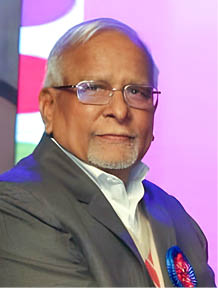
I.P.Jain: Founded over 35 years ago, Delhi based Indus Tubes Limited began with a strong vision to supply quality steel pipes for India’s growing infrastructure. Today, it stands as one of North India’s most trusted manufacturers of MS and GI steel pipes, with years of experience producing black and galvanized pipes and tubes.
As a flagship company of the ITL Group, its board—led by G.K. Jaju, I.P. Jain, B.L. Gupta, and Kailash Jajodia—has steered diversification into real estate (ITL Towers in Pitampura), education (ITL Public School, Dwarka), and publishing (ITL Education and Solutions). Indus Tubes is known for its legacy of trust, customization expertise, and ISO‑9001 certification, and is empanelled with government departments, PSUs, and EPC contractors across India.
TPI: Can you tell us about your infrastructure setup and annual manufacturing capacity catering to the steel sector?
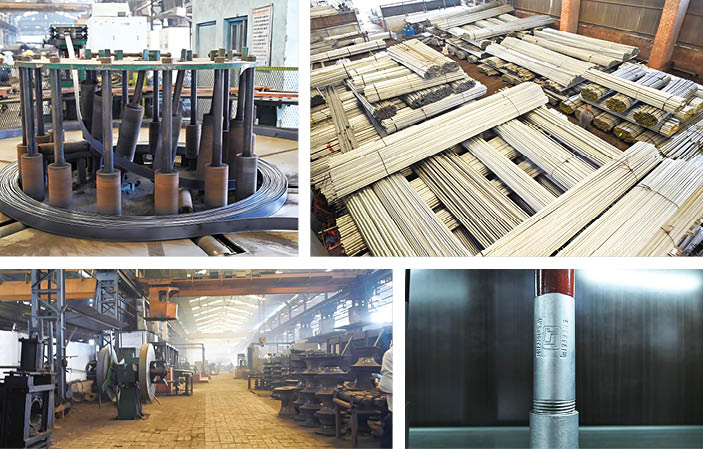
Akash Gupta: Indus Tubes Limited delivers an impressive annual production of over 60,000 metric tonnes, scalable to meet market demand, through its state-of-the-art manufacturing complex in North India. The facility boasts advanced tube mills, galvanizing plants, and automated quality-control systems, complemented by in-house labs equipped for mechanical, chemical, and hydraulic testing per BIS and global standards. Efficient logistics ensure timely deliveries across India, enabling the company to seamlessly fulfill both bulk orders and customized solutions for the steel sector.
TPI: Please share your views on the Indian steel industry vis-a-vis the global industry and the role of the Indian government in the growth of this sector.
IPJ: India is on track to become the second-largest global consumer of steel, driven by infrastructure expansion, housing initiatives, and the Make in India program. The government’s strategic policies—PLI schemes, PM Gati Shakti, and the National Steel Policy 2017—have significantly supported industry growth.
Indian manufacturers have become more agile and technologically equipped than ever, though challenges like global demand fluctuations, raw material dependency, and logistic bottlenecks continue to affect competitiveness.

Indus Tubes has adopted a strategic multi-pronged approach: securing long‑term raw‑material contracts to mitigate price risk, implementing green manufacturing practices to meet environmental regulations, maintaining healthy cash flow via lean inventory management, and partnering with EPC firms to deliver value-engineered solutions.
TPI: What are the major ongoing challenges in the Indian steel industry? How can these challenges of the industry be addressed and how is your company contributing towards this transition?
AG: India’s steel sector grapples with several critical challenges: volatile raw‑material prices (such as zinc and HR coils), stringent environmental and regulatory mandates, infrastructure execution delays, slow payment cycles, and pricing instability fueled by global overcapacity.
In response, Indus Tubes has adopted a strategic multi-pronged approach: securing long‑term raw‑material contracts to mitigate price risk, implementing green manufacturing practices to meet environmental regulations, maintaining healthy cash flow via lean inventory management, and partnering with EPC firms to deliver value-engineered solutions—thus actively supporting the industry’s transition toward stability and sustainability.
TPI: Can you tell us about your product basket and where do they find its applications? Are there any new products in the pipeline?
IPJ: Indus Tubes Limited’s product portfolio includes a wide array of steel tubes and pipes from MS pipes (ERW black steel pipes) and GI pipes (hot‑dip galvanized) to gas pipelines in city gas system, overhead transmission (OHT) tubes, idler/conveyor pipes, fire‑fighting pipes, and scaffolding tubes. These offerings are tailored to cater to varied sectors spanning water, gas, steam, air, structural engineering, mechanical uses, pipeline transportation, railway electrification, and general industrial needs.
TPI: What are the recent developments at your organization?
AG: Indus Tubes has recently advanced its operations with significant developments. It has adopted ERP and CRM platforms to elevate client servicing and tighten inventory control. It is pursuing sustainable manufacturing by working toward Green‑Pro Certification and reducing carbon emissions via eco-friendly galvanizing processes. Additionally, the company is focusing on its fire‑fighting segment, implementing dedicated production and marketing strategies to address the growing needs of builders and developers.
Also Read: DDEL Sets Sight on INR 2,400 Crore Revenue, Anjar Expansion & Hydrogen Push
TPI: What are your future growth plans to boost your steel pipe sector?
IPJ: Indus Tubes Limited envisions a dynamic roadmap for future growth. We are planning capacity expansion through new production lines and enhanced automation. We also target to grow exports into new global markets with customized solutions. We are advancing our technological capabilities by integrating IoT-enabled quality control and smart-factory systems. The company is also diversifying its offerings with new products in solar, fire safety, and coated GI pipes, while reinforcing brand outreach through a stronger digital presence, participation in industry expos, and direct engagement with architects and developers.
The company is focusing on its fire‑fighting segment, implementing dedicated production and marketing strategies to address the growing needs of builders and developers.