
As industries demand greater efficiency, reliability, and lifecycle performance from steel products, Lalbaba Engineering is aligning its strategy around specialised and application-driven solutions. With growing demand from sectors such as energy, automotive, railways, and industrial infrastructure, the company is strengthening its capabilities in value-engineered tubular products, integrated engineering services, and customised manufacturing. In an exclusive interview with Tube & Pipe India, Mr. Gopakumar Kerala Varma, Sr.VP-Tubular Operations, Lalbaba Engineering Limited, discusses evolving steel market dynamics, the increasing importance of quality and specialisation, the rise of turnkey and service-led solutions, and Lalbaba’s long-term focus on diversification into high-performance steel applications.
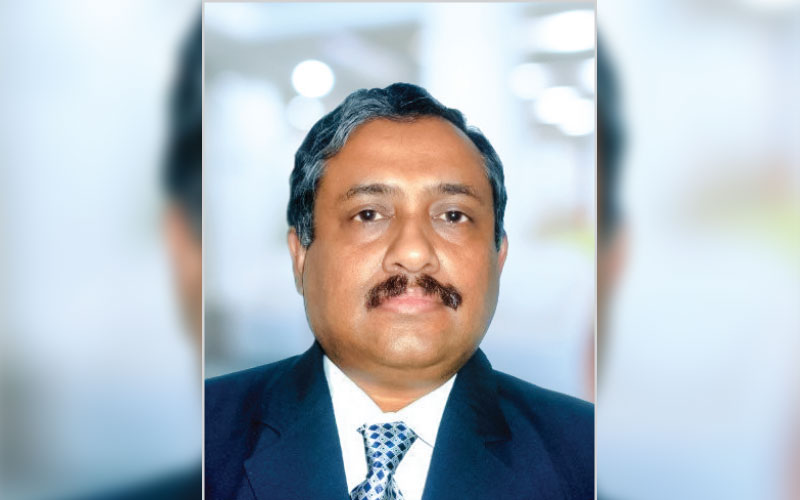
Tube & Pipe India: How are the evolving steel dynamics—quality, pricing, availability—shaping your manufacturing strategy of steel pipes, tubes and other products?
Gopakumar Kerala Varma: As we all know, the global steel landscape right now is in a state of flux, and between geopolitical shifts and raw material price swings, the entire supply chain is feeling the heat. At Lalbaba, we’re adapting to these challenges by becoming much more agile. Instead of just reacting to the market, we are opting for a forward-looking manufacturing strategy focused on procurement planning efficient inventory optimisation, and tighter production scheduling to minimise exposure to sudden fluctuations and stay ahead of the curve. At the same time, we continue to strengthen process efficiency to maintain product quality to absorb those market shocks without letting it affect our delivery reliability or the quality our partners in critical industries expect from us.
TPI: In the tube and pipe sector, how critical is steel quality in determining product performance, reliability, and end-use acceptance? How do you ensure the best quality of your pipes and tubes?
GKV: Steel quality is extremely critical in the tube and pipe sector, especially for applications involving high pressure, high temperature, fatigue resistance, and other safety-critical operations. Everything from the purity of the melt to the consistency of the chemical composition dictates how that tube will perform ten years down the line. At Lalbaba, we manage this by being selective at the source—we only work with reputable, select suppliers and follow stringent inspection protocols for chemical and mechanical properties before production. Throughout the manufacturing process, strict process controls, continuous monitoring, and rigorous testing are maintained to ensure consistency and compliance with required standards.
This integrated quality approach enables us to deliver high-performance tubular products suitable for critical and demanding applications across industries.
TPI: Which end-use sectors are currently driving demand for your steel products, and how is this influencing your portfolio?
GKV: Demand now is being driven largely by the energy and automotive sectors, along with railways and industrial infrastructure, the demand for specialized tubes that can handle supercritical boiler conditions is immense. This has naturally pushed our portfolio toward more “value-engineered” territory.
The era of “one-size-fits-all” is largely behind us. Today’s customers are increasingly looking for application-specific steel products tailored to their operating requirements. They are focused on the higher efficiency, and long-term reliability. To meet this shift, we’ve shifted our mindset from being a manufacturer to an integrated solution provider.
TPI: Are customers increasingly looking for application-specific steel products rather than standard offerings? If yes, how are you catering to the demand?
GKV: Absolutely. The era of “one-size-fits-all” is largely behind us. Today’s customers are increasingly looking for application-specific steel products tailored to their operating requirements. They are focused on higher efficiency and long-term reliability. To meet this shift, we’ve shifted our mindset from being a manufacturer to an integrated solution provider. We are working closely on understanding end-use applications and developing products suited for specific industry requirements. For instance, our Ahmednagar plant is dedicated to axle tubes for passenger vehicles and telescopic front forks for two wheelers. By focusing on the specific engineering challenges of a single segment, we can provide a level of customization that standard offerings just can’t match.
TPI: With turnkey solutions in the tube & pipe sector taking a gradual and selective spotlight, how do you view your business evolving or what steps are you taking in the direction to provide end-to-end solutions to the customers?
GKV: Lalbaba is steadily evolving from a product manufacturer into a more integrated engineering and solutions-driven organisation. A key example is the turnkey modernisation programs under our Rail Solutions-as-a-Service (“RSaaS”) model. Our offerings include coach conversions, life-extension retrofits, and wagon rebuilds, executed across multiple customer locations in India. This transition towards engineering-enabled and service-backed offerings helps create stronger customer partnerships and greater long-term value.
TPI: Does offering a wider range of turnkey solutions provide a competitive edge, or does it add operational complexity?
GKV: It’s a bit of both, to be honest. While turnkey solutions do add operational complexity, they also provide a strong competitive advantage. Customers these days increasingly prefer partners who can offer integrated solutions under one ecosystem rather than dealing with multiple vendors. This helps build stronger customer relationships, improves value addition, and creates differentiation beyond pricing alone.
TPI: How do you ensure consistency and quality across your diversified product portfolio?
GKV: Honestly, through stringent quality systems monitored by a dedicated QA/QC teams.
We are equipped with dedicated NABL-accredited in-house laboratories, and an R&D centre known as Lalbaba Metal Innovation Centre, where we run stringent inspection and testing processes to ensure uniform quality standards across product categories. More than 32 professionals are working exclusively within Metal Innovation Centre (MIC). Having that level of in-house expertise allows us to maintain a “Lalbaba standard” that remains uniform, whether we’re producing a standard industrial pipe or a high-spec automotive component.
Also Read: Quality Assurance Programs, A Non-Negotiable for Akash Steel Crafts in Tube & Pipe Production
TPI: Going forward, will growth be driven more by scale in core products or by diversification into specialized steel applications?
GKV: It should be a balance of both, but the “growth engine” is definitely diversification. When Lalbaba started, we had a relatively focused product offering that has steadily diversified into a wide range of specialised tubular products catering to automotive, energy, railways, and industrial applications. As industries become more technically demanding, they need partners who can innovate. We’ve spent years building the technical expertise and engineering backbone to handle those complex requirements. So while scale in core products will continue to remain important, future growth opportunities are expected to come increasingly from specialised and critical application-based solutions where technical capability, quality consistency, and engineering expertise will become key differentiators.