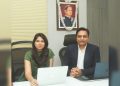

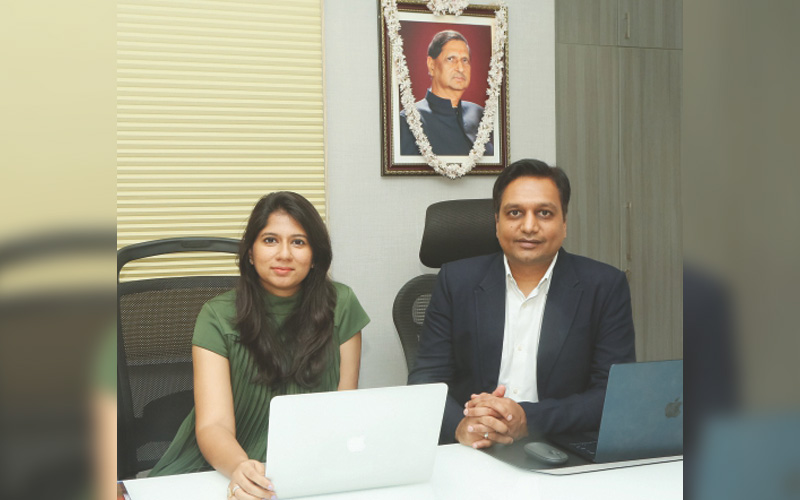
India’s tube and pipe industry is undergoing a decisive shift, from being viewed primarily as a volume-driven supplier to emerging as a globally respected hub for precision engineering and compliant manufacturing. In this exclusive interview with Tube & Pipe India, Mr. Nishant Garg and Mrs. Srishti Garg, Directors, MKK Metal Sections Pvt. Ltd., discuss how Indian manufacturers are building global credibility through advanced ERW tube solutions, stringent quality systems, and adherence to international standards. They share perspectives on export markets, sustainability expectations, technology partnerships, and value-added manufacturing, highlighting how India’s engineering talent, scalability, and process discipline are positioning the country as a reliable long-term partner for global infrastructure, mobility, and industrial applications.
Tube & Pipe India: What will you showcase at Tube Düsseldorf to highlight India’s technological capabilities and manufacturing excellence to a global audience?
Nishant Garg: At Tube Düsseldorf, we will be showcasing MKK’s high-precision ERW tubes and engineered sections under our METPRO brand, with a strong focus on structural, mechanical, and automotive-grade applications. Our portfolio includes a wide size range across round, square, and rectangular hollow sections, manufactured in grades such as IS 4923, ASTM A500, EN 10219, and other export-compliant standards.
More than product display, we want to demonstrate India’s capability in consistent quality, tight dimensional tolerances, process automation, and global certifications. Our exports to the US and Europe reflect our compliance with international standards and audit systems. We aim to position India not just as a cost-efficient source, but as a technologically competent and reliable manufacturing partner.
TPI: International trade fairs play a crucial role in shaping industry collaborations. How do platforms like Tube Düsseldorf help Indian manufacturers connect with global markets and customers?
Srishti Garg: Tube Düsseldorf is more than an exhibition, it is a convergence point for decision makers across continents. For Indian manufacturers, it provides direct access to OEMs, distributors, project consultants, and technology providers under one roof.
Such platforms accelerate trust-building. Buyers today want transparency, compliance, and long-term partnerships. Face-to-face interactions help communicate our manufacturing depth, quality systems, and scale. It also allows us to benchmark ourselves globally and identify collaboration opportunities in technology, distribution, and even co-development of specialized products.
TPI: From your participation at Tube Düsseldorf, what key global market insights are you hoping to gain and bring back to strengthen India’s tube and pipe manufacturing ecosystem?
NG: We are particularly keen to understand shifts in demand across infrastructure, renewable energy, mobility, and construction segments. Europe’s sustainability regulations, carbon reporting norms, and traceability requirements are areas where learning is critical.
We also look at automation trends, high-strength material applications, and value added processing that can enhance margins beyond commodity products. These insights help us upgrade not just our own processes but also contribute to strengthening the broader Indian ecosystem through technology adoption and best practices.
TPI: Over the years, how have you seen India’s representation evolve at international trade fairs, and how do you contribute to strengthening India’s image as a global engineering hub?
SG: India’s presence has transformed significantly. Earlier, we were largely perceived as volume suppliers. Today, Indian companies are presenting advanced manufacturing certifications, R&D capabilities, and showing strong export track records.
At MKK, we contribute by consistently aligning with global standards, maintaining export discipline, investing in quality systems, and building long-term relationships with international clients. Our objective is simple: every shipment should reinforce confidence in “Made in India” engineering.
India’s presence has transformed significantly. Earlier, we were largely perceived as volume suppliers. Today, Indian companies are presenting advanced manufacturing certifications, R&D capabilities, and showing strong export track records.
TPI: What core Indian manufacturing strengths differentiate you on the global stage? For what turnkey solutions is the world looking at India?
NG: India’s key strengths lie in technical adaptability, engineering talent, competitive cost structures, and the ability to scale quickly. We combine process efficiency with entrepreneurial agility.
Globally, there is growing demand for integrated solutions-not just tubes, but cut-to length, value-added fabrication, and customised section development. India is increasingly becoming a base for complete structural and engineering solutions supported by strong metallurgical expertise and quality assurance systems.
TPI: Technology partnerships and acquisitions are critical today. How are Indo-global collaborations helping reinforce India’s engineering leadership?
SG: Indo-global collaborations enable faster technology transfer, access to advanced process controls, and exposure to international compliance systems. Such partnerships accelerate learning curves and help Indian manufacturers leapfrog stages of development.
For companies like ours, collaboration is not limited to equipment procurement-it extends to quality benchmarking, joint product development, and customer integration across markets. This reinforces India’s image as a serious engineering partner rather than just a supply source.
TPI: Which international regions do you see as strategic growth markets, and how is India positioned as your global manufacturing base to support these expansions?
NG: North America, Europe, and parts of the Middle East continue to be strategic growth markets, particularly in infrastructure, renewable energy, and industrial applications.
India’s geographic advantage, skilled workforce, and strong steel ecosystem position it as an ideal global manufacturing base. With improving logistics infrastructure and policy support, Indian plants can serve global markets efficiently while maintaining compliance with regional standards.
Also Read: Goodluck India: Showcasing India’s Engineering Excellence on the Global Stage
TPI: How are cost pressures across raw materials, energy, or logistics being managed without compromising product reliability or compliance?
SG: Cost pressures are a global reality. Our approach focuses on process optimization, yield improvement, lean inventory management, and long-term supplier partnerships. Investments in automation and preventive maintenance also reduce rejections and energy wastage.
Importantly, cost management cannot come at the expense of compliance. Certifications, testing protocols, and traceability remain non-negotiable. Reliability builds brand equity, especially in export markets.
TPI: How are sustainability expectations from customers or regulators translating into changes in product design, manufacturing practices, or material choices?
NG: Sustainability is increasingly influencing procurement decisions. Customers now expect carbon transparency, responsible sourcing, and efficient material utilization.
This is driving changes in energy optimization, waste reduction, improved yield management, and adoption of higher-strength steels that reduce overall material consumption in applications. Sustainability is no longer a regulatory obligation-it is becoming a competitive differentiator.