
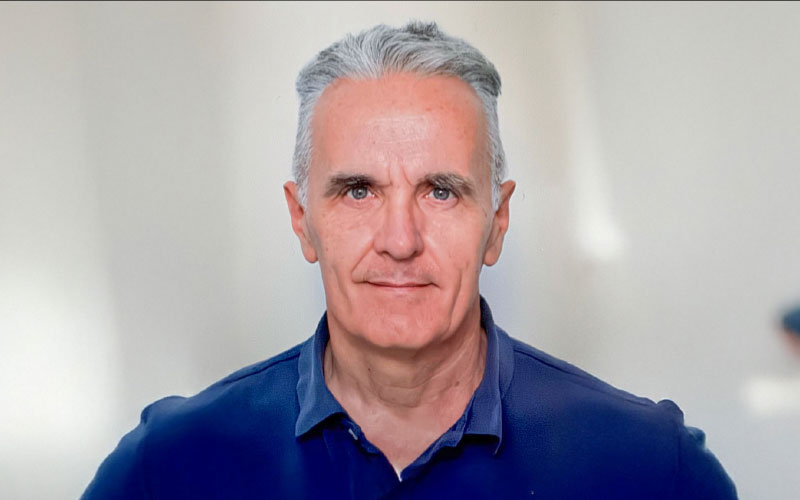
In an exclusive interaction with Tube & Pipe India, Mr. Cesare Vernocchi, Area Sales Manager, OLIMPIA 80 Srl, shares insights on the company’s tube mill portfolio covering carbon and stainless steel applications, emerging trends in high-strength materials, and the role of engineering innovation in improving mill performance and productivity. Mr. Vernocchi also discusses evolving customer requirements, sustainability considerations in mill design, and the long-term growth potential of markets such as India for advanced tube manufacturing technologies.
Tube & Pipe India: Please briefly outline your company’s tube mill product portfolio, including mill types, size ranges, materials handled, and key customer segments served.
Cesare Vernocchi: Olimpia 80 designs and manufactures a range of tube mills for carbon steel with diameters from 8 mm up to 254 mm, and for stainless steel from 6 mm up to 406 mm. The thickness range spans from 0.4 to 12.7 mm. The proposed lines can produce welded tubes using HF, LASER, or TIG/PLASMA systems. Our main customers are manufacturers of structural tubes and tubes for the automotive sector, heat exchangers and boilers, the chemical and pharmaceutical industries, the food and dairy industry, furniture, and related sectors.
TPI: Across your core tube mill offerings, how would you characterise current demand trends, order visibility, and customer investment appetite?
CV: After several years of global market growth, in recent months we have experienced a significant decline in market interest. There are not many “hot” projects at the moment. Our flagship product—direct forming lines for square and rectangular structural tubes—remains the most in demand, together with lines for high-strength steel tubes and stainless steel lines for specific applications.
TPI: Which customer requirements are currently placing the greatest demands on mill design, engineering, or delivery timelines?
CV: All our customers require customized solutions, which is why our tube mills involve substantial engineering and design lead times. Delivery time is an important factor, but it is always closely linked to the complexity of each line. None of our mills are “standard”; each one is genuinely tailored to the customer’s specific requirements.
TPI: How are evolving tube specifications and material complexities influencing your mill design, forming technology, and process control solutions?
CV: Very significantly. We started producing dedicated tube mills for high-strength steels (up to 1600 MPa) several years ago, but each project presents different challenges that must be addressed and resolved. Material characteristics and the diameter-to-thickness ratio, together with speed and the resulting productivity requirements, represent an ongoing challenge.
TPI: Which engineering innovations, automation features, or digital tools have delivered the most measurable improvements in mill performance, uptime, or yield for your customers?
CV: Each project involves research into specific materials, components, and solutions. Special steels and heat treatments, high-performance bearings, reliable motors and drives, and mechatronic automation solutions are all implemented to minimize operator intervention while ensuring safety and high performance.
A few years ago, at the TUBE trade fair, we presented an innovative flying cut-off system for stainless steel tube production lines. The system uses a fibre LASER source. Following the launch of the first prototype, several customers recognized and appreciated the advantages of this solution—no blades, no burrs, and therefore virtually zero maintenance and machine downtime. As a result, production of these machines has seen significant growth, both for new tube mills and, above all, for existing installations.
TPI: How are you managing cost pressures related to raw materials, machining, electronics, or logistics while maintaining equipment reliability, accuracy, and lifecycle performance?
CV: Constant attention and ongoing commitment are required. When it comes to costs, we seek reliable suppliers while never compromising on true quality. A misjudgment, even on a single component, could put the entire tube mill at risk. Our key suppliers share responsibility with us for the reliability of all machines; this is essential.
TPI: How are sustainability expectations—such as energy efficiency, material utilisation, or reduced scrap—shaping your tube mill designs and auxiliary systems?
CV: Every aspect is taken into account during the engineering phase. For example, we have been using only AC electric motors with energy recovery wherever possible for many years. We also minimize the use of oils wherever they are not strictly necessary.
Also Read: Bystronic Group: India Offers Growth Avenue for Tube and Profile Laser Solutions
TPI: Looking ahead, which tube applications or performance requirements (e.g., automotive, structural, precision tubing, EV-related applications) are most likely to drive customer investment in new or upgraded tube mills?
CV: These are all sectors that we have been serving and supporting for many years. High-strength carbon steels and special stainless steels have become standard for us. Structural lightweighting and corrosion-resistance performance are key drivers for future projects. For example, in the stainless steel sector, the use of ferritic steels in many applications requires specific solutions, which have already been developed and implemented by Olimpia 80 for several years.
TPI: How do you view India as a market for tube mill equipment in terms of growth potential, technology adoption, localization, and export opportunities?
CV: At present, the Indian market is largely driven by cost-sensitive solutions, with a limited but growing segment of customers placing greater emphasis on quality and performance. This balance may evolve over time, and while change is gradual, we see potential for increased appreciation of higher-value, performance-oriented technologies in the future.