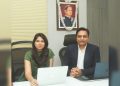

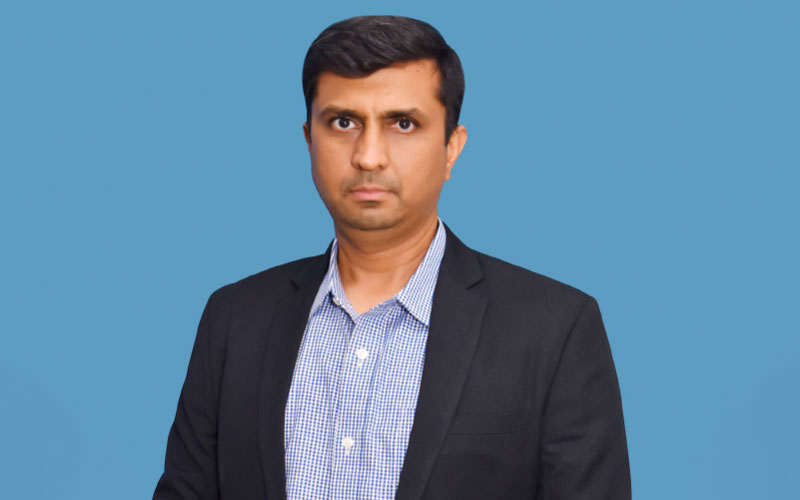
India’s tube and pipe manufacturing sector is increasingly recognised for blending practical innovation with global engineering standards. At the heart of this transformation is a culture of “jugaad”creative problem-solving applied with engineering discipline, which allows Indian manufacturers to deliver solutions that are not only cost-effective but scalable, adaptable, and reliable. In an exclusive interview with Tube & Pipe India, Mr. Parth Shah, Technical Director, Parth Equipment Limited, shares the company’s strategic focus on advanced manufacturing processes, end-to-end turnkey solutions, and strong customer engagement.
Tube & Pipe India: What will you showcase at Tube Düsseldorf to highlight India’s technological capabilities and manufacturing excellence to a global audience?
Parth Shah: We have been participating in the Tube Düsseldorf trade fair since 2006, and over the years, it has become an important platform for us to demonstrate India’s growing strength in advanced tube-making technology. Each edition, we aim to present our latest developments in the most innovative and engaging manner. Since 2014, we have consistently showcased at least one live, working model to clearly demonstrate the actual operating principles of our systems. In previous editions, we have presented functional models of straightening machines, tube mills, draw benches, and pilger mill die-mandrel sets, allowing visitors to see the technology in action rather than only in theory.
This year, we will be demonstrating a high-speed tube mill roll station featuring a partially free-rotating roll design. This concept is particularly beneficial for large-diameter stainless steel tubes, where conventional single-driven rolls tend to generate excessive friction, leading to surface marking. The new roll stand design allows differential speeds between the central driven roll and the edge guiding rolls, enabling smoother tube passage with significantly reduced friction from the edge rolls. As a result, the system delivers superior surface quality and finish—an important requirement for high-end stainless steel applications.
TPI: International trade fairs play a crucial role in shaping industry collaborations. How do platforms like Tube Düsseldorf help Indian manufacturers connect with global markets and customers?
PS: Tube Düsseldorf is one of the most prestigious trade fairs for the global tube and pipe industry. Hosted in Europe, it serves as a truly international meeting point, attracting exhibitors and visitors from the Far East, Southeast Asia, the Middle East, Africa, Europe, and the Americas. This diverse mix of cultures, ideas, and technologies creates a unique environment for global exchange and collaboration.
Our association with Tube Düsseldorf spans over two decades. We have participated as exhibitors nine times over the past 20 years and have also attended the fair as visitors, giving us a close view of its evolution. During this period, we have clearly observed a steady rise in both the number and confidence of Indian manufacturers participating in the exhibition. Equally significant has been the shift in international perception—what was once cautious interest has transformed into strong, positive engagement with Indian technology and capabilities.
The Indian pipe and tube industry has built a solid reputation in export markets such as Europe, North America, the Middle East, and Africa, and this is distinctly reflected in the growing Indian presence at Tube Düsseldorf.
Machinery manufacturers from India have benefited in the same way. In fact, some of our overseas customers were acquired directly through this platform. The exhibition provides an excellent opportunity for Indian manufacturers to engage with global customers, understand international market expectations, and stay aligned with evolving global trends.
TPI: From your participation at Tube Düsseldorf, what key global market insights are you hoping to gain and bring back to strengthen India’s tube and pipe manufacturing ecosystem?
PS: Trade fairs such as Tube Düsseldorf act as key convergence points where industrialists, technology developers, and system designers come together to define the future direction of the global tube and pipe industry. For us as technocrats, these platforms offer invaluable insight into emerging market trends, evolving customer expectations, and the technological pathways being adopted worldwide.
The exhibition provides first-hand exposure to new performance requirements, process innovations, and the approaches global players are taking to meet increasing demands for speed, quality, efficiency, and consistency. We closely study these developments and evaluate how such ideas can be adapted and integrated into our own machinery and solutions.
In the past, insights gained from Tube Düsseldorf have directly influenced enhancements in our equipment, including higher levels of automation, the introduction of intelligent control and AI-based tools, and improvements in production speed and output quality. When these advancements are transferred to our Indian customers, they contribute to measurable gains in productivity, competitiveness, and overall manufacturing capability. With the current edition as well, we look forward to gaining similar insights that can further strengthen India’s tube and pipe manufacturing ecosystem.
TPI: Over the years, how have you seen India’s representation evolve at international trade fairs, and how do you contribute to strengthening India’s image as a global engineering hub?
PS: Over the years, India’s presence at international trade fairs such as Tube Düsseldorf has evolved significantly—both in scale and in substance. Earlier, Indian participation was relatively limited and often viewed through the lens of cost competitiveness. Today, Indian manufacturers are increasingly recognised for their engineering depth, process understanding, and ability to deliver advanced, application-specific solutions.
This transformation is clearly visible in the growing number of Indian exhibitors, the confidence with which they present their technologies, and the quality of interactions with global customers. International visitors now engage with Indian companies not just as suppliers, but as technology partners capable of innovation and long-term collaboration.
Our own contribution to strengthening this image has been consistent and deliberate. Through regular participation over the past two decades, we have focused on demonstrating real engineering capability—by showcasing working models, explaining design logic, and highlighting performance-driven innovations rather than only finished products. By introducing advanced concepts such as high-speed roll stations, automation-driven features, and surface-quality-focused solutions, we aim to reflect the true technological maturity of Indian engineering. Such sustained and transparent engagement helps reinforce India’s position as a reliable global engineering hub—one that combines innovation, manufacturing excellence, and a deep understanding of customer requirements across international markets.

Indian engineers are known for developing out-of-the-box solutions that are often simple, logical, and highly economical—what is commonly referred to as jugaad, but applied with engineering discipline.
TPI: What core Indian manufacturing strengths differentiate you on the global stage? For what turnkey solutions is the world looking at India?
PS: One of India’s strongest manufacturing advantages lies in its culture of innovation rooted in practicality. Indian engineers are known for developing out-of-the-box solutions that are often simple, logical, and highly economical—what is commonly referred to as jugaad, but applied with engineering discipline. These solutions address real production challenges efficiently and can be adapted across a wide range of manufacturing environments, making them both scalable and cost-effective.
Another key strength is India’s capability to deliver integrated, end-to-end manufacturing solutions. Unlike many global manufacturers—particularly in Europe—who specialise in a single category of machinery, Indian manufacturers often design and build multiple systems across the entire production chain. For example, we manufacture equipment ranging from coil processing to tube manufacturing and post-processing operations.
This integrated approach allows customers to source complete turnkey solutions from a single supplier, significantly reducing integration challenges, coordination efforts, and the risk of technical mismatches between machines. For global customers, especially new entrepreneurs and expanding manufacturers, this single-point responsibility is a major advantage. It is this combination of innovation, flexibility, cost-efficiency, and turnkey capability that the world increasingly looks to India for in modern manufacturing solutions.
TPI: Technology partnerships and acquisitions are critical today. How are Indo-global collaborations helping reinforce India’s engineering leadership?
PS: Indo-global collaborations have undergone a significant transformation over the years. Earlier, many partnerships were primarily transactional in nature, often driven by cost advantages, where Indian manufacturing capabilities were leveraged mainly for economical production. Today, this dynamic has evolved into genuine technology partnerships based on shared expertise, joint development, and mutual value creation.
Modern Indo-global collaborations increasingly involve the combined application of design intelligence, engineering know-how, and manufacturing strength from both sides. Indian engineering has matured substantially, demonstrating high levels of reliability, efficiency, design capability, and execution excellence. As a result, Indian partners are no longer viewed merely as manufacturers, but as equal contributors to technology development and system innovation.
In the global marketplace, Indian engineering solutions have carved out a unique position—offering reliability comparable to established European standards while remaining competitive and flexible in cost. This balance has made Indian companies attractive partners for long-term collaboration. In addition, several Indian engineering firms have successfully pursued overseas acquisitions, further strengthening their global footprint and reinforcing India’s leadership in engineering and manufacturing on the world stage.
TPI: Which international regions do you see as strategic growth markets, and how is India positioned as your global manufacturing base to support these expansions?
PS: We see Africa and the Middle East as key strategic growth markets over the coming years. These regions are witnessing increasing investments in infrastructure, energy, construction, and industrial manufacturing, which directly drive demand for tube, pipe, and associated processing technologies.
India is well positioned to serve these markets as a global manufacturing base. Its geographical proximity to Africa and the Middle East provides a natural logistical advantage, supported by a strong maritime infrastructure along the western coast, with multiple major ports and well-developed industrial corridors. This enables efficient movement of heavy machinery and project cargo to these regions.
Beyond logistics, India’s economic momentum, political stability, and steadily improving ease of doing business add further strength to its global role. Combined with India’s cost-efficient manufacturing, engineering depth, and growing capability to deliver complete turnkey solutions, this makes India an ideal hub to support expansion into these emerging and fast-growing international markets.
Also Read: Nirmal Overseas: Driving Global Excellence in Tube and Pipe Manufacturing
TPI: How are cost pressures across raw materials, energy, or logistics being managed without compromising product reliability or compliance?
PS: Managing rising costs across raw materials, energy, and logistics requires a balanced approach that focuses on efficiency without diluting quality, reliability, or compliance. Our primary strategy is continuous improvement in manufacturing efficiency—optimising processes, reducing waste, and improving throughput across operations.
Wherever feasible, we leverage economies of scale through planned mass production, which helps stabilise input costs and improve consistency. Increased adoption of automation and CNC-based manufacturing has also played a critical role by enhancing precision, reducing dependency on manual intervention, and ensuring repeatable quality across components.
Equally important is effective material selection. By carefully evaluating material grades, sourcing strategies, and design optimisation, we ensure that performance requirements are met without unnecessary cost escalation. On the energy front, we are increasingly leveraging renewable sources such as solar power to offset rising energy costs and improve long-term sustainability. Together, these measures allow us to manage cost pressures proactively while maintaining strict adherence to global quality standards and regulatory compliance—ensuring that product reliability remains uncompromised.
TPI: How are sustainability expectations from customers or regulators translating into changes in product design, manufacturing practices, or material choices?
PS: Sustainability expectations from both customers and regulators are increasingly influencing the way machinery is designed, manufactured, and operated. Rather than being treated as a compliance requirement alone, sustainability is now an integral part of engineering decision-making.
From a product design perspective, there is a growing focus on energy-efficient systems, optimised material usage, and designs that reduce friction, waste, and rework during production. Improving process efficiency not only lowers energy consumption but also directly enhances output quality and equipment life. Customers today actively seek solutions that help them reduce operational energy costs and material losses at the shop-floor level.
On the manufacturing side, we are adopting cleaner and more efficient practices, including higher levels of automation, precision CNC machining, and renewable energy integration such as solar power. These measures help reduce emissions, improve consistency, and minimise resource wastage. Material selection has also become more deliberate, with emphasis on durability, recyclability, and long service life, ensuring that machines remain productive and compliant over extended operating cycles.
Overall, sustainability is driving smarter engineering—where efficiency, reliability, and environmental responsibility move together. These changes not only align with global regulatory frameworks but also create long-term value for customers by lowering lifecycle costs and improving operational resilience.