
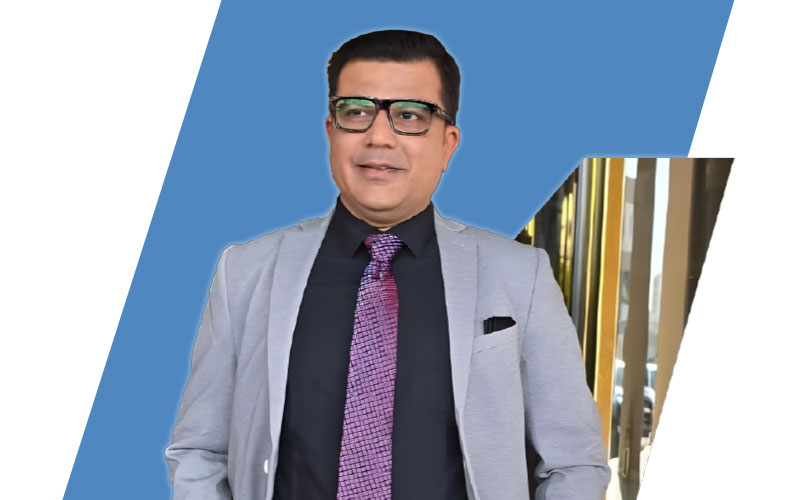
As global customers demand higher reliability, traceability, and lifecycle performance, India’s tube and pipe industry is recalibrating its value proposition. In this interaction with Tube & Pipe India, Mr. Jigar Parikh, CEO, Arvind Anticor Ltd., outlines how technology adoption, digital manufacturing, and sustainability-led engineering are reshaping India’s role in global supply chains. He highlights the growing importance of automation, predictive maintenance, and advanced material solutions in meeting stringent international benchmarks.
Tube & Pipe India: What will you showcase at Tube Düsseldorf to highlight India’s technological capabilities and manufacturing excellence to a global audience?
Jigar Parikh: At Tube Düsseldorf, Arvind Anticor will showcase advanced tube and pipe solutions that demonstrate India’s growing capabilities in precision engineering, automation, and value-added manufacturing. Our focus will be on high-performance products, process innovations, and digitally enabled manufacturing practices that meet stringent global standards. The objective is to highlight India’s ability to deliver not only cost-competitive solutions but also technologically sophisticated and reliable products for diverse global applications.
TPI: International trade fairs play a crucial role in shaping industry collaborations. How do platforms like Tube Düsseldorf help Indian manufacturers connect with global markets and customers?
JP: Platforms like Tube Düsseldorf provide Indian manufacturers with direct access to global customers, technology leaders, and decision-makers under one roof. These forums enable meaningful technical discussions, faster trust-building, and real-time understanding of customer expectations. For Indian companies, such platforms help accelerate market entry, establish long-term partnerships, and position India as a dependable global supply partner.
TPI: From your participation at Tube Düsseldorf, what key global market insights are you hoping to gain and bring back to strengthen India’s tube and pipe manufacturing ecosystem?
JP: We are keen to gain insights into evolving global demand patterns, emerging material technologies, sustainability benchmarks, and automation trends. Understanding customer expectations around traceability, compliance, and lifecycle performance will help us further align India’s manufacturing ecosystem with future global requirements and strengthen our competitiveness.
TPI: Over the years, how have you seen India’s representation evolve at international trade fairs, and how do you contribute to strengthening India’s image as a global engineering hub?
JP: India’s presence at international trade fairs has evolved from being largely cost-focused to becoming technology- and solution-driven. Indian companies today present complex, high-value products with confidence and durability. Arvind Anticor contributed to this evolution by consistently investing in quality systems, R&D, certifications, and customer-centric engineering, reinforcing India’s reputation as a reliable global engineering hub.

Digital tools and predictive maintenance systems help reduce variability while ensuring compliance with international standards.
TPI: What core Indian manufacturing strengths differentiate you on the global stage? For what turnkey solutions is the world looking at India?
JP: India’s key strengths lie in engineering depth, skilled manpower, flexible manufacturing, and the ability to scale efficiently. Arvind Anticor actively contributed to this shift by investing in R&D, adopting global certifications, and delivering technically complex products that meet or exceed international benchmarks, particularly in sectors such as infrastructure, energy, automotive, and industrial applications. This reinforces India’s image as a dependable global engineering hub with long-term manufacturing credibility.
TPI: Technology partnerships and acquisitions are critical today. How are Indo-global collaborations helping reinforce India’s engineering leadership?
JP: Indo-global collaborations enable faster technology absorption, access to advanced processes, and exposure to global best practices. Customers are increasingly looking to India for turnkey solutions spanning precision tubes, customised profiles, fabrication-ready components, and end-to-end project support. These partnerships help Indian manufacturers move up the value chain, reduce development cycles, and co-create solutions tailored to global markets, thereby reinforcing India’s engineering leadership.
TPI: Which international regions do you see as strategic growth markets, and how is India positioned as your global manufacturing base to support these expansions?
JP: Regions such as Europe, the Middle East, Southeast Asia, and North America present strong growth opportunities. India is well positioned as a global manufacturing base due to its robust supply chain ecosystem, improving infrastructure, and ability to deliver high-quality products at competitive costs while meeting international compliance standards.
Also Read: Accrete Electromech: Building Integrated Tube Solutions for a Global Customer Base
TPI: How are cost pressures across raw materials, energy, or logistics being managed without compromising product reliability or compliance?
JP: Cost pressures are being addressed through advanced process optimisation, yield improvement initiatives, energy-efficient equipment, and data-driven production planning. Digital tools and predictive maintenance systems help reduce variability while ensuring compliance with international standards. Anticor- focus remains on delivering optimised total lifecycle cost rather than short-term price advantages.
TPI: How are sustainability expectations from customers or regulators translating into changes in product design, manufacturing practices, or material choices?
JP: Sustainability expectations are driving fundamental changes in product engineering and manufacturing strategy. This includes lightweight design optimisation, increased use of recyclable and low-carbon materials, energy-efficient processes, and measurable emissions reduction initiatives. Anticor- view sustainability as a core driver of innovation and long-term competitiveness rather than a regulatory obligation.
Customers are increasingly looking to India for turnkey solutions spanning precision tubes, customised profiles, fabrication-ready components, and end-to-end project support.