
As large-scale infrastructure expansion, execution-driven projects, and rising quality expectations reshape the steel pipes and tubes industry, manufacturers are increasingly moving beyond conventional supply models toward integrated and solution-oriented operations. In an exclusive interview with Tube & Pipe India, Mr. Prakash Agrawal, Director, RR ISPAT (A Unit of GPIL), explains how deeper integration across the steel value chain is enabling stronger control over raw materials, operational efficiency, and downstream product performance. He further discusses the growing importance of execution-linked partnerships, long-term supply reliability, and sustainable manufacturing capabilities in meeting the evolving requirements of infrastructure, industrial, and energy sectors.

Tube & Pipe India: As companies increasingly advance downstream from steelmaking to finished pipe solutions, and vice-a-versa, how is integration reshaping your role as a manufacturer, product supplier, and then a solution or execution partner?
Prakash Agrawal: Integration is transforming the steel and pipe industry from a product-centric business into a complete solution-driven ecosystem. Today, customers are not only looking for high-quality steel or pipes, but also reliability, traceability, technical expertise, and execution capability. By integrating upstream steelmaking with downstream pipe and tube manufacturing, companies gain better control over quality, delivery timelines, and cost optimization.
This evolution allows manufacturers to move beyond being just suppliers to becoming strategic partners capable of offering customized solutions, engineering support, and project execution assistance. It also strengthens responsiveness to sector-specific requirements across infrastructure, energy, water, and industrial applications.
TPI: How does integration strengthen your competitiveness in the overall ecosystem of the steel sector?
PA: Integration creates significant competitive advantages by ensuring consistency in raw material quality, operational efficiency, and supply chain reliability. It minimizes dependency on external suppliers, reduces lead times, and enhances cost competitiveness.
Additionally, integrated operations improve product offerings and deliver an integrated specialized solution with higher speed and agility. In a highly competitive market, customers increasingly prefer partners who can provide end-to-end reliability — from steel production to finished pipes, technical support, and execution readiness.
TPI: In which segments (oil & gas, water, infrastructure, construction) is integrated capability becoming a key differentiator?
PA: Today an integrated capability is the key differentiator for any customer as you offer a customer solution with faster speed and agility, also customers expectation has improved from supplier to a strategic partner creating more value for the organisation.
In oil & gas, stringent quality standards and performance reliability make integration essential. In water infrastructure, governments and EPC players increasingly seek suppliers who can ensure timely delivery and long-term durability. Infrastructure and construction sectors also value integrated players because of their ability to handle large volumes, customized specifications, and project-linked execution support.
As projects become larger and more time-sensitive, integrated manufacturers gain an advantage through seamless coordination and dependable supply capabilities.
TPI: To what extent does control over raw materials and steel quality influence the performance of your downstream pipe/tube products?
PA: Control over raw materials and steel quality plays a decisive role in determining the performance, durability, and reliability of downstream pipe and tube products. Consistent steel chemistry and mechanical properties directly impact strength, weldability, corrosion resistance, and lifecycle performance.
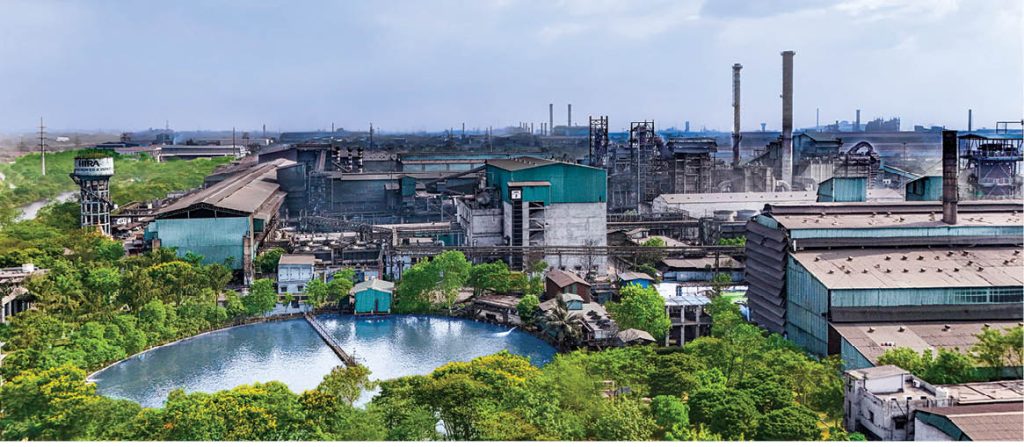
Here we at GPIL have an edge as we have our captive mines and best quality raw material used and state of art manufacturing facility and an integrated setup ensures stringent quality monitoring right from steelmaking, resulting in better dimensional accuracy and superior product consistency. This becomes especially important in critical applications such as energy transportation, structural infrastructure, and high-pressure industrial systems where performance standards are non-negotiable.
TPI: Could you walk us through the innovations, capacity expansion, or product portfolio diversification you have been working on in the steel pipe/tube sector?
PA: At Godawari Power & Ispat Limited, our focus has always been on strengthening the integrated steel value chain and enhancing the quality of downstream steel products that support industries such as pipes, tubes, infrastructure, engineering, and construction.
Over the years, we have invested significantly in backward integration through captive iron ore mining, pellet manufacturing, sponge iron, billets, wire rods, and captive power generation. This integration helps us ensure consistent raw material quality, supply reliability, and cost efficiency — all of which are critical for downstream applications including pipe and tube manufacturing.
We are also continuously working on operational modernization, process efficiency, and value-added steel products to cater to evolving industrial requirements. Our broader diversification strategy is focused on future-ready sectors, including infrastructure and clean energy, which are expected to drive long-term demand for quality steel and tube applications.
Rather than only expanding capacity, our approach is to create sustainable and integrated manufacturing capabilities that strengthen the entire downstream ecosystem.
TPI: Are customers increasingly demanding turnkey or execution-linked solutions along with pipe/tube supply? And how do you view this demand growing in future? Please elaborate.
PA: Yes, the industry is clearly witnessing a shift from standalone product supply to integrated and execution-oriented partnerships. Today’s customers are increasingly looking for suppliers who can offer reliability, technical support, timely delivery, and value-added collaboration beyond just material supply. This trend is particularly visible in sectors like infrastructure, water management, renewable energy, industrial projects, and EPC-driven developments, where project timelines and execution efficiency are becoming extremely important.
From our perspective at Godawari Power & Ispat Limited, integration across the value chain creates stronger operational control and better responsiveness to customer requirements. As India continues to invest heavily in infrastructure and industrial expansion, the demand for integrated solution providers and execution-linked partnerships is expected to grow significantly.
In the coming years, companies with strong manufacturing capabilities, dependable supply chains, and collaborative project support will have a clear competitive advantage.
As projects become larger and more time-sensitive, integrated manufacturers gain an advantage through seamless coordination and dependable supply capabilities.
TPI: What is your mantra for offering best turnkey solutions to the customers? How important is it to maintain healthy relationships with EPC contractors?
PA: Our philosophy is built around consistency, credibility, and long-term partnerships. We believe the best solutions come from understanding customer requirements deeply and aligning manufacturing quality, delivery timelines, and operational support accordingly.
Even in sectors where we are primarily a steel and raw material partner, collaboration with EPC contractors and project stakeholders remains extremely important. EPC companies play a critical role in project execution, and maintaining transparent, responsive, and dependable relationships helps ensure smoother coordination and successful outcomes.
At Godawari Power & Ispat Limited, we believe long-term trust is built through quality assurance, timely execution, and the ability to consistently deliver under dynamic market conditions.
Our approach is not transactional — it is partnership-driven.
TPI: What are the key operational and financial challenges in building and sustaining an integrated steel-to-pipes/tubes model?
PA: An integrated steel-to-pipes/tubes ecosystem requires substantial investment, operational discipline, and long-term strategic planning.
One of the biggest operational challenges is maintaining synchronization across the value chain — from raw material sourcing and steel production to downstream processing and final delivery. Ensuring consistent quality across every stage is critical, especially for applications where performance and durability are essential.
Financially, the industry also faces challenges related to raw material volatility, energy costs, logistics expenses, and continuous technology upgrades. In addition, customer expectations around quality, delivery timelines, and cost competitiveness are constantly increasing.
However, integration also creates significant long-term advantages. Companies with backward integration and stronger control over raw materials are better positioned to manage volatility, improve efficiency, ensure quality consistency, and build supply chain resilience. This is one of the reasons why vertically integrated companies like Godawari Power & Ispat Limited continue to remain competitive in a dynamic steel environment.
Also Read: Tata Steel Re-defines Tube and Pipe Playbook with Fully-Integrated Steel Ecosystem
TPI: Going forward, do you see integration and turnkey capability becoming essential for growth, or remaining segment-specific strategies?
PA: We believe integration will increasingly become a strategic necessity rather than a segment-specific differentiator. As industries evolve, customers are expecting greater reliability, quality consistency, faster execution, and stronger accountability from their partners. This naturally favors companies that have integrated operations and stronger control across the value chain.
Sectors such as infrastructure, water, industrial manufacturing, renewable energy, and construction are already moving in this direction. Companies that can combine manufacturing strength with execution support, operational efficiency, and long-term sustainability will be better positioned for future growth.
At Godawari Power & Ispat Limited, we see integration not just as a business strategy, but as a way to build resilience, improve efficiency, and create long-term value for customers and stakeholders alike.
Over the years, we have invested significantly in backward integration through captive iron ore mining, pellet manufacturing, sponge iron, billets, wire rods, and captive power generation. This integration helps us ensure consistent raw material quality, supply reliability, and cost efficiency — all of which are critical for downstream applications including pipe and tube manufacturing.