
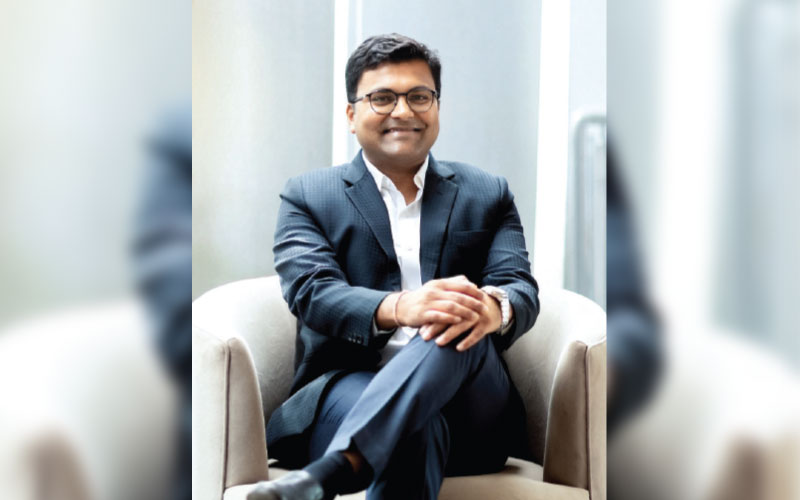
As evolving customer expectations, tighter project timelines, and increasing demand for quality assurance reshape the steel pipes and tubes industry, integrated manufacturing is emerging as a key competitive differentiator across the value chain. In an exclusive interview with Tube & Pipe India, Mr. Hitesh Agarwal, Chief Executive Officer, Mahalakshmi Profiles Pvt. Ltd. (MPL), discusses how integrated manufacturing is strengthening competitiveness, enabling product diversification, and supporting the transition from conventional pipe supply to execution-oriented partnerships. He also shares insights into the company’s investments in advanced technologies, precision manufacturing, and long-term growth through forward integration.
Tube & Pipe India: As companies increasingly advance downstream from steelmaking to finished pipe solutions, and vice-a-versa, how is integration reshaping your role as a manufacturer, product supplier, and then a solution or execution partner?
Hitesh Agarwal: Integration’s changing everything for us in steel. At MPL, we’ve moved from just shipping products to really partnering with customers on solutions. Back in the day, companies stuck to either making steel or forming pipes—separate worlds. Now, with our setup covering everything from DRI and melting to coils and pipes, we jump in early, work together on specs that fit their needs, and keep quality steady all the way through. We’re not just suppliers anymore; we’re on the hook for how well the whole thing performs.
TPI: How does integration strengthen your competitiveness in the overall ecosystem of the steel sector?
HA: It gives us a real edge in costs, quality, and getting stuff delivered on time. Our facility with synced high-speed mills lets us plan smarter and cut expenses. Not relying on outside suppliers means we handle raw material swings and disruptions better. Process control keeps the steel’s chemistry and strength uniform, so pipes perform reliably every time. Plus, we can pivot fast on orders for specs, sizes, or deadlines.
TPI: In which segments (oil & gas, water, infrastructure, construction) is integrated capability becoming a key differentiator?
HA: It’s standing out in material handling, water, infrastructure, construction, home appliances, heat transfer, and firefighting. Each one’s tough in its own way—water and construction need pipes that last in harsh conditions; fire systems can’t tolerate slip-ups on safety. Appliances and heat exchangers demand precise thickness and finishes for efficiency. Our full control from raw materials to finished product lets us deliver that consistency across the board.
TPI: To what extent does control over raw materials and steel quality influence the performance of your downstream pipe/tube products?
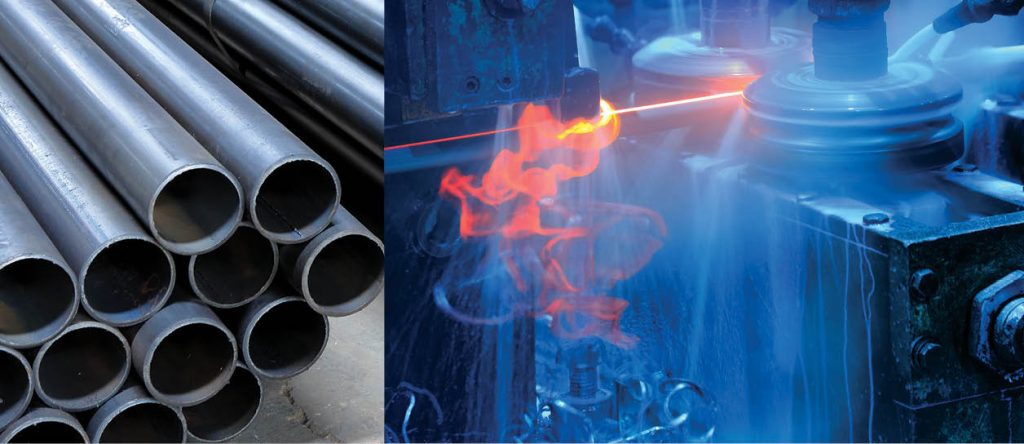
HA: Raw material control is everything for pipe performance. Our in-house steel melting shop lets us manage chemistry, inclusions, and mechanical properties right from the start. That means pipes with consistent strength, dimensional accuracy, and resistance to wear and environmental conditions. Less variation matters a lot in applications where precision and reliability cannot be compromised.
TPI: Could you walk us through the innovations, capacity expansion, or product portfolio diversification you have been working on in the steel pipe/tube sector?
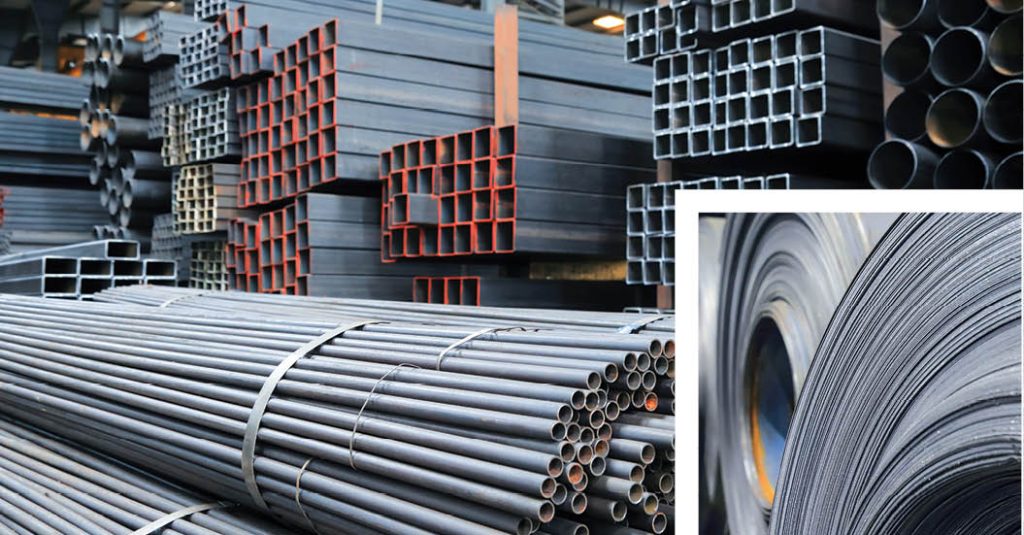
HA: We’re growing by expanding capacity, upgrading technology, and broadening our product range. MPL currently operates 9 pipe mills as part of our phased forward integration strategy. We have invested in advanced manufacturing technologies such as solid-state welding and high-speed tube mills, which improve productivity while maintaining tight dimensional tolerances. On the quality side, we monitor more than 40 testing parameters across mechanical properties, dimensions, and surface finish. We already have 450+ sizes in our SKU portfolio, and we’re continuing to add new sizes that require even higher precision and serve automobile and other industries where zero tolerance is the standard.
TPI: Are customers increasingly demanding turnkey or execution-linked solutions along with pipe/tube supply? And how do you review this demand growth in future? Please elaborate.
HA: Absolutely, customers are no longer looking only for pipe supply. They want partners who can support execution, reduce coordination issues, and take more ownership across the project lifecycle. This is especially visible in infrastructure, water management, and large industrial projects where delays or inconsistencies can become expensive. With our integrated manufacturing base and partner network, we are well placed to support this shift, and this demand is only going to grow as projects become more complex and timelines get tighter.
TPI: What are the key operational and financial challenges in building and sustaining an integrated steel-to-pipes/tubes model?
HA: It brings long-term advantages, but it also adds complexity. Operationally, every stage has to stay aligned because even one gap can affect the rest of the value chain. Financially, it takes major investment in infrastructure, technology, and capacity, while also demanding careful planning around raw material volatility and changing market demand. Over time, though, this creates a stronger and more resilient business model.
Also Read: RR ISPAT Moves Beyond Convention to Integration, Reshaping Steel Pipe & Tube Industry
TPI: Going forward, do you see integration and turnkey capability becoming essential for growth, or remaining segment-specific strategies are good for growth?
HA: Integration is increasingly becoming a necessity rather than a choice. Customers now expect better quality, traceability, reliability, and end-to-end accountability, and integrated players are naturally in a stronger position to deliver that. The level of integration may differ from one segment to another, but the overall direction of the industry is clearly moving toward more integrated and solution-led models. At MPL, this is a long-term commitment to creating customer value, improving control, and building a stronger growth platform.
Customers are no longer looking only for pipe supply. They want partners who can support execution, reduce coordination issues, and take more ownership across the project lifecycle. This is especially visible in infrastructure, water management, and large industrial projects where delays or inconsistencies can become expensive.