
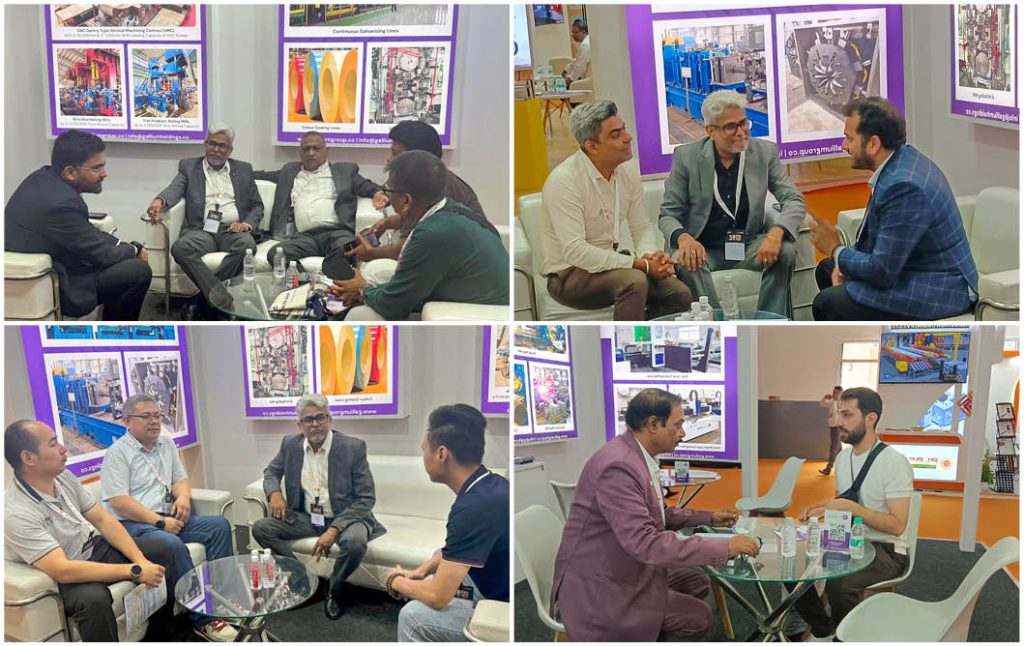
With over four decades of engineering expertise, Gallium Group is strengthening its presence in the tube and steel processing industry through advanced, flexible, and automated manufacturing technologies. At TPF Hyderabad 2026, Gallium Preet, a strategic collaboration between Gallium and Preet Group, showcased its Common Roll Mill (CRM) and Laser Tube Cutting Technology. As manufacturers increasingly focus on productivity, flexibility, precision, and operational efficiency, demand is rising across forming, tube finishing, laser processing, automation, and material handling. In an exclusive interview with Tube & Pipe India, Ms. Priyanka Rajesh Meena, Promoter and Director, Gallium Group, discusses evolving customer priorities, technology adoption, brownfield modernisation and the future of intelligent tube manufacturing.
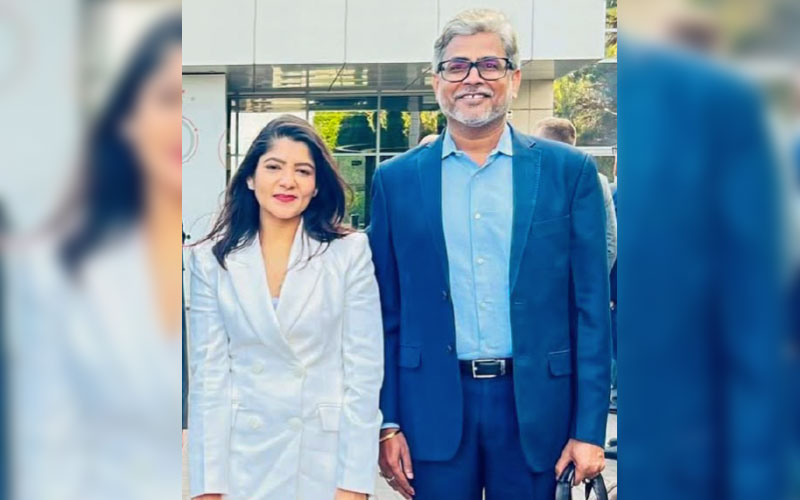
Tube & Pipe India: Please briefly introduce your company and the technologies or solutions you are showcasing at TPF Hyderabad.
Priyanka Rajesh Meena: Gallium Group is a globally recognized engineering company specializing in advanced tube and steel processing technologies. With over four decades of experience, Gallium has successfully delivered more than 500 projects, installed over 5,000 machines across 76 countries, and exported engineering equipment valued at over USD 500 million. Our manufacturing facilities are supported by a dedicated Research & Development centre focused on innovation, automation, and sustainable manufacturing.
In a significant step towards strengthening its position as a comprehensive engineering solutions provider, Gallium has entered into a strategic collaboration with Preet Group, one of India’s leading manufacturers of steel rolling mills and metallurgical equipment. Through Gallium Preet the partnership combines Gallium’s expertise in tube and steel processing technologies with Preet’s decades of experience in rolling mill engineering, enabling the delivery of integrated solutions across the steel manufacturing value chain. Together, the two organizations are expanding their presence in domestic and international markets while driving innovation, localization, and advanced manufacturing technologies for the next generation of the steel industry.
At Tube & Pipe Fair Hyderabad 2026, our primary focus will be on showcasing two of our flagship technologies – Gallium Common Roll Mill (CRM) and Gallium laser tube cutting technology.
Gallium’s common roll mill is a revolutionary solution that enables manufacturers to produce ERW round, square, and rectangular hollow sections on the same mill with minimal roll changes. By significantly reducing changeover time and increasing machine utilization, CRM offers manufacturers greater flexibility, improved productivity, and lower operating costs.
Alongside CRM, we will also be presenting our laser tube cutting technology, designed for high-speed, automated, and precision tube processing. Equipped with advanced motion control and 360-degree cutting capability, the system delivers exceptional cutting accuracy while reducing material waste and improving production efficiency. Together, these technologies reflect Gallium’s commitment to helping manufacturers improve productivity, reduce downtime, and remain globally competitive.
TPI: What are customers currently prioritizing most when investing in new equipment or upgrading existing facilities?
PRM: Today’s investment decisions are driven less by production capacity alone and more by operational efficiency and return on investment. Customers are looking for solutions that reduce downtime, minimize material wastage, lower energy consumption, and increase overall equipment effectiveness.
Manufacturers are increasingly seeking flexible production systems that can quickly adapt to changing market requirements without major capital expenditure. Technologies such as Gallium’s common roll mill have gained significant interest because they allow multiple tube profiles to be produced on the same mill while drastically reducing roll change time.
Similarly, automated laser tube cutting systems are becoming an important investment because they improve accuracy, reduce secondary processing, and enable manufacturers to meet the growing demand for precision-engineered products. Customers today expect equipment that combines productivity, flexibility, automation, and long-term reliability.
Manufacturers are replacing conventional forming systems with flexible technologies such as common roll mills that reduce setup time and increase machine utilization. There is also significant investment in precision laser tube cutting, particularly from automotive, infrastructure, furniture, and engineering sectors where product quality and accuracy are critical.
TPI: Which areas of tube and pipe manufacturing are seeing the highest demand for technology upgrades today?
PRM: The strongest demand is currently seen in forming technology, tube finishing, laser processing, automation, and material handling.
Manufacturers are replacing conventional forming systems with flexible technologies such as common roll mills that reduce setup time and increase machine utilization. There is also significant investment in precision laser tube cutting, particularly from automotive, infrastructure, furniture, and engineering sectors where product quality and accuracy are critical.
Another important area is plant automation, where manufacturers are adopting intelligent control systems, digital monitoring, and integrated production management to improve consistency and reduce dependence on manual intervention.
TPI: How are automation and digital technologies changing the way tube and pipe plants operate?
PRM: Automation has transformed tube and pipe manufacturing from reactive production to intelligent manufacturing. Modern plants increasingly rely on digital monitoring, PLC-based control systems, servo-driven equipment, and real-time production data to improve efficiency. Operators now have better visibility into machine performance, allowing them to optimize production while reducing downtime and maintenance costs.
Gallium integrates automation across its equipment portfolio to improve repeatability, accuracy, and operational safety. In our laser tube cutting systems, automation enables precise positioning, automatic feeding, intelligent cutting sequences, and consistent quality with minimal operator intervention.
Similarly, our common roll mill incorporates advanced machine design that allows faster product changeovers while maintaining dimensional accuracy and production stability. Automation ultimately enables manufacturers to produce more with fewer interruptions while maintaining consistent quality standards.
Today’s investment decisions are driven less by production capacity alone and more by operational efficiency and return on investment. Customers are looking for solutions that reduce downtime, minimize material wastage, lower energy consumption, and increase overall equipment effectiveness.
TPI: Are customers focusing more on greenfield projects or brownfield modernization? What trends are you observing?
PRM: Both segments continue to grow, but there has been a noticeable increase in brownfield modernization projects. Many manufacturers prefer upgrading existing facilities by introducing advanced technologies rather than investing in entirely new plants. Modernization provides quicker returns, minimizes production disruption, and allows companies to remain competitive without extensive capital investment.
Technologies such as Gallium’s common roll mill and laser tube cutting systems are particularly well suited for modernization because they significantly enhance productivity while integrating efficiently into existing production lines.
At the same time, greenfield investments continue in sectors driven by infrastructure development, renewable energy, and high-value manufacturing, where complete turnkey solutions remain in demand.
TPI: Looking ahead, which technologies do you believe will have the greatest impact on the tube and pipe industry over the next few years?
PRM: The future of tube manufacturing will be driven by technologies that combine flexibility, automation, precision, and sustainability. Flexible forming technologies like Gallium’s common roll mill will continue to gain importance because manufacturers increasingly require the ability to produce multiple product sizes with minimal setup time and lower tooling costs.
Laser tube cutting technology will also become a standard requirement as customers demand higher precision, greater design flexibility, shorter production cycles, and reduced material waste. Alongside these technologies, automation, digital manufacturing, intelligent process monitoring, energy-efficient welding systems, and integrated material handling solutions will play a critical role in improving productivity and maintaining global competitiveness.
Manufacturers that successfully integrate these technologies will be better positioned to respond quickly to changing customer requirements while improving profitability.
Also Read: Tube & Pipe India Emagazine Jul-Sep Issue 2026
TPI: What are your expectations from TPF Hyderabad 2026, and what opportunities do you see in the Indian market?
PRM: TPF Hyderabad provides an excellent platform for meaningful interaction with customers, technology partners, and industry professionals. We look forward to demonstrating how Gallium’s engineering solutions can help manufacturers improve efficiency, productivity, and long-term competitiveness.
India continues to be one of the fastest-growing steel and tube manufacturing markets in the world, supported by investments in infrastructure, renewable energy, automotive, railways, and industrial development. These sectors are creating strong demand for advanced manufacturing technologies that improve quality while reducing production costs.
We also see increasing interest in flexible production systems, automation, and precision processing technologies, making this an ideal time to introduce innovations such as Gallium’s common roll mill and laser tube cutting technology to a wider audience. Through TPF Hyderabad 2026, we hope to strengthen existing relationships, build new partnerships, and contribute to the continued advancement of India’s tube and pipe manufacturing industry.
TPF Hyderabad provides an excellent platform for meaningful interaction with customers, technology partners, and industry professionals. We look forward to demonstrating how Gallium’s engineering solutions can help manufacturers improve efficiency, productivity, and long-term competitiveness.