
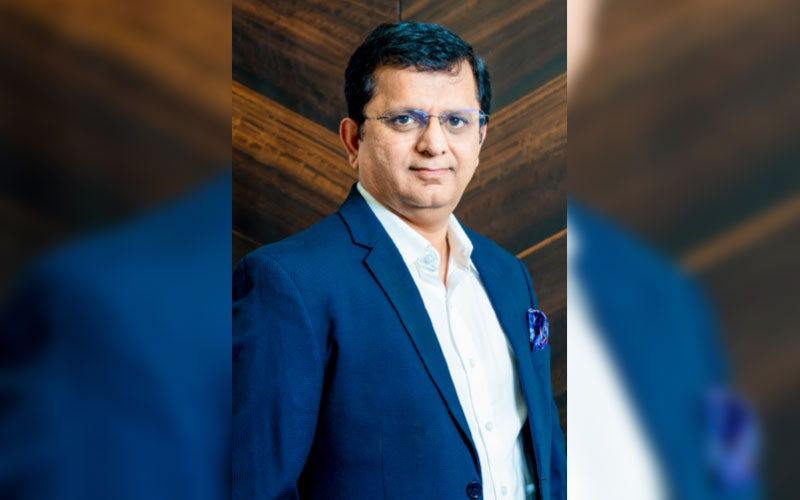
Headquartered in Hyderabad, Hariom Pipe Industries’ total installed capacity stands at 7,85,232 MTPA, including backward-integrated operations. Of this, the finished goods capacity, covering the full range of tube and pipe products, stands at 5,21,000 MTPA. With 900+ dealers across five southern states, the company’s focus remains on value-added, application-specific products, with 60% of its installed capacity dedicated to higher-specification offerings, developed through continued investment in backward integration, technology upgrades, and capacity augmentation. In an exclusive interview with Tube & Pipe India, Mr. Roopesh Kumar Gupta, Managing Director, Hariom Pipe Industries Limited, shares the company’s recent milestone—the signing of an MoU with the Government of Maharashtra to expand operations in Gadchiroli, strengthening its geographical footprint and positioning it closer to emerging demand hubs. With steel price volatility remaining a significant challenge, the company’s focus continues to be on production, logistics, and customer service. Mr. Gupta sees the Tube & Pipe Fair as an excellent platform to engage with the entire tube and pipe ecosystem.
Tube & Pipe India: Please briefly introduce your company’s tube and pipe product portfolio and key end-use sectors.
Roopesh Kumar Gupta: Hariom Pipe Industries Limited, established in 2007 and headquartered in Hyderabad, manufactures a diversified range of steel tube and pipe products under distinct brand lines — Hariom Veer (HR pipes & tubes), DuraEdge (CR pipes), Zincon (GI and GP pipes), 360 Prime (HRPO, GP, CRCA, and CRFH slit coils), Build Master (scaffolding systems), Rackx (racking systems & storage solutions), and billets (M.S. billets).
Our products serve a wide cross-section of industries including agriculture, infrastructure, power, warehousing, and construction. We supply through 900+ dealers across five southern states, reflecting our strong regional distribution network and consistent market presence.
TPI: Could you please elaborate on the production capacities of each of your tube and pipe product categories?
RKG: Our total installed capacity stands at 7,85,232 MTPA, encompassing our backward integrated operations. Of this, our finished goods capacity — covering our full range of tube and pipe products — stands at 5,21,000 MTPA. This integrated setup allows us to maintain strong control over raw material availability, cost efficiency, and consistent product quality across our finished product lines.
This integrated capacity allows us to manufacture pipes and tubes across multiple sizes, with thickness ranging from 0.5 mm to 3.5 mm, along with varied coatings to suit different applications.
TPI: Could you share the recent developments, innovations, and strategic initiatives your company has undertaken in the tube and pipe segment?
RKG: A key recent milestone is the MoU signed with the Government of Maharashtra to expand our operations in Gadchiroli, strengthening our geographical footprint and positioning us closer to emerging demand hubs. We’ve also accelerated a strategic shift toward value added, application-specific products — today, over 60% of our installed capacity is oriented toward these higher-specification offerings, developed through continued investment in backward integration, technology upgrades, and capacity augmentation. To support this scale-up, we’ve rolled out integrated ERP, HRM, and CRM platforms across our operations, enabling tighter coordination between production planning, dealer servicing, and after-sales support as we broaden our product lines.
On the customer-facing side, we’ve taken a selective approach to turnkey and end-to-end solutions, strengthening our logistics coordination and technical support capabilities so that solution-oriented engagement enhances customer outcomes without diluting our core manufacturing focus.

A key recent milestone is the MoU signed with the Government of Maharashtra to expand our operations in Gadchiroli, strengthening our geographical footprint and positioning us closer to emerging demand hubs.
TPI: What is currently the biggest challenge faced by the tube and pipe industry?
RKG: The most significant challenge is steel price volatility — the industry has seen 5 to 7 price revision cycles annually, with variations of roughly 8% to 15% driven by input costs, supply demand shifts, and logistics conditions. This volatility has become structural rather than cyclical, requiring manufacturers to build predictable, disciplined operations rather than reacting to short-term fluctuations.
TPI: How important are automation and digitalisation in your future growth plans? Which manufacturing or quality-control improvements have delivered the most measurable benefits for your operations?
RKG: Automation and digitalisation are central to our strategy. Our ERP, HRM, and CRM systems give us real-time visibility into production planning, inventory movement, cost trends, and market demand — allowing us to respond to fluctuations with speed and accuracy rather than hindsight, while also giving management a consolidated view of workforce productivity and dealer-level demand patterns.
On the quality-control side, the most measurable benefits have come from standardising operating procedures across all plants: rigorous input inspections, in-process checkpoints, and in-house testing aligned with BIS specifications, supported by structured employee training and periodic audits. This has ensured uniform quality across our dealer network in five southern states, regardless of plant location or application.
TPI: Looking ahead, where do you see the next major growth opportunities for the tube and pipe industry over the next three to five years?
RKG: We see renewable energy — particularly solar power — as the strongest emerging demand segment, supported by India’s rapid transition toward sustainable infrastructure. Alongside this, railways and auto ancillaries are contributing steadily to demand for high-performance tubular products, while infrastructure development, EPC projects, and industrial manufacturing continue to provide volume stability. Going forward, margin growth will increasingly come from specialized, application-specific products tailored to load conditions, environmental exposure, and installation requirements — and our expanding geographical footprint positions us well to capture demand as it emerges across new regions.
Also Read: Tube & Pipe India Emagazine Jul-Sep Issue 2026
TPI: What are your expectations from TPF Hyderabad 2026, and what opportunities do you see in the Indian market?
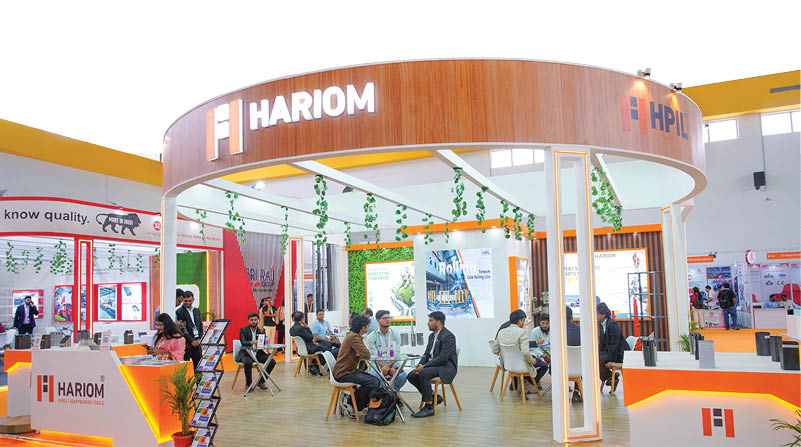
RKG: As a Hyderabad-headquartered manufacturer, TPF Hyderabad 2026 is a valuable platform to engage with the broader tube and pipe ecosystem in our home market and showcase our capabilities to EPC players, dealers, and end-use industries. We see continued opportunity in India’s infrastructure push and the shift toward performance-driven, specification-led steel solutions, and look forward to deepening relationships that support long-term, sustainable growth.
*Note: All the figures are approximate
TPF Hyderabad 2026 is a valuable platform to engage with the broader tube and pipe ecosystem in our home market and showcase our capabilities to EPC players, dealers, and end-use industries.