
As industries such as nuclear energy, aerospace, defence, semiconductor, and pharmaceuticals demand increasingly specialised stainless-steel solutions, REMI Group continues to strengthen its position in high-precision manufacturing. With capabilities spanning from ultra-fine 0.5mm tubing to 80mm thick-wall piping, the company has built a reputation for serving technically demanding applications where quality, consistency, and reliability are critical. In an exclusive interview with Tube & Pipe India, Mr. Rishabh Saraf, Managing Director, REMI Group, discusses evolving steel dynamics, growing demand for application-specific products, the shift toward value-added solutions, and its long-term strategy centred on specialised manufacturing rather than commodity-scale production.
Tube & Pipe India: How are the evolving steel dynamics — quality, pricing, availability — shaping your manufacturing strategy?
Rishabh Saraf: Raw material prices, especially nickel and molybdenum, have been volatile in recent years. Global supply chains have shifted, and domestic stainless-steel production in India has grown. For REMI, these changes have only reinforced our focus on high-precision, high-specification products — segments where quality matters more than price, and where we are less exposed to commodity market swings.
We have responded by strengthening supplier relationships, maintaining strategic inventory of critical grades, and tightening our process controls. The sectors we serve — nuclear power, oil & gas, aerospace, defence — demand absolute consistency. That keeps us disciplined on the supply chain side, regardless of market conditions.
TPI: How critical is steel quality in determining product performance, and how do you ensure the best quality of your pipes and tubes?
RS: In the sectors we serve, quality is not optional — it is the baseline. A substandard pipe in a nuclear plant or a pharmaceutical facility is not just a commercial problem; it is a safety risk. That reality drives every decision we make on the shop floor.
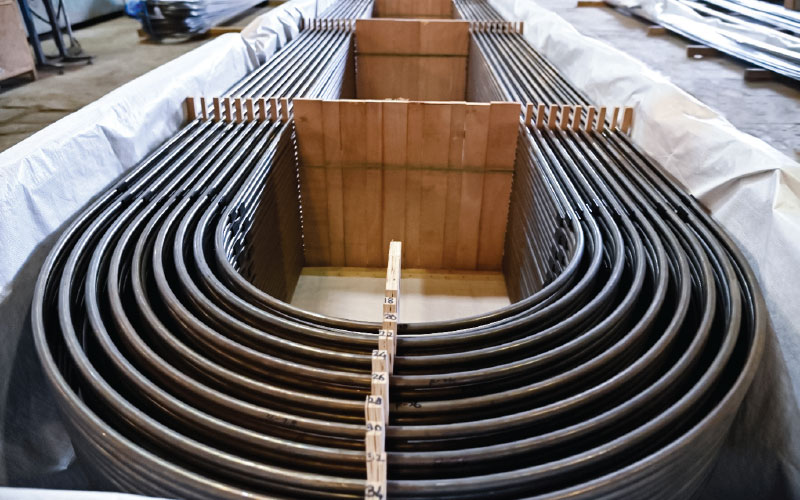
What makes REMI distinctive is the sheer breadth of precision we operate across — from 0.5mm thin-wall tubing to 80mm thick-wall piping, all manufactured under one roof. Maintaining the same standard of precision and quality across that entire range is not easy, and it is something very few manufacturers in the world can claim. Our testing covers dimensions, mechanical properties, corrosion resistance, and non-destructive methods such as radiography and ultrasonic testing — applied consistently, regardless of the product size or grade.

A substandard pipe in a nuclear plant or a pharmaceutical facility is not just a commercial problem; it is a safety risk. That reality drives every decision we make on the shop floor.
TPI: Which end-use sectors are currently driving demand, and how is this influencing your portfolio?
RS: Nuclear energy, oil & gas, petrochemical, defence, and aerospace are all strong contributors to our order book. On the industrial side, semiconductor and pharmaceutical sectors are growing rapidly, with demand for ultra-clean tubing meeting ASME BPE standards.
What is notable is that each of these sectors has very different requirements — in terms of grades, dimensions, surface finish, and certification. Having one of the widest production ranges in the industry, from the finest precision tubing to heavy-wall industrial piping, means we can serve all of them from a single facility. That breadth is a genuine differentiator and has shaped our portfolio strategy from the very beginning.
TPI: Are customers increasingly seeking application-specific products rather than standard offerings? How are you catering to this?
RS: Yes, very clearly. Customers today come with specific process conditions and engineering requirements — they want a manufacturer who understands the application and can deliver accordingly, not just quote a catalogue item.
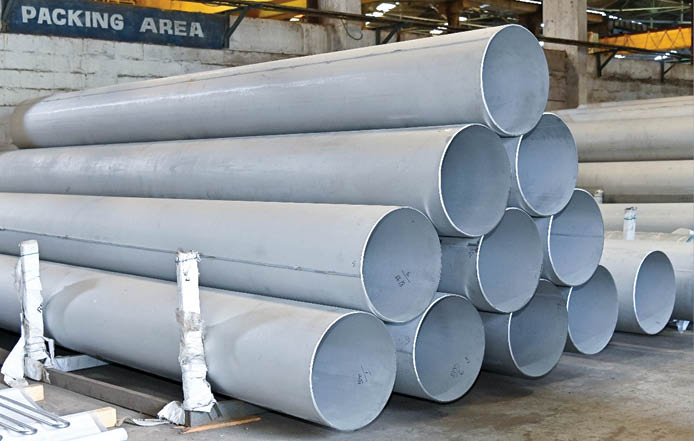
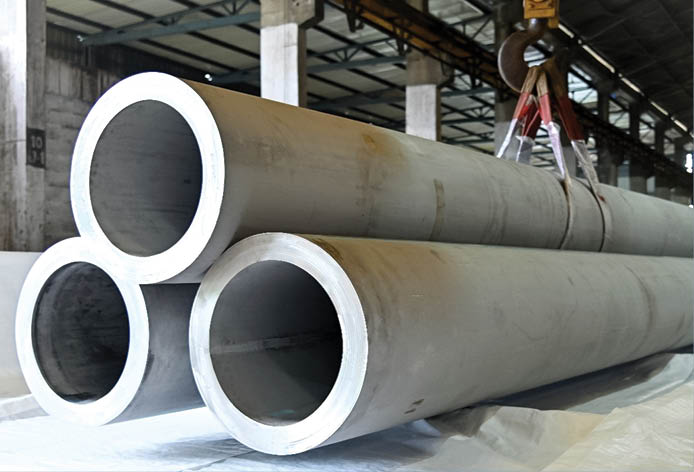
This is where REMI’s range becomes a real advantage. Whether a customer needs 0.5mm precision tubing for a semiconductor or pharmaceutical application, or 80mm thick-wall piping for a high-pressure industrial system, we can address it under one roof with the same quality discipline. Our specialisation in high wall thickness welded pipes is a strong example of application-specific capability — a technically demanding product requiring precise welding process control and thorough testing. We take a consultative approach: understand the application first, then commit to the specification.
TPI: How do you view the evolution toward turnkey solutions, and what steps is REMI taking in that direction?
RS: Customers increasingly want fewer, more accountable vendors — partners who can cover more of the value chain rather than just supplying a product. We understand this shift and are building capabilities accordingly.
For us, this means extending our offering to include value-added processing such as electropolishing, cut-to-length, end finishing, and complete documentation packages. It also means advising customers on material selection, welding procedures, and post-weld treatment. Our ability to manufacture across an exceptionally wide size range — from the thinnest tubing to the heaviest piping — under one roof means customers can consolidate more of their requirements with us, which is itself a form of end-to-end simplification.
TPI: Does offering a wider range of solutions provide a competitive edge, or does it add operational complexity?
RS: Honestly, it does both. A wider offering is an advantage only when backed by real competence. Stretched beyond capability, it becomes a liability.
At REMI, our portfolio spans an enormous range — 0.5mm thin-wall tubing to 80mm thick-wall piping — but it is always anchored in our core discipline of precision stainless steel manufacturing. Five decades of operational experience have already absorbed much of the complexity that range brings. Our systems and teams are built to handle variety at the specification level. Breadth rooted in depth is a competitive advantage. Breadth without mastery is a risk.
Maintaining the same quality standard across a production range as wide as ours — from ultra-fine precision tubing to heavy-wall industrial pipes — is perhaps our most significant operational achievement.
TPI: How do you ensure consistency and quality across your diversified product portfolio?
RS: Our approach rests on three things. First, standardised process discipline — every product family has documented manufacturing procedures, qualified welding processes, and defined inspection checkpoints that are consistently enforced. Second, institutional knowledge — REMI has been in continuous operation since 1972, and that depth of experience within our teams is irreplaceable. Third, external validation — approvals from some of India’s most demanding certifying bodies require us to prove consistency through independent audits and testing, not just claim it.
Maintaining the same quality standard across a production range as wide as ours — from ultra-fine precision tubing to heavy-wall industrial pipes — is perhaps our most significant operational achievement. Full traceability on every product, from raw material heat to final test results, ensures that every customer receives exactly what they specified.
Also Read: Integration a Game Changer for MPL in the Steel Pipe and Tube Sector
TPI: Going forward, will growth be driven more by scale in core products or by diversification into specialised applications?
RS: Specialisation, without question. We made a conscious choice long ago not to compete on volume. The commodity end of the market rewards scale and low cost — that is a valid model, but it is not ours.
Our growth comes from going deeper into technically demanding applications where the barrier to entry is knowledge, qualification, and precision capability — not just capital. Very few manufacturers anywhere in the world can produce the full range we do, from 0.5mm thin tubing to 80mm thick piping, under one roof and to the tolerances our customers demand.
A good example of this direction is our technical collaboration with WSG, a leading South Korean company, for the manufacture of high-purity and ultra-high purity stainless steel products. These are highly specialised segments serving the semiconductor, pharmaceutical, and advanced industrial sectors, where material cleanliness and surface integrity are as critical as dimensional accuracy. This partnership brings together WSG’s expertise in high-purity systems with our precision manufacturing capabilities — expanding what we can offer to customers at the highest end of the specification spectrum.
As India’s ambitions in energy, advanced manufacturing, and defence grow, demand for exactly this kind of high-precision specialty stainless steel will rise significantly. Our strategy is to be qualified, capable, and trusted before that demand peaks.
A good example of this direction is our technical collaboration with WSG, a leading South Korean company, for the manufacture of high-purity and ultra-high purity stainless steel products.