
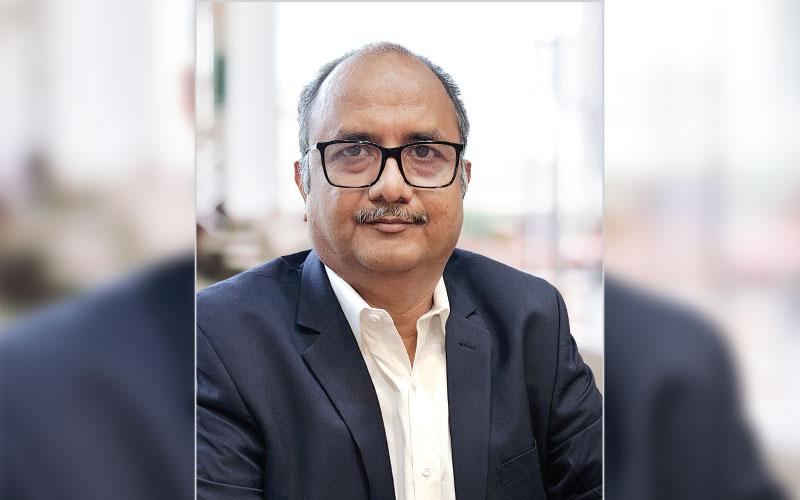
Amid evolving steel market dynamics, increasing demand for application-specific products, and rising emphasis on quality assurance, Jindal Industries Hissar Pvt. Ltd. is strengthening its position through a balanced strategy focused on capacity expansion, technological advancement, and value-added product diversification. In an exclusive interview with Tube & Pipe India, Mr. Sunil Jain, Director and CEO, Jindal Industries Pvt. Ltd. (Hisar), shares how the company is investing in high-performance manufacturing, advanced Direct Forming Technology (DFT) mills, and integrated piping solutions to enhance efficiency, flexibility, and customer responsiveness across diverse end-use sectors. Mr. Jain discusses how the company is adapting to changing steel dynamics, ensuring consistent product quality, expanding into specialized applications, and building a future-ready growth strategy driven by scale, customization, and export expansion.
Tube & Pipe India: How are the evolving steel dynamics- quality, pricing, availability, shaping your manufacturing strategy of steel pipes, tubes and other products?
Sunil Jain: With a focus on evolving steel dynamics and manufacturing strategy, Jindal Industries is shifting toward high-performance manufacturing to counter steel price volatility and demand for better quality.
Raw Material Strategy: The company prioritizes procurement of high-grade Hot Rolled Coils (HRC) to ensure consistent, premium-quality pipes, particularly sourcing from major suppliers like SAIL, TATA, JSW & now JFL.
Capacity Expansion: To address availability and meet growing demand, a new 1.5 million TPA capacity plant is being set up in Hansi, near Hisar, expected to be in production by Q3 2026.
Technological Shift: The company is implementing Direct Forming Technology (DFT) mills at new facilities, allowing for faster production of varied sizes without changing tools, enhancing efficiencies, improving delivery of variety with less lead time.
TPI: In the tube and pipe sector, how critical is steel quality in determining product performance, reliability, and end-use acceptance? How do you ensure the best quality of your pipes and tubes?
SJ: Steel quality plays a critical role in ensuring the structural integrity, durability, and long-term performance of pipes and tubes, particularly in corrosive and high-stress operating environments. Inferior-quality steel can lead to premature corrosion, weld failures, structural fatigue, and reduced service life, making stringent quality control essential across the manufacturing process.
To maintain consistent product reliability and performance, the company follows rigorous quality assurance procedures, including strict adherence to Bureau of Indian Standards (BIS) specifications and inspection schemes such as IS:1239, IS:3589, and IS:10748. Comprehensive in-house testing is carried out at multiple stages — from raw material inspection to final dispatch — to ensure compliance with required standards. For critical applications, specialized tests including hydrostatic testing, eddy current testing, and ultrasonic testing are also conducted to guarantee product safety, strength, and defect-free performance.
TPI: Which end-use sectors are currently driving demand for your steel products, and how is this influencing your portfolio?
SJ: The demand is currently driven by infrastructure, government initiatives, and industrial expansion. Some of the key sectors are– Jal Jeevan Mission (water transportation), structural projects (airports, railway bridges), firefighting in commercial buildings, solar power support systems, and oil/gas transportation.
In terms of our portfolio, there is an increased focus on high-strength MS pipes (Fe 330, 410, 450) and GI pipes, along with expanding into hollow sections.
TPI: Are customers increasingly looking for application-specific steel products rather than standard offerings? If yes, how are you catering to the demand?
SJ: Yes, customers are increasingly demanding application-specific steel products instead of standard offerings, as industries now require solutions tailored to their operational, structural, and environmental requirements. In response to this evolving demand, Jindal Industries is expanding its customised product capabilities by offering pipes in customised lengths along with tailor-made coating solutions such as bare, varnish, bituminous, and primer coatings.
The company also manufactures specialized products for niche applications, including OCTG (Oil Country Tubular Goods) pipes for the oil & gas sector and high-strength sections for prefabricated structures. Further, with the adoption of Direct Forming Technology (DFT) and new tooling capabilities, Jindal Industries is able to produce specific non-standard sizes with greater flexibility, improved efficiency, and reduced lead times.
Customers are increasingly demanding application-specific steel products instead of standard offerings, as industries now require solutions tailored to their operational, structural, and environmental requirements. In response to this evolving demand, Jindal Industries is expanding its customised product capabilities by offering pipes in customised lengths along with tailor-made coating solutions such as bare, varnish, bituminous, and primer coatings.
TPI: With turnkey solutions in the tube & pipe sector taking a gradual and selective spotlight, how do you view your business evolving or what steps are you taking in the direction to provide end-to-end solutions to the customers?
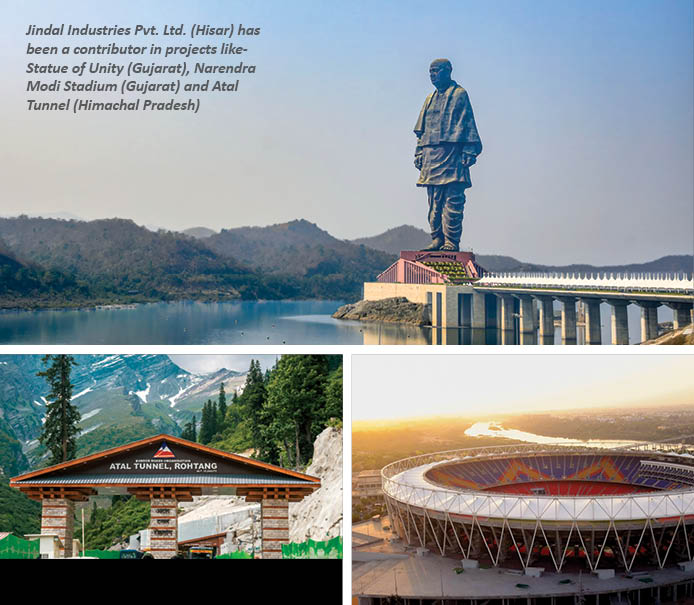
SJ: The company is moving toward providing comprehensive piping solutions, transitioning from merely a product supplier to a solutions provider. Working in the direction, the company has integrated its manufacturing capabilities with the ability to offer coated, welded, and fabricated pipes, especially for large infrastructure projects like the Statue of Unity and the Chenab Rail Bridge.
TPI: Does offering a wider range of turnkey solutions provide a competitive edge, or does it add operational complexity?
SJ: Offering a wider range of turnkey solutions provides a competitive edge in high-value projects, even though it requires higher operational efficiency. In terms of value addition, it helps secure long-term contracts and builds client trust, particularly in competitive markets where quality assurance is valued over low cost.
TPI: How do you ensure consistency and quality across your diversified product portfolio?
SJ: Jindal Industries ensures consistency and quality across its diversified product portfolio through a robust integrated management system and a strong focus on process standardization. The company operates under internationally recognized certifications, including ISO 9001:2015, ISO 14001:2015, and ISO 45001:2018.
To maintain uniform product quality and minimize process variations, the company extensively utilizes automated mills and standardized testing systems across its manufacturing operations. This helps reduce human error, improve process reliability, and ensure consistent compliance with required quality specifications across different product categories.
Also Read: Goodluck India Sheds Light on Increased Demand of Product Specialisation
TPI: Going forward, will growth be driven more by scale in core products or by diversification into specialized steel applications?
SJ: Going forward in 2026 and beyond, growth will be driven through a hybrid strategy balancing scale expansion in core products with diversification into specialized steel applications.
Specialised Applications: The company is simultaneously diversifying into high-margin, value-added products such as specialized sections and high-end alloy steel pipes.
Scale Expansion: Jindal Industries is expanding its core MS pipe production capacity, with a target of achieving 10 lakh tons per annum by 2028.
Complete Product Basket: The focus remains on providing a complete basket of products to customers under one umbrella.
Pan-India Availability: Strengthening product availability and distribution reach across India continues to be a key growth driver.
Exports from New Plants: The upcoming facilities will also support export expansion and strengthen the company’s global market presence.
The company is moving toward providing comprehensive piping solutions, transitioning from merely a product supplier to a solutions provider. Working in the direction, the company has integrated its manufacturing capabilities with the ability to offer coated, welded, and fabricated pipes, especially for large infrastructure projects like the Statue of Unity and the Chenab Rail Bridge.