
As stainless steel continues to gain ground over conventional materials, its applications are expanding across construction, infrastructure, water, process industries and other demanding sectors, driven by its corrosion resistance, durability, hygiene and aesthetics. Amid this evolving market landscape, Jindal Stainless is strengthening its support for tube and pipe manufacturers through customised, application-specific solutions, technical assistance and ecosystem development. The Global melting capacity reached 4.2 MTPA back in March 2026 (3 MTPA in India + 1.2 MTPA from Indonesia). Separately, cold-rolling capacity specifically rising from 2.05 MTPA to 2.67 MTPA by FY28. In an exclusive interview with Tube & Pipe India, Mr. Rajesh Pandian, Associate Vice President, Regional Manager – South Zone, Jindal Stainless Limited, shares insights into changing customer preferences, segment specific requirements, capacity expansion, digitalisation and the company’s efforts to build a stronger stainless steel ecosystem.
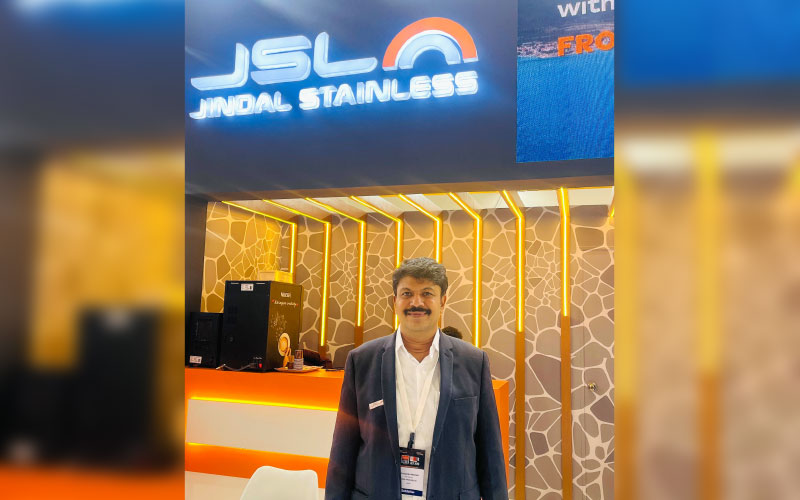
Tube & Pipe India: Please introduce Jindal Stainless and take us through its product portfolio for the tube and pipe industry, along with the key end-use sectors you serve.
Rajesh Pandian: Jindal Stainless is India’s largest stainless steel producer and among the top 3 stainless steel manufacturers globally, according to SMR Stainless Producer Ranking 2026.
In the tube and pipe industry, we supply quality stainless steel products to manufacturers, supporting them in producing reliable solutions for diverse applications. Stainless steel tubes have traditionally found strong acceptance in decorative applications, architecture, building and construction. Their usage is now expanding rapidly into construction and infrastructure, while process industries, oil and petrochemicals, pharmaceuticals and several other sectors also represent important application areas.
TPI: How is the stainless steel tube and pipe market evolving, and what is driving customers to consider stainless steel over conventional materials?
RP: We are witnessing increasing demand for stainless steel pipes and tubes, with corrosion resistance emerging as one of the key drivers. India has a coastline of over 11,000 km, which presents significant corrosion related challenges. In such a scenario, stainless steel offers a strong advantage in terms of durability and service life.
Beyond corrosion resistance, stainless steel also offers benefits in aesthetics and hygiene. Its applications are therefore expanding into areas such as water pipelines as well. Overall, we are seeing a clear shift among customers from mild steel and other materials towards stainless steel, driven by a combination of longer service life, quality and aesthetics.
TPI: Beyond supplying raw material, how is Jindal Stainless supporting tube and pipe manufacturers in addressing increasingly specialised customer requirements?
RP: At Jindal Stainless, we see our role as going beyond that of a raw material supplier. We work closely with pipe and tube manufacturers and provide technical support across various aspects, including just-in-time delivery and consistent product quality, enabling them to manufacture quality tubes and pipes for their customers.
Another important focus is customisation. Every industry comes with its own technical requirements, and we develop offerings accordingly. For instance, pharmaceutical applications require lower roughness values and superior surface finish, while decorative applications demand enhanced glossiness. Our approach is to provide segment-specific products that address these distinct requirements.
TPI: Jindal Stainless has outlined significant capacity expansion. Could you elaborate on the scale of this expansion and the Maharashtra greenfield project?
RP: Jindal Stainless had signed a non-binding memorandum of understanding with the Maharashtra government in FY25 to explore a manufacturing facility in the state. The proposed stainless steel facility will have a total capacity of 4 million tonnes per annum and will be constructed in phases, with the first phase expected to be operational in the next four years. This expansion reflects our confidence in the long term growth of the stainless steel market.
TPI: What are some of the key challenges that the stainless steel industry needs to address today?
RP: One of the challenges we are currently facing is the presence of counterfeit materials being sold using our brand name. We are actively working to address this issue and are taking appropriate measures to tackle counterfeit products and protect customers from such practices.
TPI: Jindal Stainless has been focusing on ecosystem development. What are the key initiatives supporting this approach?
RP: Being the largest stainless steel producer in India, we don’t see our role as being limited to supplying stainless steel. We believe it is our responsibility to contribute to the development of the broader stainless steel ecosystem.
One of our key initiatives has been training nearly one lakh stainless steel fabricators through our education and skilling initiative, Stainless Academy. This programme creates greater awareness about stainless steel and promotes better fabrication practices.
Stainless steel is different from carbon steel and requires a different approach to handling, fabrication and electrode selection. By developing a stronger ecosystem of trained fabricators, we aim to ensure that end users receive quality fabricated products.
Another important initiative is our Jindal Saathi Seal programme, which is focused on building greater trust among customers. Under this programme, we co-brand with pipe and tube manufacturers, among other industries, after thoroughly auditing their facilities. Customers purchasing co-branded products can be assured of the quality of the material and its provenance from Jindal Stainless.
This helps strengthen traceability, build customer confidence and ensure that quality products reach the end user.
Also Read: Tube & Pipe India Emagazine Jul-Sep Issue 2026
TPI: How is Jindal Stainless leveraging automation and digitalisation to make customer engagement and transactions more efficient?
RP: Automation and digitalisation are already deeply integrated into our operations. We have platforms such as Cloud for Customer and the Hybris Portal, through which customers can directly book orders and manage their accounts and ledgers. Jindal Stainless had also launched Jindal Stainless Mart 2.0 marking a significant step forward in its digital transformation journey. It enables customers to browse, order, and manage purchases through a seamless, self-service experience. With capabilities including chatbot support, GPS-enabled dispatch tracking, and simplified reordering, the platform strengthens digital engagement while enhancing transparency and efficiency across the customer journey.
The Hybris Portal is integrated with our SAP system, creating a seamless digital interface for customers. We also provide virtual payment options. In terms of digitalisation, we are already well advanced in adopting technology across our stainless steel business.
TPI: Finally, how has your experience been at TPF Hyderabad, and what value do you see in such industry platforms?
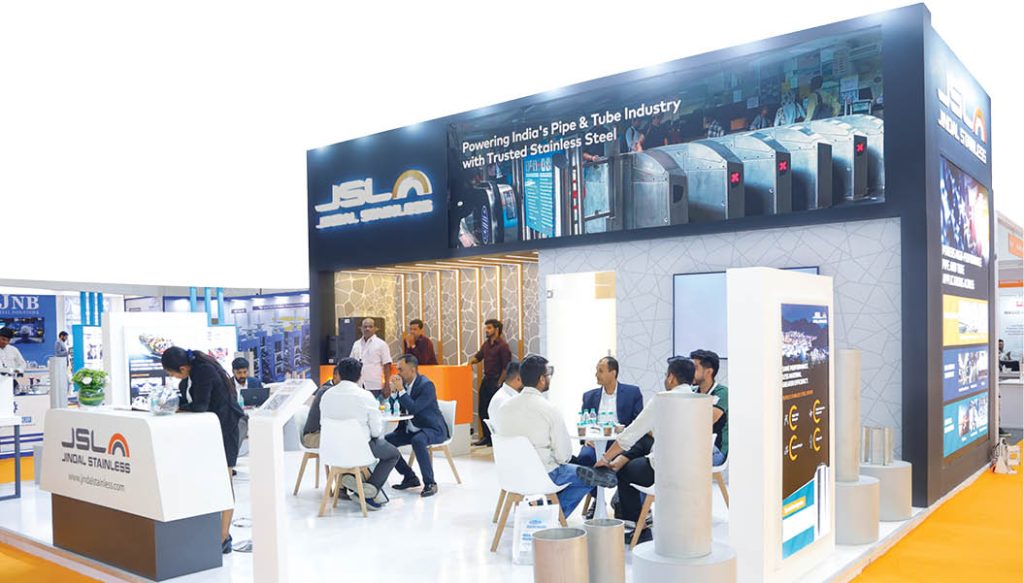
RP: It has been a good experience. We have seen a strong flow of customers and clients, making the event a valuable platform for interaction. Such exhibitions facilitate the exchange of knowledge and ideas between manufacturers and end users. These interactions help participants understand market requirements better while also opening up new business opportunities.
For us, Tube & Pipe Fair Hyderabad has been a good platform to connect with the industry and engage directly with customers.

Tube & Pipe Fair Hyderabad has been a very good experience. We have seen a strong flow of customers and clients, making the event a valuable platform for interaction. Such exhibitions facilitate the exchange of knowledge and ideas between manufacturers and end users.