
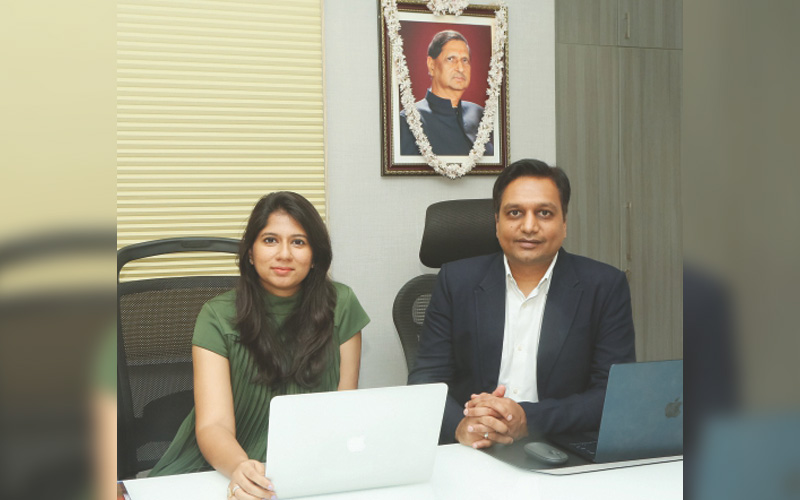
With the demand for high-performance steel tubes and hollow sections rising across diverse industrial applications, manufacturers are increasingly focusing on capacity expansion, product innovation, and operational excellence to stay ahead of the curve. In an exclusive interaction with Tube & Pipe India, Mr. Nishant Garg and Mrs. Srishti Garg, Directors, MKK Metal Sections Pvt. Ltd., discuss the company’s expanding product portfolio, ongoing capacity enhancement, investments in automation and quality control, and its focus on value-added manufacturing. They also share their perspective on the key challenges facing the tube and pipe industry, emerging growth opportunities, and their expectations from TPF Hyderabad 2026.
Tube & Pipe India: Please briefly introduce your company’s tube and pipe product portfolio and key end-use sectors.
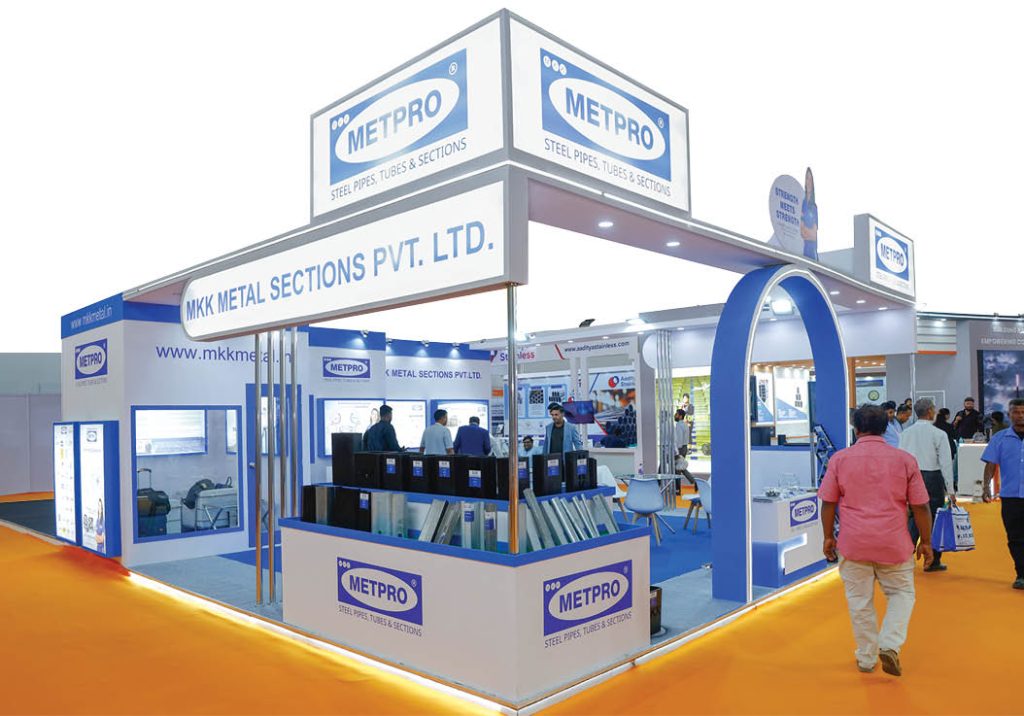
Nishant Garg: MKK Metal Sections Pvt. Ltd. is a manufacturer of high-quality steel tubes and sections, catering to a diverse range of industrial and infrastructure applications. Our product portfolio includes precision-engineered ERW tubes and hollow sections in sizes ranging from 12.7OD to 457OD, 15×15 to 350x350mm, 26×13 to 400x300mm with thickness from 1.6 to 16mm and yield strength of 210MPa to 800Mpa, all designed to meet stringent quality standards. Our in-house galvanising plant facilitates all GI pipe requirements as well. We serve key sectors such as construction, infrastructure, automotive, engineering, fabrication, renewable energy, and general industrial applications, with a strong focus on reliability, consistency, and customer-centric solutions.
TPI: Could you please elaborate on the production capacities of each of your tube and pipe product categories?
Srishti Garg: Currently, we are at an annual production capacity of 5,00,000 MT per annum from our seven tube mills with an additional 60,000 MT coming in from our galvanisation plant. We are undergoing major developments that will boost up our capacities. A new mill for CHS is being set up that will add on another 10,000 MT/month. Our current DFT has an added capacity of 15,000 MT/month and a smaller DFT is in the pipeline which will bring in another additional 10,000 MT/month.
TPI: Could you share the recent developments, innovations, and strategic initiatives your company has undertaken in the tube and pipe segment?
NG: At MKK, value addition has always been the core of all our strategies. Recently, our product portfolio has increased to be able to manufacture sizes above 200×200 in 16mm thickness – the only ones in Southern India to do so. We have invested in process improvements, quality control systems, and capacity optimisation to deliver consistent, high-performance products. Strategically, we are expanding our presence across high-growth sectors such as infrastructure, solar, and engineering, while strengthening long-term customer partnerships through reliable supply and value-added solutions. Our increased production capabilities have also made us capable of exploring and supplying international markets.
TPI: What is currently the biggest challenge faced by the tube and pipe industry?
SG: One of the biggest challenges facing the tube and pipe industry today is the continued volatility in steel prices and input costs, driven not only by market dynamics but also by global geopolitical instability and ongoing conflicts. Wars, trade restrictions, and disruptions in international supply chains have created uncertainty in the availability and pricing of raw materials, making long-term planning increasingly difficult.
At the same time, the industry is witnessing intense competition, making it essential for manufacturers to differentiate themselves through consistent quality, reliable delivery, and customer service rather than price alone. End-user industries are also demanding higher quality standards, tighter tolerances, and more sustainable manufacturing practices. To remain competitive, manufacturers must continuously invest in technology, process optimization, and operational efficiency while remaining agile enough to respond to rapidly changing global and domestic market conditions.
TPI: How important are automation and digitalisation in your future growth plans? Which manufacturing or quality-control improvements have delivered the most measurable benefits for your operations?
NG: Automation and digitalisation are central to our long-term growth strategy. As customer expectations continue to evolve, leveraging technology is essential to improve productivity, ensure consistent quality, and enhance operational efficiency. We are steadily integrating automation across key manufacturing processes and strengthening data-driven monitoring to improve process control and decision-making.
On the quality front, investments in advanced testing and inspection systems, standardized operating procedures, and real-time process monitoring have delivered the most measurable benefits. These initiatives have helped us reduce process variability, improve product consistency, minimize wastage, and ensure that every product meets the stringent quality standards our customers expect.
TPI: Looking ahead, where do you see the next major growth opportunities for the tube and pipe industry over the next three to five years?
SG: The outlook for the tube and pipe industry over the next three to five years is very promising, driven by strong investments in infrastructure, urban development, renewable energy, and manufacturing. Government initiatives such as Make in India, continued expansion of the railways, highways, warehousing, and the growing solar and green energy sectors are expected to create significant demand for high-quality steel tubes and hollow sections.
We also see increasing opportunities in value-added and specialized products as customers seek higher performance, precision, and reliability. At MKK Metal Sections, we believe manufacturers that invest in technology, quality, sustainability, and customer-centric innovation will be best positioned to capitalize on these opportunities and drive the next phase of industry growth.
Also Read: Tube & Pipe India Emagazine Jul-Sep Issue 2026
TPI: What are your expectations from TPF Hyderabad 2026, and what opportunities do you see in the Indian market?
NG: TPF Hyderabad 2026 is an excellent platform for industry stakeholders to exchange ideas, showcase technological advancements, and build meaningful business partnerships. We expect the event to provide valuable insights into emerging trends, evolving customer requirements, and the latest manufacturing and automation solutions that will shape the future of the tube and pipe industry.
The Indian market continues to offer immense growth potential, supported by rapid infrastructure development, increasing industrialisation, and the government’s strong focus on manufacturing and exports. We see significant opportunities in sectors such as infrastructure, renewable energy, construction, engineering, and automotive, where the demand for high-quality steel tubes and sections is expected to grow steadily in the coming years.

A new mill for CHS is being set up that will add on another 10,000 MT/month. Our current DFT has an added capacity of 15,000 MT/month and a smaller DFT is in the pipeline which will bring in another additional 10,000 MT/month.