
As the steel and pipe industries increasingly converge through vertical integration and turnkey execution capabilities, manufacturers are evolving far beyond their traditional role as material suppliers. In an exclusive interview with Tube & Pipe India, Mr. Shiv Kumar Singhal, President (Commercial), Maharashtra Seamless Limited, shares that integration not only helps manufacturers control input costs, ensure consistent steel quality, and improve operational efficiency, but also transforms them into long-term lifecycle partners capable of delivering tailored, high-performance solutions. He further highlights that growing demand from oil & gas, infrastructure, renewable energy, automotive, and high-pressure applications is driving investments in automation, advanced heat treatment facilities, hydrogen-ready pipes, corrosion-resistant subsea pipelines, and high-strength alloy development.
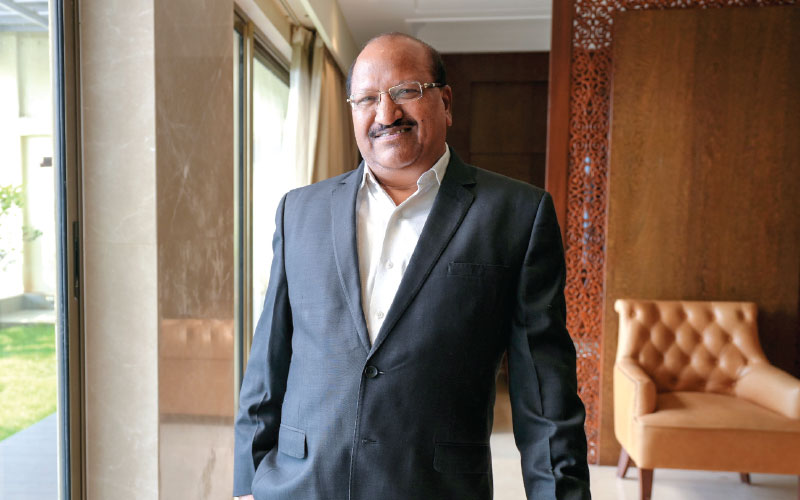
Tube & Pipe India: As companies increasingly advance downstream from steelmaking to finished pipe solutions, and vice-a-versa, how is integration reshaping your role as a manufacturer, product supplier and then a solution or execution partner?
Shiv Kumar Singhal: Pipe/tube manufacturer’s role is no longer limited to achieving high volume tonnage. Integration allows manufacturers to control cost, chemistry of the steel, precision of the mill, reduce waste and ensure that the raw material properties perfectly match with the performance requirements of the finished products.
In a fragmented market, a supplier simply fulfills an order. In case of integration, suppliers become technical advisor, can influence the bill of materials early – recommending specific grades or coatings to improve the longevity rather than just delivering the materials.
Moving towards downstream means manufacturers have to take responsibility for the overall performance of the pipes, managing logistic, full traceability of the products, maintaining data and helping right from steelmaking to installation. But non-integrated players cannot provide a total solution.
Integration removes margin-on-margin cost structure, eliminates blame game between steel mill, pipe maker and user. Integration is shifting the business model from a transactional commodity seller to a strategic lifecycle partner.
TPI: How does integration strengthen your competitiveness in the overall ecosystem of the steel sector?
SKS: Integration, whether vertical or horizontal, strengthens a primary or secondary steel maker’s competitiveness through input cost control, operational synergy, energy efficiency and higher margin. Upward and backward integration insulates companies from volatile raw material prices, and ensures uninterrupted supply of inputs at cost which provides a huge advantage over competitors who have to buy at market rates during price hikes. Integrated operations reduce time, manpower requirements, energy consumption and wastages.
Expanding into downstream processes allow companies to capture higher margins and also make them sought after integrated players who can supply tailored made products like galvanised seamless pipes, coated pipes and high end products made to order.
Integration transforms a company from just a simple manufacturer into a self-sustainable company who can survive a downturn better than a non-integrated company.
TPI: In which segments (oil & gas, water, infrastructure, construction) influence the performance of your downstream pipe/tube products?
SKS: The performance of downstream pipe and tube products is heavily influenced by the oil & gas segment. This segment drives the demand for pipes and tubes along with other allied sectors. Exploration, subsea pipe line, cross country pipe line, refinery activities and expansion dictate the demands. Performance here relies on high–strength, corrosion resistant pipes capable of handling extreme pressures and sour environments.
The infrastructure and construction segment drive the volume of structural pipes and mechanical tubing. Heat exchanger, super heaters, boiler tubes which can withstand high temperatures mainly used in power and refineries influence the performance of downstream pipe/tube products.

We are expanding capacity utilization to meet rising demand of the infrastructure sector and diversifying product portfolios into high growth segments like renewable energy, automotive industries, high pressure gas cylinder pipes, and corrosion resistant subsea pipelines.
TPI: To what extent does control over raw materials and steel quality influence the performance of your downstream pipe/tube products?
SKS: Performance of downstream pipe and tubes is highly influenced by the quality of raw materials. High quality raw materials ensure superior tensile and yield strength which are critical for pipes. Strict control of chemical properties like chrome, moly and carbon content which determine the corrosion resistance, high temperature strength and hardness are very important to withstand a specific harsh environment. Clean steel with consistent chemical composition, restriction on sulfur & phosphorus ensures better weldability and defect free finished products. High quality steel with refined microstructure helps manufacturers to achieve required hardness and ductility after heat treatment. Dimensional accuracy helps to maintain strict wall thickness and diameter tolerance. Quality raw material reduces the risk of failure such as leaks and structural failures.
While high grade raw materials may have higher initial cost but it provides long term cost efficiency by reducing wastage, rejections, low maintenance and repair cost.
TPI: Could you walk us through the innovations, capacity expansion, or product portfolio diversification you have been working on in the steel pipe/tube sector?
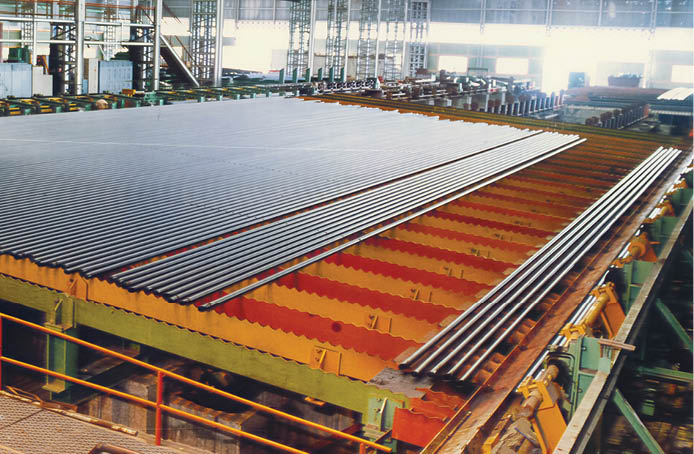
SKS: We are manufacturing a full basket of SMLS & ERW steel pipe/tubes with highest range from ½” to 24” with additional facilities for coating, galvanizing etc. i.e. total piping solution under one roof. Such diversified product portfolios no other manufacturer possesses in India. We manufactured the higher diameter seamless pipes of size 24” for the first time in India. MSL is an exclusive manufacturer of 18” to 24” seamless pipes in India, thin walled seamless pipe (size 10” to 14” sch. 20) and facilitates timely delivery as per project schedule.
Innovation efforts are focused on the production of pipes for hydrogen gas applications to meet anticipated future demand. The company is also concentrating on the development of high-strength alloys to cater to the growing requirements of the nuclear, marine, and petrochemical sectors.
A new draw bench has been installed to manufacture CDS tubes in order to meet the increasing demand for various precision applications, including the bearing sector.
Investments are being made in automation, along with the establishment of new finishing lines and heat treatment facilities, to debottleneck and enhance the efficiency of the production line.
Further, we are expanding capacity utilization to meet rising demand of the infrastructure sector and diversifying product portfolios into high growth segments like renewable energy, automotive industries, high pressure gas cylinder pipes, and corrosion resistant subsea pipelines.
TPI: Are customers increasingly demanding turnkey or execution-linked solutions along with pipe/tube supply? And how do you view this demand growing in future? Please elaborate.
SKS: Customers, especially in large scale infrastructure and oil & gas projects prefer a single point accountability to reduce risk of coordination delays among multiple vendors. Nowadays, customers prefer to have turnkey and execution-linked solutions along with pipe and tube supply. The market is increasingly shifting from a supply-only model to an integrated model where contractors are engaged for complete packaged solutions from engineering, procurement and final commissioning. Turnkey project provides cost and time efficiency. Technical complexities involved in modern facilities are easily resolved by experienced turnkey contractors which suppliers very often cannot handle.
Nowadays, customers expect pre-fabricated components such as pipes already cut to precision, threaded, coated or NDT tested to ensure they are ready for installation immediately after delivery. There is a rising trend towards modular fabrication where piping systems are fabricated off-site and then quickly assembled on-site to improve precision, reduce time and labour cost.
Further, as the industry is focusing on ESG mandate demand is growing for turnkey or execution–linked solution providers who can offer eco-friendly materials and energy efficient solutions to reduce carbon footprint.
Integration transforms a company from just a simple manufacturer into a self-sustainable company who can survive a downturn better than a non-integrated company.
TPI: What is your mantra for offering best turnkey solutions to the customers? How important is it to maintain healthy relationships with EPC Contractors?
SKS: One-stop shop solution gives customers peace of mind and fixed price assurance. Therefore, customers look forward to having single point accountability for everything from design, procurements, installation etc. To offer the best turnkey solution, focus should be on prioritising transparency to provide clear defined project scope & proposal, technological advancement, to address budget constraint and fulfil specific customer need and achieve customer goal.
Healthy partnerships with EPC contractors are very important because they directly impact project quality, cost and future opportunities. Good relationship with EPC contractors helps in achieving operation efficiency by leveraging purchasing power through their established supplier to secure materials at better rates. A healthy relationship always helps in risk mitigation; prevents dispute and delays in project execution. Big projects always face hurdles which can be resolved mutually with good relationships. Good business relationships always help in long term growth in terms of future business and bring repeat order.
TPI: What are the key operational and financial challenges in building and sustaining an integrated steel-to-pipes/tubes model?
SKS: Key operational and financial challenges are primarily driven by the high capital intensity of the sector and volatility of the global steel market. Main operational difficulty lies in managing a vast multi-stage production chain that ranges from raw materials to finished pipes/tubes. Supply chain disruption and international trade policies at times leads to delay in production and increases cost.
Ensuring consistency from molten metal to the finished pipes/tubes is difficult. Variations in raw material properties can compromise the quality of the pipe. Transportation of heavy raw material (Steel) and voluminous finished pipe is a challenge. Inadequate rail capacity and port congestion often lead to inventory carrying cost.
The shift toward automation has increased demand for highly skilled technicians. Many firms face a shortage of personnel trained in modern manufacturing. Integrated models carry high fixed costs, making them highly sensitive to demand fluctuations.
Increasingly strict global regulations on carbon emissions (e.g., net-zero targets) require massive investment in green technologies like hydrogen-based steelmaking and carbon capture. These upgrades are often difficult to justify financially due to uncertain returns. Producers face intense price pressure from lower-cost imports, particularly from countries like China.
Also Read: Avon Steel Industries Meets Evolving Market Demands with Precision-Driven Steel Products
TPI: Going forward, do you see integration and turnkey capability becoming essential for growth, or remaining segment-specific strategies?
SKS: Historically the construction and oil & gas segment have been relying on turnkey models. But now it has become preferable for customers to have a one stop turnkey solution for any project irrespective of any segments. Businesses are moving from viewing integration as a one-time project to a continuous Integrations-as-a-Service. Integration & turnkey solution is becoming essential for growth because it can complete large projects ahead of schedule by eliminating inter-contractor coordination. It is also cost effective and reduces maintenance cost.
The market is increasingly shifting from a supply-only model to an integrated model where contractors are engaged for complete packaged solutions from engineering, procurement and final commissioning.