
The steel tube and pipe industry is witnessing a steady transition from volume-driven manufacturing to application-oriented, quality-focused production. As end-use industries demand higher durability, precision, and compliance with global standards, manufacturers are being compelled to strengthen integration, improve process control, and expand into value-added offerings. Avon Steel Industries Private Limited is aligning itself with this shift through backward integration, technology investments, and a growing focus on customized tubular solutions. In an exclusive interview with Tube & Pipe India, Mr. Rajesh Tripathi, Sales Head, Avon Steel Industries Private Limited, discusses how the company is navigating changing steel dynamics, enhancing product quality, and building long-term competitiveness through operational efficiency and application-specific innovation.
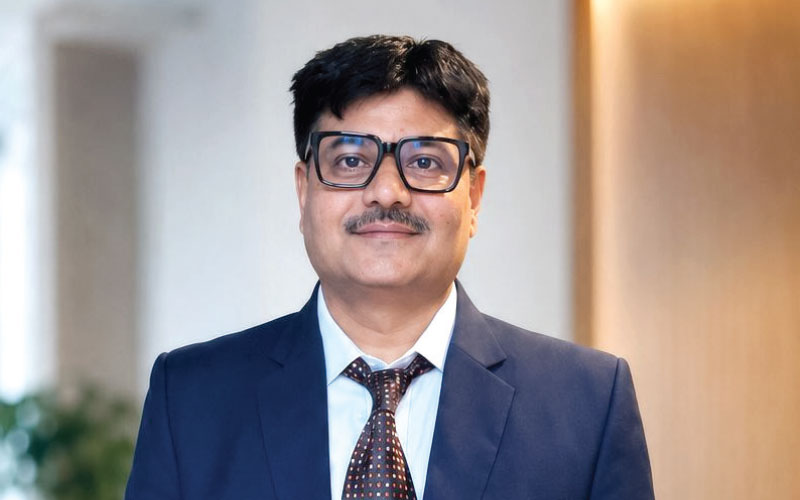
Tube & Pipe India: How are the evolving steel dynamics- quality, pricing, availability, shaping your manufacturing strategy of steel pipes, tubes and other products?
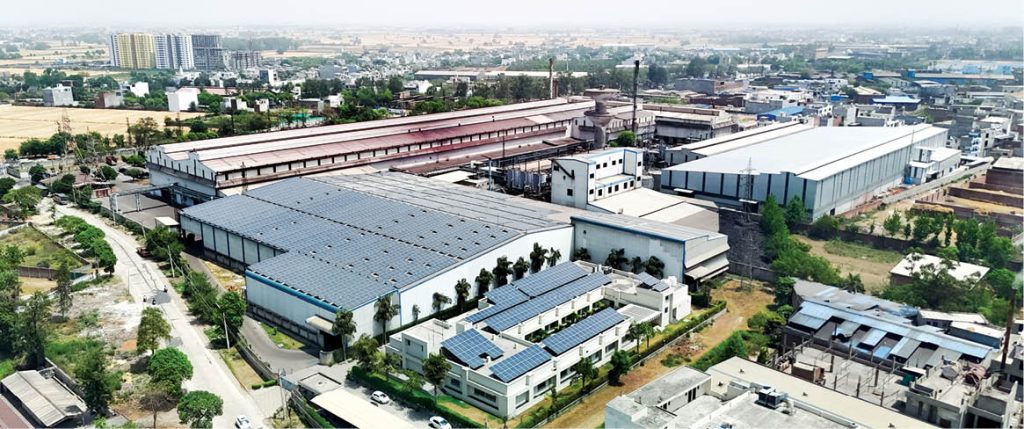
Rajesh Tripathi: Avon Steel Industries operates as a vertically integrated steel manufacturer, producing hot-rolled coils, ERW pipes, galvanized pipes, and hollow sections for sectors like infrastructure, automotive, and construction. Its backward integration—from slabs to coils to tubes— gives it tighter control over raw material sourcing and product quality.
Rising demand for high-strength, corrosion-resistant, and application-specific steel—particularly across infrastructure, automotive, and export markets—is driving increasing adherence to global standards for pipes and tubes. In response, Avon Steel Industries is focusing on value-added products such as ERW tubes and precision hollow sections. The company has also invested in modern ERW tube mills and advanced strip mill technology to ensure consistent quality, while leveraging in-house HR coil production to maintain quality consistency across the value chain. This quality evolution is pushing Avon toward premiumization and tighter process control, rather than volume-only growth.
Backward integration reduces dependence on external suppliers, thereby cushioning the impact of price shocks. At the same time, Avon is focusing on operational efficiency and cost optimization to navigate market volatility more effectively. The company’s shift toward value-added downstream products, including pipes and tubes, offers better margins compared to raw steel. As a result, pricing volatility is encouraging Avon to move further up the value chain and optimize cost structures, rather than compete purely on commodity pricing.
Strong backward integration into hot-rolled coil production ensures internal raw material availability, while reduced reliance on external suppliers enhances supply chain resilience and production continuity.
Simultaneously, Avon is aligning its portfolio toward high-demand, application-driven tubular products to strengthen its position in evolving domestic and export markets.
TPI: In the tube and pipe sector, how critical is steel quality in determining product performance, reliability, and end-use acceptance? How do you ensure the best quality of your pipes and tubes?
RT: At Avon Steel Industries, we recognize that even minor variations in steel composition or processing can significantly impact load-bearing capacity, corrosion resistance, weld integrity, and lifecycle performance of pipes and tubes. This is particularly critical because our products are used in high-performance and safety-critical applications, where reliability compliance with standards are essential. High-quality Avon steel pipes ensure superior mechanical properties, enabling pipes and tubes to withstand pressure, stress, and harsh environments.
Customers demand strict adherence to certified ISO approved material, which is only possible with high-grade steel and controlled manufacturing processes. We ensure strict inspection of raw materials before production. Continuous process control minimizes defects and maintains dimensional accuracy. Real-time monitoring at every stage of manufacturing ensures process stability and defect prevention. Finished products are tested before dispatch to ensure compliance with specifications and performance standards. ISO 9001-certified quality management system. Continuous investment in technology upgrades and process improvements to enhance product quality and customer satisfaction.
For Avon Steel Industries, steel quality is not just a parameter—it is the foundation of product performance and brand trust. By combining backward integration, advanced manufacturing, stringent testing, and global standard compliance, we ensure that every pipe and tube delivered meets the highest benchmarks of quality, reliability, and customer satisfaction.
TPI: Which end-use sectors are currently driving demand for your steel products, and how is this influencing your portfolio?
RT: At Avon Steel Industries, demand for our steel products—particularly HR coils, ERW pipes, galvanized pipes, and hollow sections—is driven by a diverse set of high-growth end-use sectors, which significantly shapes our product strategy and portfolio evolution.
Infrastructure & Construction: One of the largest demand drivers, fueled by urbanization, highways and industrial projects. Our pipes, tubes & structural steel are widely used in buildings and structural applications. This sector requires high-strength, durable, and corrosion-resistant steel, pushing us to enhance our structural tubes and hollow section offerings.
Water, Irrigation & Agriculture Sector: Agriculture and irrigation continue to be important contributors, especially in developing regions like India. Steel pipes are widely used for irrigation pipelines, borewells, and water distribution systems. Emphasis on corrosion-resistant GI pipes. Development of cost-effective, durable products suited for rural and agricultural use.
Export Markets: Increasing global demand for steel tubes and pipes is opening new opportunities for us. Avon Steel has been expanding exports, especially in tubular products. This pushes us to align our portfolio with international specifications and high-value products.
TPI: Are customers increasingly looking for application-specific steel products rather than standard offerings? If yes, how are you catering to the demand?
RT: Yes, the shift toward application-specific steel is real and accelerating. Avon Steel Industries is addressing this by moving beyond commodity steel to customized, value-added, and industry-specific solutions, supported by integrated manufacturing, advanced processing, and a strong focus on customer specifications.
At Avon Steel Industries, we have clearly observed a growing preference among customers for application-specific and value-added steel solutions over generic, standard products. Industries today require steel tailored to their exact use cases—whether it is strength, corrosion resistance, dimensional precision, or processing compatibility. Our products Hot rolled coils, ERW steel pipes, galvanized pipes cater to diverse sectors like construction, automotive, and infrastructure. This allows us to align product characteristics with specific industry requirements. Our end-to-end infrastructure enables better control over quality and customization.
This integration helps us modify product specifications efficiently based on customer applications. We focus on value addition through processes like forming, cutting, and surface treatment, ensuring that materials are delivered as per exact customer specifications rather than generic grades. Our products are used across agriculture, infrastructure, bicycles, and engineering industries, each requiring distinct specifications—reinforcing our focus on application-driven solutions.
TPI: With turnkey solutions in the tube & pipe sector taking a gradual and selective spotlight, how do you view your business evolving or what steps are you taking in the direction to provide end-to-end solutions to the customers?
RT: At Avon Steel Industries, we see the shift towards turnkey solutions in the tube & pipe sector as a natural evolution of customer expectations—from product supply to complete, integrated solutions. This is especially relevant as industries increasingly prefer reliable partners who can deliver consistency across the value chain.
Closer collaboration with OEMs, EPC contractors, and infrastructure developers. Bundling products with services like design inputs and supply chain integration. Enhancing digital and service capabilities to support project-based deliveries. In essence, our evolution toward turnkey solutions is less about a shift and more about scaling our existing strengths—integration, quality, and customer-centricity—to deliver seamless, end-to-end value to our customers.

At Avon Steel Industries, we have clearly observed a growing preference among customers for application-specific and value-added steel solutions over generic, standard products.
TPI: Does offering a wider range of turnkey solutions provide a competitive edge, or does it add operational complexity?
RT: Offering a wider range of turnkey solutions does create some operational complexity—but in our view, the competitive advantages far outweigh the challenges, especially when supported by strong integration and process discipline. From a competitive standpoint, turnkey capabilities significantly strengthen our position. Customers today prefer partners who can deliver consistent quality, assured timelines, and reduced coordination efforts. By providing end-to-end solutions we become a more strategic supplier rather than just a product vendor. We view turnkey solutions not as a burden, but as a structured evolution of our business model. The key lies in scaling these offerings in a disciplined and selective manner—where we can maintain reliability while delivering added value.
TPI: How do you ensure consistency and quality across your diversified product portfolio?
RT: Ensuring consistency and quality across a diversified product portfolio is central to our operations, especially as we cater to multiple sectors with varying application requirements. At Avon Steel Industries, this is achieved through a combination of integration, standardization, and rigorous quality control systems. We manufacture in compliance with recognized standards such as IS, BS, EN, supported by ISO-certified quality management systems. These frameworks ensure that every product category—whether structural tubes, GI pipes, or precision tubes—meets consistent benchmarks regardless of application.
By following the standardized systems and rigorous quality check and control, we ensure that every product—regardless of its application or level of customization—delivers the same level of reliability and performance that customers expect from Avon Steel Industries.
TPI: Going forward, will growth be driven more by scale in core products or by diversification into specialized steel applications?
RT: Going forward, we see growth coming from a balanced combination of scaling our core products and selectively diversifying into specialized steel applications, rather than choosing one over the other. Our core offerings—ERW pipes, structural tubes, and galvanized products—will remain the backbone of our business.
Demand from sectors like agriculture, infrastructure, construction, and general engineering continues to be strong and volume-driven. At the same time, there is a clear shift in the market toward application-specific and higher-value steel products. Developing customized tube and pipe solutions for specific end uses. Enhancing value-added offerings such as precision tubes and coated products, and working closely with OEMs and project-based customers for tailored requirements.
Growth for Avon Steel Industries will be driven by a dual strategy—scaling up our core, high-volume product lines while gradually increasing our share in specialized, value-added applications. This approach allows us to maintain stability while capturing emerging opportunities in a competitive steel market.
At Avon Steel Industries, we see the shift towards turnkey solutions in the tube & pipe sector as a natural evolution of customer expectations—from product supply to complete, integrated solutions. This is especially relevant as industries increasingly prefer reliable partners who can deliver consistency across the value chain.