
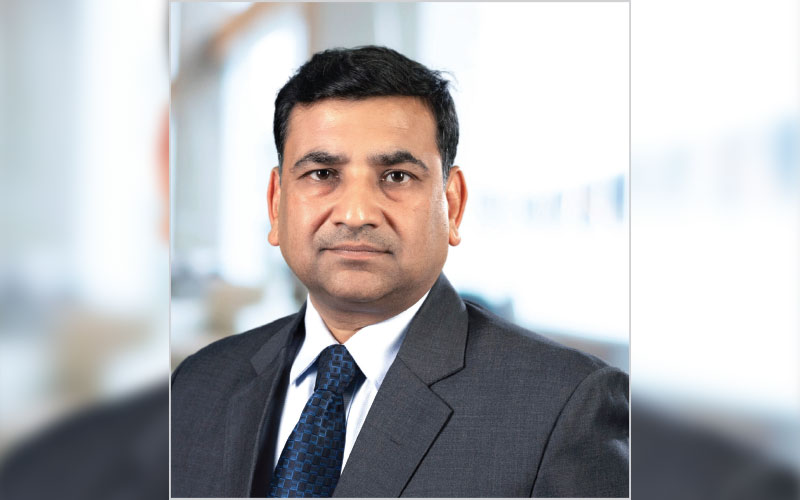
In an exclusive interaction with Tube & Pipe India, Mr. Rajeev Garg, Head – Sales, Jindal Stainless Limited, shares that the company is setting up a steel melt shop in Indonesia leveraging its proximity to key raw materials, mitigating supply chain volatility, strengthening backward integration, and driving long-term cost efficiencies. With this new facility, JSL’s total melting capacity has increased to 4.2 million TPA. Additionally, JSL has earmarked INR 1,900 crore to strengthen its downstream capabilities in India including a 1.1 million TPA HRAP line and a 0.17 million TPA cold rolling capacity addition in Jajpur, Odisha by FY27. The SMS is strategically aligned with Jajpur expansion plan, providing feed stock for downstream capacity. Further, INR 900 crore will be invested in augmenting cold rolling capacities at its Hisar and Kharagpur units. Following these developments, the company’s cold rolled portfolio is expected to contribute approximately 64% of its total melt capacity, rising to nearly 2.67 million TPA by FY28.
Tube & Pipe India: Jindal Stainless has commissioned a new steel melt shop (SMS) in Indonesia. What is the investment cost, infrastructure setup and production capacity of this new facility?
Rajeev Garg: The stainless steel melt shop (SMS) in Indonesia, commissioned though our joint venture (JV), is part of earlier announced investment outlay of INR 700 crore. The facility adds 1.2 million tonnes per annum (MTPA) to our company’s overall melting capacity, which will hence be ramped up to 4.2 MTPA, including 3 MTPA in India.
The commissioning of the Indonesia facility ahead of schedule, complemented with a significant push in downstream capabilities, is an extension of our commitment to raw material security and integrated approach to growth.
TPI: How will this facility contribute to stainless steel production and augment downstream capabilities for the company?
RG: The Indonesia SMS will play a key role in strengthening our integrated operations by expanding melting capacity and supporting the growth of downstream capabilities. The Indonesian SMS is aligned with our plans to commission new HRAP and CRAP lines in Jajpur, Odisha, which will provide feed stock for our downstream capacity. These additions will enhance our ability to produce value-added and thinner cold rolled and products for high-growth sectors, while increasing overall CRAP capacity.
TPI: How does Indonesia serve as a strategic location for setting up this SMS facility?
RG: Indonesia is strategically significant due to its proximity to key raw material resources, particularly nickel, which is essential for stainless steel production. Establishing the facility there reduces exposure to global supply chain volatility, allows us to strengthen backward integration and improves cost efficiencies in the long run.
The SMS also helps diversify our manufacturing footprint geographically, which is increasingly important in managing global uncertainties and ensuring supply continuity.
TPI: Tell us about your investment in the Hot Rolled Annealed Pickled (HRAP) line and the expansion of cold rolling capacity in India? Could you elaborate on the installation location, capital expenditure, and the expected commissioning timeline for the project?
RG: We are undertaking a series of investments to strengthen our downstream capabilities in India: A 1.1 MTPA HRAP line is being set up at our Jajpur facility in Odisha, expected to be commissioned by Q4 FY27. In addition to this, a 0.17 MTPA cold rolling capacity is also being added at Jajpur, expected by Q2 FY27.
The investment for this expansion is part of the outlay expenditure of INR 1,900 crore, announced earlier. In addition, we have committed INR 900 crore towards further expanding cold rolling capacities at Hisar and Kharagpur, with commissioning expected by Q2 FY28. The aim of these investments is to increase the share of cold rolled products and strengthen our downstream value chain. Together, the expanded melting and downstream facilities will enable us to deploy capacity in a calibrated and sustainable manner, strengthening both production capabilities and product offerings.
Production of thinner and more specialised products will further enable us to cater to high-growth and application-driven sectors, and improve overall product mix and value realisation. It strengthens our positioning as a provider of application-specific solutions, rather than just standard products.
TPI: How will these additions – the HRAP line and capacity addition within the cold rolling mill – impact your value-added product mix?
RG: These additions are central to our strategy of moving towards a more value-added product portfolio. Our cold rolling capacity is expected to increase from approximately 2.05 MTPA in FY26 to about 2.67 MTPA by FY28. Post all downstream expansion, our total cold rolled portfolio will account for approximately 64% of total melt capacity.
This production of thinner and more specialised products will further enable us to cater to high-growth and application-driven sectors, and improve overall product mix and value realisation. It also strengthens our positioning as a provider of application-specific solutions, rather than just standard products.
TPI: With the evolving global dynamics, fluctuating product availability and prices, diversified material procurement and logistics are crucial. What are your views on it and long-term strategies to implement stable production and timely deliveries?
RG: In such a scenario, supply chain strategy becomes as critical as production itself. Our long-term approach is built on three pillars: diversifying sourcing to avoid concentration risk, integrating manufacturing capabilities to lower external dependencies and strengthening logistics and supply chain visibility. Together, these measures help us maintain production continuity, manage volatility more effectively, and ensure consistent, timely deliveries even amid changing global conditions.
TPI: Brief us about your long products- tubes and pipes portfolio. What are your specific manufacturing capacities for this portfolio and which application areas do they cater to?
RG: Our stainless steel tubes and pipes portfolio caters to a wide range of applications across infrastructure and construction, process industries, oil & gas and automotive and mobility. These products are valued for their corrosion resistance, strength and durability and suitability for varied applications.
This is also our first segment where we introduced co-branding, enabling our partners to offer premium, authentic, corrosion-resistant products used across railings, facades, furniture and automotive applications.
Also Read: Mukand Sumi Builds Global-Grade Specialty Steel Capabilities from India
TPI: Which countries are you presently targeting for customer base expansion or export growth, and what factors are driving your focus on these markets?
RG: We are focused on strengthening our presence across key global markets, including the United States, Germany, Italy, South Korea, and Japan. These markets are driven by demand for high-quality and value-added stainless steel products and an increasing emphasis on durability and lifecycle performance even for everyday applications. Our approach is to build long-term, stable customer relationships in these regions.
TPI: What are Jindal Stainless’ future plans for the next 5-10 years? Are there any new investment plans or projects in the pipeline?
RG: Our long-term strategy is centered on building a future-ready, value-driven and integrated stainless-steel ecosystem that supports India’s growth and self-reliance. A key focus will be on further driving greater adoption of stainless steel across critical sectors such as infrastructure, transit, defence and aerospace, where safety, durability and quality are paramount.
Our efforts on expanding our melting and downstream capacities are in line with growing demand. Our focus will continue to be on increasing the share of value-added products and diversifying our product mix to cater to evolving application needs. Alongside capacity growth, we will continue investing in ecosystem development through efforts such as Stainless Academy, including skill-building and awareness building, to help shape a stronger and more future-ready industry.
We are focused on strengthening our presence across key global markets, including the United States, Germany, Italy, South Korea, and Japan.