
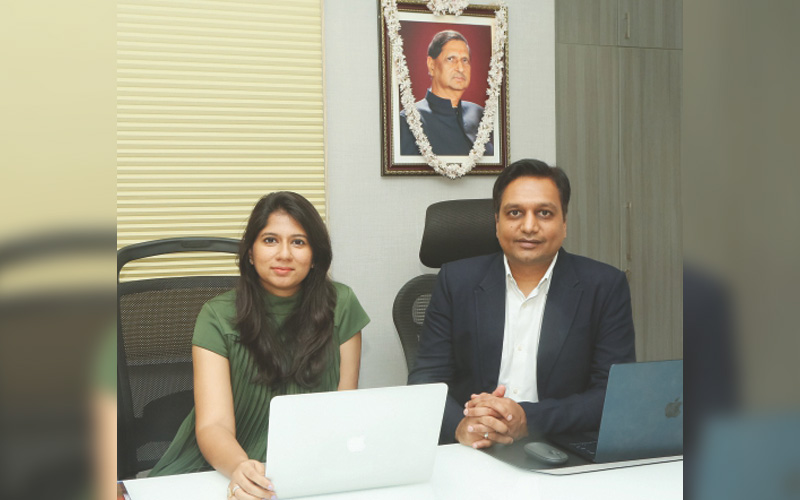
As steel markets evolve with rising quality benchmarks and application-specific demand, the company is sharpening its focus on precision manufacturing, advanced testing, and value-added solutions. In an exclusive interview with Tube & Pipe India, Mr. Nishant Garg and Mrs. Srishti Garg, Directors, MKK Metal Sections Pvt. Ltd., discuss the company’s strategy around quality assurance, and long-term growth in the steel tubes and pipes sector. The interview also talks about how the company is catering to customisation needs by offering tailored dimensions, grades, coatings, and specifications based on industry requirements. With a focus on quality control throughout the process of raw material selection to final inspection, MKK Metal Sections aims to balance both scale and diversification in the steel tube and pipe sector.
Tube & Pipe India: How are the evolving steel dynamics—quality, pricing, and availability—shaping your manufacturing strategy for steel pipes, tubes, and other products?
Nishant Garg: The steel market today is far more dynamic than it was a few years ago, with fluctuations in raw material pricing and increasing expectations around quality and delivery timelines. At MKK Metal Sections Pvt. Ltd., our strategy is focused on maintaining a strong balance between quality consistency, cost efficiency, and supply reliability. We work closely with trusted steel suppliers, optimize inventory planning, and continuously upgrade our manufacturing processes to remain agile and competitive in changing market conditions.
TPI: In the tube and pipe sector, how critical is steel quality in determining product performance, reliability, and end-use acceptance? How do you ensure the best quality of your pipes and tubes?
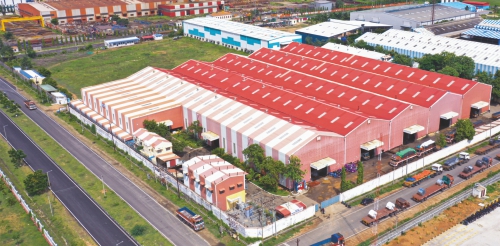
Srishti Garg: Steel quality is absolutely critical in our industry because it directly impacts strength, durability, weldability, and overall product performance. End-use sectors today demand strict adherence to specifications and certifications. At MKK, quality is monitored at every stage – from raw material selection to final inspection. We follow stringent quality control processes, advanced testing standards, and continuous process monitoring to ensure that our pipes and tubes consistently meet both domestic and international requirements. MKK has the most advanced state-of-the-art testing tools like a spectrometer, hydro-tester etc that ensure quality at all stages.
TPI: Which end-use sectors are currently driving demand for your steel products, and how is this influencing your portfolio?
NG: Infrastructure, construction, automotive, renewable energy, engineering, and industrial fabrication are currently among the strongest demand drivers for our products. This shift is encouraging us to expand our portfolio toward higher-value and application-focused products, including precision tubes, structural sections, and specialized grades that cater to evolving project requirements.
TPI: Are customers increasingly looking for application-specific steel products rather than standard offerings? If yes, how are you catering to the demand?
SG: Yes, customer expectations have evolved significantly. Today, many clients prefer customized and application-specific solutions instead of generic standard products. At MKK, we are addressing this by offering tailored dimensions, grades, coatings, and specifications based on industry requirements. Our focus is on understanding the customer’s end application and delivering products that improve performance, efficiency, and long-term value. Apart from regular BIS Licenses (IS:1239 (part-1), IS:3589, IS:4270, IS:1161, IS:4923, IS:3601, IS:9295, we also have EN 10219-1:2006-Construction Product Regulation 305/2011, EN 10255-2004+A1:2007-Construction Product Regulation 305/2011, SLS 829-2009-GI pipes, AFP-3206 (Activfire) for ASTM A135/A53, and AFP-2977 (Activfire) for AS1074 certification. These help us cater to specific demands of clients.
TPI: With turnkey solutions in the tube & pipe sector taking a gradual and selective spotlight, how do you view your business evolving, or what steps are you taking toward providing end-to-end solutions to customers?
NG: The industry is gradually moving toward integrated and solution-oriented partnerships rather than purely transactional supply models. At MKK, we see this as an important opportunity for long-term growth. We are strengthening our capabilities not just in manufacturing, but also in technical support, processing, logistics coordination, and customer servicing to create a more complete value proposition for our clients.
Today, many clients prefer customized and application-specific solutions instead of generic standard products. At MKK, we are addressing this by offering tailored dimensions, grades, coatings, and specifications based on industry requirements. Our focus is on understanding the customer’s end application and delivering products that improve performance, efficiency, and long-term value.
TPI: Does offering a wider range of turnkey solutions provide a competitive edge, or does it add operational complexity?
SG: It does both. Offering turnkey capabilities certainly creates a competitive advantage because customers increasingly value convenience, reliability, and single-point accountability. At the same time, it requires stronger coordination, planning, and operational discipline. We believe companies that can effectively manage this complexity while maintaining quality and delivery standards will emerge as stronger players in the industry.
TPI: How do you ensure consistency and quality across your diversified product portfolio?
NG: Consistency comes from process discipline and continuous monitoring. At MKK, we maintain standardized operating procedures, robust quality checks, and regular equipment calibration across all product lines. Our teams are trained to maintain uniform quality standards irrespective of product category, ensuring reliability and consistency across the portfolio.
Also Read: Not Just a Product Supplier, JTL Industries Aims to be Trusted Solutions Partner
TPI: Going forward, will growth be driven more by scale in core products or by diversification into specialized steel applications?
SG: We believe future growth will come from a balanced combination of both. Scale will continue to be important in core products to remain cost competitive and meet growing market demand. At the same time, diversification into specialized and value-added applications will be key to improving margins, strengthening customer relationships, and differentiating from commodity-driven competition. At MKK, we are focused on building strength in both areas simultaneously.
Diversification into specialized and value-added applications will be key to improving margins, strengthening customer relationships, and differentiating from commodity-driven competition.