
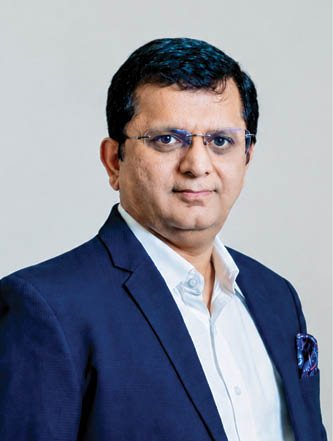
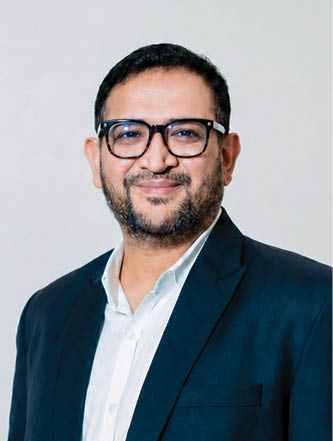
As India’s infrastructure, renewable energy, and industrial sectors gather momentum, the steel tube and pipe industry is evolving amid volatile steel prices, rising quality standards, and increasing demand for application-specific solutions. In an exclusive interview with Tube & Pipe India, Mr. Roopesh Kumar Gupta, Managing Director Representing, Hariom Pipe Industries Limited, and Mr. Shailesh Gupta, Whole-time Director Representing, Hariom Pipe Industries Limited, discusses how the company is strengthening its manufacturing ecosystem through integrated digital systems, workforce training, backward integration, and disciplined process controls. They also highlight the company’s growing focus on value-added and application-specific products, driven by demand from infrastructure, solar energy, railways, and industrial sectors, while sharing their perspective on manufacturing excellence, selective turnkey solutions, and long-term sustainable growth.
Tube & Pipe India: How are the evolving steel dynamics- quality, pricing, availability, shaping your manufacturing strategy of steel pipes, tubes and other products?
Roopesh Kumar Gupta: The current financial year has clearly underscored how dynamic the steel ecosystem has become. Over the course of the year, the industry has witnessed multiple price revisions—typically 5 to 7 cycles— with variations ranging approximately between 8% to 15% across different phases, driven by changes in input costs, supply demand dynamics, and logistics conditions. These frequent movements have reinforced the need for a manufacturing strategy that is predictable, system driven, and resilient rather than reactive.
At Hariom Pipe Industries, we have consciously strengthened our internal control mechanisms through integrated ERP, HRM, and CRM systems, enabling real-time visibility into production planning, inventory movement, cost trends, and market demand. This allows us to respond to fluctuations with speed and accuracy rather than hindsight. Equally important has been our focus on people and process readiness. We conduct regular, structured employee training programs across operations, quality, and planning functions to improve capability in managing variability without compromising output standards. This ensures that volatility is absorbed through efficiency and discipline rather than passed on as inconsistency.
From a product perspective, these dynamics have accelerated our strategic shift toward value-added and application-specific offerings, where decision-making is driven less by short-term price movements and more by performance, reliability, and long-term customer partnerships. Our investments in backward integration, technology upgrades, and capacity augmentation further strengthen availability, cost control, and quality consistency.
Overall, our manufacturing strategy today is designed to operate effectively in an environment where volatility is structural—not cyclical—while continuing to deliver stable quality, dependable supply, and sustainable value to our customers.
TPI: In the tube and pipe sector, how critical is steel quality in determining product performance, reliability, and end-use acceptance? How do you ensure the best quality of your pipes and tubes?
Shailesh Gupta: Steel quality plays a decisive role in determining product strength, dimensional accuracy, corrosion resistance, and long-term reliability in the tube and pipe sector. Even minor variations in input quality can directly impact performance, especially in infrastructure, industrial, and renewable applications.
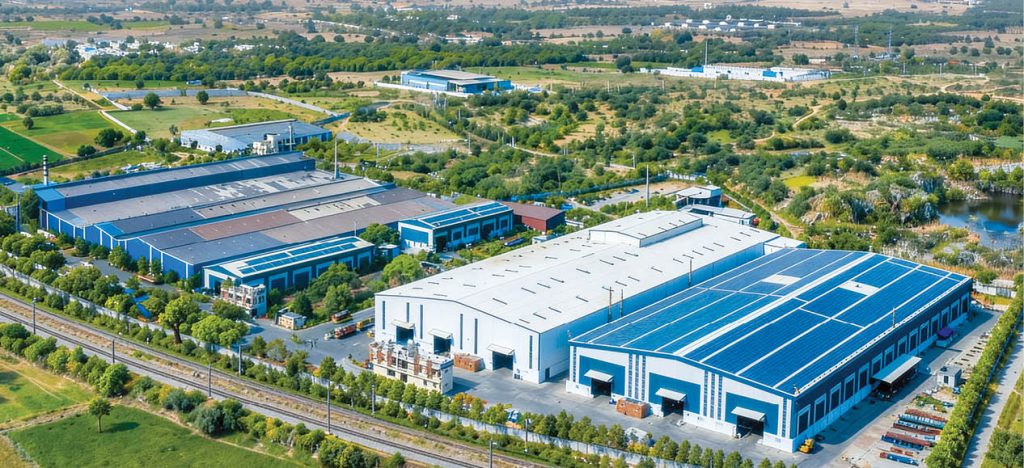
At Hariom Pipe Industries, quality control is embedded across every stage of manufacturing. Operating with a combined capacity of over 700,000 MTPA, we follow standardized operating practices, rigorous input inspections, process checkpoints, and in-house testing aligned with BIS specifications. Our focus is on consistency rather than correction, supported by disciplined process control, skilled manpower, and continuous monitoring. This approach ensures that products supplied across more than 625+ dealers in five southern states meet uniform quality expectations, regardless of application or geography.
TPI: Which end-use sectors are currently driving demand for your steel products, and how is this influencing your portfolio?
RKG: Demand for steel pipes and tubes continues to be driven by infrastructure development, construction, EPC projects, industrial manufacturing, and renewable energy. Among these, renewable energy—particularly solar power—has emerged as a strong and evolving demand segment, supported by India’s rapid transition toward sustainable and green energy infrastructure. Solar power plants, along with railways and auto ancillaries, are contributing steadily to requirement growth for high-performance tubular products.
This evolving demand mix has had a defining influence on our portfolio strategy. While structural and core products continue to provide volume stability, over 60% of our installed capacity is now oriented toward value-added products, reflecting a clear shift toward application-specific, higher-specification offerings. We have expanded capabilities to support sectors such as solar, where consistency, durability, and corrosion resistance are critical.
Aligned with our long-term growth roadmap, we have also signed an MoU with the Government of Maharashtra to expand our operations in Gadchiroli, marking an important milestone for Hariom Pipe Industries. This initiative strengthens our geographical footprint and positions us closer to emerging demand hubs, particularly in infrastructure and renewable energy.
Overall, our portfolio is designed to balance scale with specialization, enabling us to serve diverse industries while minimizing dependence on any single sector and supporting sustainable, future-ready growth.
TPI: Are customers increasingly looking for application-specific steel products rather than standard offerings? If yes, how are you catering to the demand?
SG: Yes, customers are increasingly seeking application-specific products tailored to load conditions, environmental exposure, and installation requirements, rather than standard-grade offerings.
To meet this demand, we have developed manufacturing flexibility across our facilities to produce pipes and tubes in multiple sizes; thickness ranges from 0.5 mm up to 3.5 mm, and varied coatings. Our teams work closely with customers to understand end-use conditions and recommend suitable specifications, which reduce secondary processing and improves onsite performance. This capability has helped us strengthen relationships in sectors where performance consistency and dimensional precision are critical.
TPI: With turnkey solutions in the tube & pipe sector taking a gradual and selective spotlight, how do you view your business evolving or what steps are you taking in the direction to provide end-to-end solutions to the customers?
RKG/SG: We view turnkey solutions as an evolutionary opportunity rather than a blanket strategy. Customers increasingly expect suppliers to provide more than just products — timely deliveries, technical clarity, and application guidance are becoming equally important. At Hariom Pipe Industries, our approach is selective. We are strengthening internal systems, logistics coordination, and technical support capabilities while Accounting On ground Feedback and Market Analysis to offer end-to-end value where it complements our manufacturing strength, without diluting operational focus. This ensures that solution-oriented engagement enhances customer outcomes while maintaining execution discipline.
At Hariom Pipe Industries, we have consciously strengthened our internal control mechanisms through integrated ERP, HRM, and CRM systems, enabling real-time visibility into production planning, inventory movement, cost trends, and market demand. This allows us to respond to fluctuations with speed and accuracy rather than hindsight. Equally important has been our focus on people and process readiness.
TPI: Does offering a wider range of turnkey solutions provide a competitive edge, or does it add operational complexity?
RKG: Turnkey solutions can provide a competitive edge when implemented with clarity and scale alignment. However, indiscriminate expansion into non-core areas can add operational complexity and execution risk. Our philosophy is to build depth before breadth. Competitive advantages come from reliability, consistency, and execution strength. By focusing on manufacturing excellence, integrated operations, and system driven planning, we ensure that any value-added service enhances competitiveness rather than fragmenting focus.
TPI: How do you ensure consistency and quality across your diversified product portfolio?
SG: Consistency across a diversified portfolio is achieved through standardization of processes, disciplined supervision, and uniform quality benchmarks across all facilities.
All plants operate under common manufacturing protocols, inspection practices, and quality documentation systems. Workforce training, process reviews, and periodic audits ensure that product quality remains consistent regardless of plant location or end-use application.
This enables us to scale operations while maintaining reliability across both core and value-added products.
Also Read: From Raw Material Selection to Final Inspection, MKK Metal Sections Focuses on Steel Quality
TPI: Going forward, will growth be driven more by scale in core products or by diversification into specialized steel applications?
RKG: Future growth will be driven by a measured combination of scale and specialization. Core products will continue to provide volume stability and operational leverage, particularly as infrastructure spending accelerates.
At the same time, diversification into specialized and value-added steel applications will play a critical role in margin expansion and long-term differentiation. Our strategy is to scale responsibly while deepening our presence in segments where quality, reliability, and application-specific performance command greater value.
While structural and core products continue to provide volume stability, over 60% of our installed capacity is now oriented toward value-added products, reflecting a clear shift toward application-specific, higher-specification offerings. We have expanded capabilities to support sectors such as solar, where consistency, durability, and corrosion resistance are critical.