
Rapid shifts in steel pricing, evolving quality benchmarks, and rising demand for customized applications are redefining priorities across the tube and pipe manufacturing sector. Customers today are increasingly seeking suppliers capable of delivering not only quality products, but also technical reliability, consistency, and integrated support across the value chain. Against this backdrop, manufacturers are being compelled to strengthen operational discipline, invest in process optimization, and move toward higher-value, application-focused offerings. In an exclusive interview with Tube & Pipe India, Mr. Mahesh Chandra Garg, Chairman, Goodluck India Ltd., shares his perspective on changing market dynamics, the growing relevance of turnkey capabilities, and how the company is positioning itself for long-term growth through precision manufacturing, customer collaboration, and portfolio diversification.
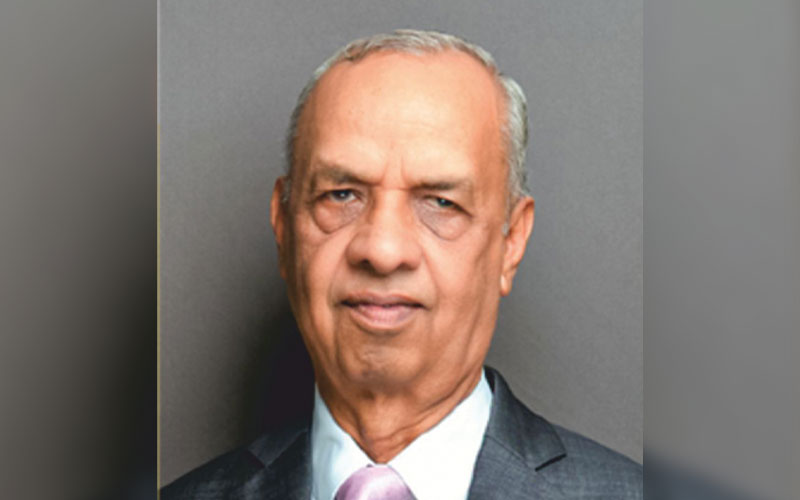
Tube & Pipe India: How are the evolving steel dynamics—quality, pricing, availability—shaping your manufacturing strategy of steel pipes, tubes and other products?
Mahesh Chandra Garg: The steel industry today is witnessing a significant transformation driven by fluctuations in raw material pricing, evolving quality standards, global trade regulations, and sustainability expectations. For manufacturers like us, adaptability has become equally important as scale.
Our strategy is focused on three key pillars — quality consistency, supply chain resilience, and operational efficiency. We work closely with approved steel suppliers to ensure stable quality and traceability of raw materials, while simultaneously optimizing inventory planning to manage price volatility and availability challenges.
At the manufacturing level, we continue investing in process automation, testing infrastructure, and production optimization to improve yield, reduce variability, and maintain competitiveness. The market today demands not only cost-effective products, but also reliability, compliance, and long-term performance, and our manufacturing philosophy is aligned accordingly.
TPI: In the tube and pipe sector, how critical is steel quality in determining product performance, reliability, and end-use acceptance? How do you ensure the best quality of your pipes and tubes?
MCG: Steel quality is the foundation of the tube and pipe industry. The mechanical properties, dimensional accuracy, weld integrity, corrosion resistance, and long-term durability of the final product are all directly influenced by the quality and consistency of the steel used.
In critical applications such as automotive, infrastructure, engineering, construction, energy, and precision engineering, even minor inconsistencies can impact performance and customer confidence. Therefore, quality cannot be treated as a checkpoint — it must be embedded throughout the manufacturing process.
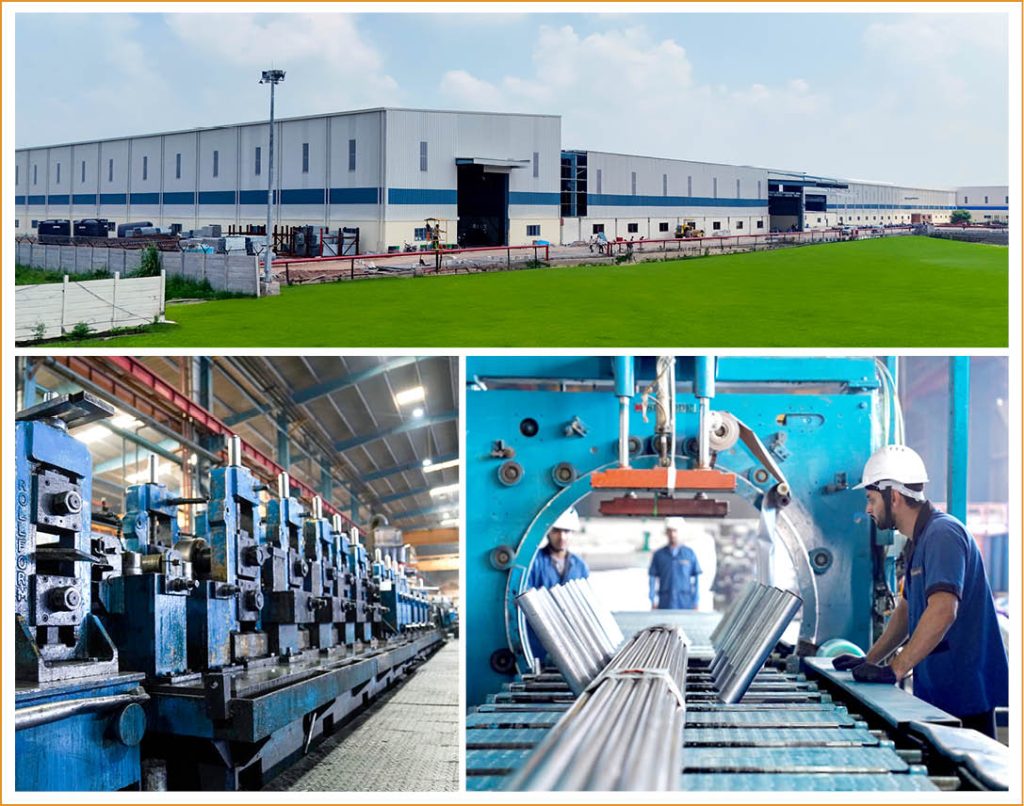
At our facilities, quality assurance begins from raw material selection itself. We source steel only from approved and reputed mills, followed by stringent incoming inspection protocols. During production, we maintain strict process controls, online monitoring systems, dimensional inspections, weld quality verification, and multiple stages of testing including mechanical, chemical, coating, and surface evaluations.
In addition, we continuously invest in advanced testing equipment, process upgrades, and workforce training to ensure our products consistently meet international standards and customer-specific requirements.
TPI: Which end-use sectors are currently driving demand for your steel products, and how is this influencing your portfolio?
MCG: Currently, demand is being driven strongly by sectors such as infrastructure, automotive, construction, renewable energy, engineering, industrial fabrication, and global OEM supply chains.
Infrastructure expansion and urban development continue to create sustained demand for structural and construction-grade tubes. Simultaneously, engineering and automotive sectors are increasingly seeking higher precision, tighter tolerances, improved surface finish, and application-specific solutions.
This evolving demand profile is encouraging us to diversify our portfolio toward higher value-added products, specialized coatings, precision tubes, and customized solutions rather than focusing solely on commodity volumes. The market today is clearly shifting toward performance-oriented products, and we see this as a long-term direction for the industry.
TPI: Are customers increasingly looking for application-specific steel products rather than standard offerings? If yes, how are you catering to the demand?
MCG: Yes, absolutely. Customers today are far more application-focused than before. Different industries have highly specific requirements related to strength, dimensional tolerances, coating thickness, corrosion resistance, machinability, and processing compatibility. As a result, standardized products alone are no longer
sufficient in many segments. Customers increasingly expect solutions tailored to their exact operational and technical needs.
To cater to this demand, we work closely with customers right from the development stage. Our approach involves understanding the end application in detail and then aligning material selection, manufacturing parameters, coating specifications, testing protocols, and packaging systems accordingly.
This collaborative and solution-oriented approach helps us create long-term partnerships instead of transactional business relationships.
TPI: With turnkey solutions in the tube & pipe sector taking a gradual and selective spotlight, how do you view your business evolving or what steps are you taking in the direction to provide end-to-end solutions to customers?
MCG: The industry is gradually moving toward integrated and value-added partnerships where customers prefer suppliers capable of offering not just products, but dependable end-to-end support. We believe turnkey capabilities will become increasingly important, especially for global customers seeking consistency, technical coordination, and supply chain reliability under a single platform.
In this direction, we are strengthening our capabilities across product development, processing, coating solutions, quality assurance, logistics coordination, and technical support. Our focus is on becoming a long-term strategic manufacturing partner capable of supporting customers from concept to execution.
However, we also believe that turnkey solutions must be built carefully and sustainably. The objective should not merely be expansion, but creating a system that genuinely improves efficiency, accountability, and customer value.
Steel quality is the foundation of the tube and pipe industry. The mechanical properties, dimensional accuracy, weld integrity, corrosion resistance, and long-term durability of the final product are all directly influenced by the quality and consistency of the steel used.
TPI: Does offering a wider range of turnkey solutions provide a competitive edge, or does it add operational complexity?
MCG: In reality, it does both. A wider range of turnkey solutions certainly provides a strong competitive advantage because customers today value convenience, technical integration, accountability, and supply reliability. The ability to offer multiple solutions under one roof strengthens customer confidence and deepens business relationships. At the same time, diversification also increases operational complexity in terms of quality management, technical expertise, production planning, and coordination across multiple functions.
The key lies in balancing expansion with operational discipline. At our organization, we prioritize controlled growth supported by strong systems, process standardization, technical competency, and continuous monitoring. We believe sustainable diversification creates long-term value only when backed by operational excellence.
TPI: How do you ensure consistency and quality across your diversified product portfolio?
MCG: Consistency can only be achieved through systems, discipline, and continuous improvement. Across our product portfolio, we maintain standardized manufacturing procedures, strict quality protocols, traceability systems, and defined inspection mechanisms at every stage of production. We have also invested significantly in modern machinery, testing laboratories, calibration systems, and process monitoring technologies to minimize variation and improve repeatability.
Equally important is our focus on people. Continuous training, technical development, and a quality-driven work culture play a major role in ensuring consistency across all product categories. For us, quality is not limited to compliance alone — it is about delivering reliability and confidence to the customer every single time.
TPI: Going forward, will growth be driven more by scale in core products or by diversification into specialized steel applications?
MCG: Going forward, we believe the industry’s strongest growth will come from a balanced combination of both. Scale will continue to remain important for operational efficiency, competitiveness, and market presence in core product categories. However, long-term differentiation and sustainable value creation will increasingly come from specialized and application-oriented products.
Global customers today are looking beyond volume. They are evaluating suppliers based on technical capability, quality consistency, customization, sustainability readiness, and solution-oriented manufacturing.
Therefore, our growth strategy is focused not only on expanding capacity, but also on moving progressively toward higher value-added products, advanced applications, and stronger customer integration. We see the future of the steel tube and pipe industry being driven by innovation, precision, and reliability rather than commoditization alone.
The industry is gradually moving toward integrated and value-added partnerships where customers prefer suppliers capable of offering not just products, but dependable end-to-end support. We believe turnkey capabilities will become increasingly important, especially for global customers seeking consistency, technical coordination, and supply chain reliability under a single platform.