
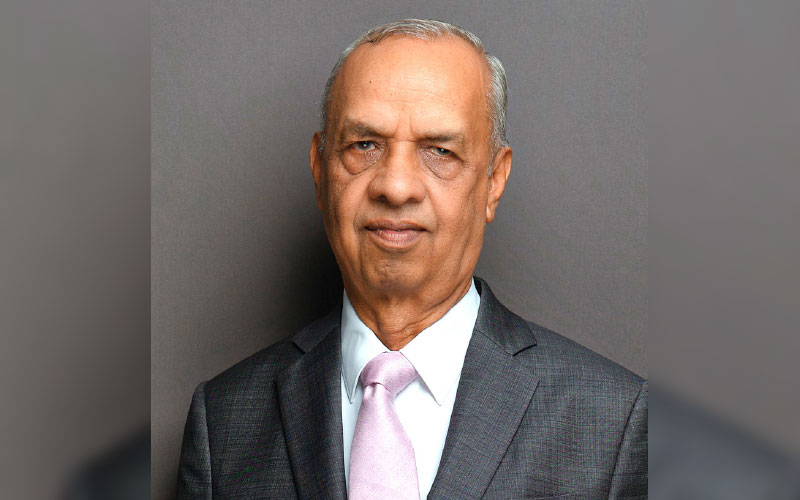
Goodluck India is strengthening its tube and pipe portfolio with a focus on precision tubes and structural products, backed by planned investments of around INR 200 crore over the next one to two years, with a key focus on expanding its Precision Tubes facility at Sikandrabad. The investment is being directed towards the installation of a new tube mill, specialized machinery for front-fork production and the expansion of its cold-drawn tube manufacturing facility to cater to export requirements. The company is also expanding its manufacturing footprint in Gujarat with a new tube mill and an additional galvanizing (GI) facility. In an exclusive interview with Tube & Pipe India, Mr. Mahesh Garg, Chairman, Goodluck India Limited, highlighted the company’s expanding OEM-focused business, AI-enabled planning and growing opportunities across automotive, construction and engineering sectors.
Tube & Pipe India: Please briefly introduce your company’s tube and pipe product portfolio and the end-user sectors it caters to.
Mahesh Garg: Goodluck India Limited is a diversified engineering and steel products manufacturer with a strong presence in precision tubes, automotive tubes, welded pipes and value-added tubular products. Within our tube and pipe portfolio, we manufacture cold drawn welded (CDW) tubes, ERW precision tubes, engineering tubes, ERW black pipes, hot-dip galvanized pipes, red-painted pipes, hollow sections and electrical conduits, including EMT and rigid conduits.
Our CDW and ERW precision tube business is particularly focused on applications where dimensional accuracy, surface quality, mechanical properties and consistency are critical. These products are used in automotive components, hydraulic cylinders, construction and earth-moving equipment, agricultural machinery, general engineering, tractor components, industrial machinery and other precision applications.
Our precision tube portfolio covers both standard and customer-specific requirements in terms of diameter, wall thickness, tolerance, surface condition, heat treatment and length. Goodluck’s precision tube division is IATF 16949 certified and serves customers in automotive and engineering industries globally.
On the conventional pipe side, our portfolio includes ERW black and galvanized pipes, painted pipes and conduits, serving applications in infrastructure, construction, water management, electrical installations, scaffolding, solar structures, transmission and other industrial applications.
A key strength of Goodluck is that we are able to address both high-volume pipe requirements and high-value precision tube applications, giving us a diversified exposure across automotive, infrastructure, engineering and industrial sectors.
TPI: Could you elaborate on your production capacities across your tube and pipe product categories?
MG: For our precision pipes & auto tubes business, the company’s capacity reached approximately 250,000 MTPA in FY2025-26, following the commissioning of a new 60,000 MTPA precision tube facility. This increased capacity is intended to support growing demand from automotive, construction equipment, engineering and other high-value applications.
The new large-diameter facility at Sikandrabad has significantly enhanced our manufacturing capability. The facility provides capability for ERW precision tubes up to approximately 245 mm OD and 17 mm thickness, CDW tubes with large-diameter capability extending up to approximately 230 mm OD and 16 mm thickness, depending on the product configuration, and dedicated inspection capabilities including eddy current testing, ultrasonic testing and magnetic resonance testing.
For our broader tubes & pipes business, Goodluck has a combined manufacturing capacity of approximately 600,000 MTPA, covering products such as ERW black pipes, galvanized pipes, hollow sections and other welded tubular products. The business also has substantial galvanizing capability, supporting the production of value-added GI pipes. From a product-range perspective, our published CDW capability extends from approximately up to 230 mm OD, while ERW tube capabilities extend to approximately 245 mm OD in the large-diameter facility.
The important point is that our capacity expansion is not only about increasing tonnage. We are simultaneously increasing our ability to manufacture larger diameters, tighter tolerances, higher-value grades and application-specific precision tubes.

A key strength of Goodluck is that we are able to address both high-volume pipe requirements and high-value precision tube applications, giving us a diversified exposure across automotive, infrastructure, engineering and industrial sectors.
TPI: Could you share the recent developments, innovations, and strategic initiatives your company has undertaken in the tube and pipe segment?
MG: One of our key strategic initiatives is the planned investment of around INR 200 crore over the next one to two years to further strengthen our precision tubes and structural products business. A significant part of this investment is being utilized for the expansion of our precision tubes facility at Sikandrabad, where we are installing a new tube mill along with specialized machinery for front-fork production. We are also expanding our cold-drawn tube manufacturing facility to cater to growing export requirements.
In addition, we are increasing our manufacturing capacity in Gujarat through the installation of a new tube mill and an additional galvanizing (GI) facility. These investments are aimed not only at increasing production capacity but also at strengthening our capabilities in higher-value and application-specific products.
One of our other significant developments has been the commissioning of our large-diameter CDW and ERW precision tube facility at Sikandrabad in 2024. Recently, we have also added honing and SRB processes to offer greater value addition with our precision tubes. This reflects our continued shift towards value-added and application-specific products. Instead of competing only in conventional commodity tubes, we are increasingly focusing on products where customers require tighter dimensional control, better surface quality, specific heat-treatment conditions and application-specific performance.
TPI: What is currently the biggest challenge faced by the tube and pipe industry?
MG: I would say the biggest challenges for us are raw material volatility, global tariffs, pricing pressure, CBAM, where correct data is the biggest challenge, and freight costs, which have increased fourfold because of geopolitical tensions. Another major challenge is meeting the ever-increasing demand for better quality and shorter lead times.
Steel is the primary raw material for our industry, and fluctuations in steel prices, energy costs, freight rates and other input costs can have a significant impact on manufacturing economics. At the same time, customers are looking for competitive pricing while expecting increasingly stringent requirements in terms of quality, dimensional tolerances, surface finish, and traceability and delivery performance.
For manufacturers serving international markets, another challenge is the changing global trade environment. Factors such as anti-dumping measures, tariffs, changing trade regulations, freight volatility and geopolitical developments can influence sourcing decisions and market competitiveness.
The industry is also experiencing a shift in customer expectations. Traditionally, many tube and pipe products were evaluated primarily on price. Today, especially in automotive, hydraulic and engineering applications, customers increasingly evaluate suppliers based on product consistency, process capability, quality systems, traceability, delivery reliability, technical support, the ability to develop customized products and sustainability. Therefore, manufacturers need to invest continuously in technology, automation, quality systems and skilled manpower.
For Goodluck, we see this challenge as an opportunity to differentiate ourselves through precision manufacturing, value-added products, process control and strong customer relationships, rather than competing purely on commodity pricing.
TPI: How important are automation and digitalization in your future growth plans. Which manufacturing or quality control improvements have delivered the measurable benefits for your operations?
MG: Automation and digitalization are becoming increasingly important in our manufacturing strategy. For precision tubes, consistency is extremely important because even small variations in dimensions, weld quality or surface condition can affect the customer’s downstream manufacturing process. We added MRT and Auto measurement system to increase our operation capability and quality.
From our perspective, the real value of automation is not simply reducing the workforce. It is about achieving better consistency, fewer defects, improved productivity, lower rejection, better traceability and improved customer confidence. Going forward, we see further opportunities in real-time process monitoring, predictive maintenance, digital quality records, production analytics and greater integration between manufacturing and customer quality systems.
One of the strongest opportunities is hydraulic and construction equipment. The growth of construction machinery, agricultural equipment, material-handling equipment and heavy machinery will continue to generate demand for precision tubes used in hydraulic cylinders and other structural and mechanical applications.
TPI: Looking ahead, where do you see the next major growth opportunities for the tube and pipe industry over the next three to five years?
MG: Significant growth opportunities in value-added and precision tubular products, rather than only conventional commodity pipes. One of the strongest opportunities is hydraulic and construction equipment. The growth of construction machinery, agricultural equipment, material-handling equipment and heavy machinery will continue to generate demand for precision tubes used in hydraulic cylinders and other structural and mechanical applications.
The automotive sector will also remain an important growth area. As OEMs increasingly focus on weight reduction, efficiency, dimensional accuracy and higher-performance components, the demand for engineered and precision tubes is expected to increase.
Another important opportunity is renewable energy and infrastructure. Solar structures, transmission-related applications and other infrastructure projects are creating additional demand for galvanized and value-added tubular products. Goodluck is already focusing on value-added products in the GI pipe segment, including applications related to solar and transmission infrastructure. Geographically, India is also becoming increasingly important as a global manufacturing and sourcing base. As international OEMs diversify their supply chains, Indian tube manufacturers with the right combination of quality, scale, technical capability and international certifications can capture a larger share of global business. Therefore, over the next three to five years, we expect the industry to move increasingly towards higher-value, application-specific, technically demanding tubular products.
Also Read: Tube & Pipe India Emagazine Jul-Sep Issue 2026
TPI: What are your expectations from TPF Hyderabad 2026, and what opportunities do you see in the Indian market?
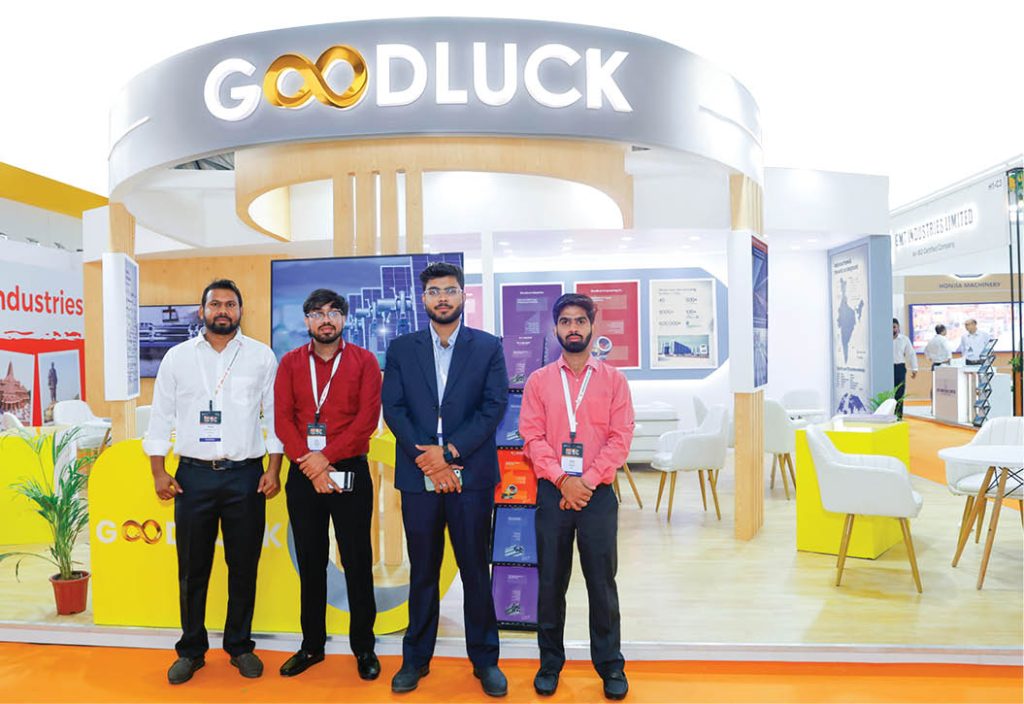
MG: The Indian market is also seeing increasing demand for higher quality, better dimensional accuracy, improved surface finish and application-specific tubes, which fits well with Goodluck’s precision tube capabilities. Our expectation from TPF Hyderabad 2026 is therefore not limited to generating immediate sales. We would also like to use the platform to understand new customer requirements, emerging markets of south India and potential collaborations. We believe India’s tube and pipe industry has strong growth potential because of the country’s expanding automotive, infrastructure, manufacturing, renewable energy and construction-equipment sectors.
Our expectation from TPF Hyderabad 2026 is therefore not limited to generating immediate sales. We would also like to use the platform to understand new customer requirements, emerging markets of south India and potential collaborations.