
In an exclusive interview with Tube & Pipe India, Mr. Nikhil Mansukhani, MD, MAN Industries (India) Limited, reflects on the company’s evolution, from its beginnings in 1988 as an aluminium extruder to its emergence as a global pipe manufacturer. The company has recently announced INR 600 crore and INR 550 crore capex projects in Saudi Arabia and Jammu, respectively. Man Industries achieved record-breaking FY25 revenue and earnings, underscored by its expanded 1.18 million tonnes per annum capacity spread across facilities in Anjar (Gujarat) and Pithampur (Madhya Pradesh), and cutting‑edge spiral mill capabilities, with a new mill in Gujarat facility. The company is exploring strategic expansions and partnerships including setting up new facilities internationally, to tap into high-growth markets and increase export potential.

Tube & Pipe India: Can you walk us through your business journey, highlighting major milestones and crucial achievements?
Nikhil Mansukhani: Established in 1988, MAN Industries (India) Limited began manufacturing aluminium extrusion products and quickly transitioned into one of India’s premier producers and exporters of large-diameter line pipes. In 1994-95, the company diversified into LSAW pipes, marking its move into energy infrastructure. By 2004-05, MAN had expanded capacity by entering HSAW pipe production. In 2006, it secured approvals from global oil majors including Shell, Total, and ADNOC, enabling consistent exports to the Middle East, Africa, and Europe. Over the 2010s, the company executed pipeline projects across more than 60 countries spanning oil & gas, petrochemicals, and water transmission. Between 2020 and 2023, it delivered over 20,000 km of pipelines, cementing its position among India’s top SAW pipe manufacturers.
In FY24- FY25, MAN announced two significant capex projects: an INR 600 crore SAW pipe manufacturing facility in Saudi Arabia aligned with Vision 2030, and an INR 550 crore stainless-steel seamless pipe plant in Jammu targeting import substitution. To fund growth and bolster its balance sheet, the company successfully raised INR 300 crore through preferential allotment in FY25. As a result, MAN reported its highest-ever annual revenue, EBITDA, and PAT in FY25, reflecting robust execution and an improved product mix.
TPI: The company has recently invested in a pipe manufacturing facility in Saudi Arabia and has an expansion project underway in J&K. Can you shed light on these projects and further growth plans?
NM: Yes, we’ve committed approximately INR 1,150 crore across two major initiatives: an INR 600 crore large diameter SAW (submerged arc welded) pipe plant in Saudi Arabia, and an INR 550 crore stainless-steel seamless pipe plant in Jammu & Kashmir. The Saudi facility supports Vision 2030 infrastructure projects, while the Jammu plant addresses import substitution, benefiting from lower power tariffs and regional incentives. Both are slated for commissioning in Q3 FY26, with projected peak revenues of INR 3,000 crore and INR 1,100 crore respectively. To fund growth and strengthen the balance sheet, we raised INR 300 crore through preferential allotment in FY25 and reported our highest-ever annual revenue, EBITDA, and PAT.
TPI: Can you tell us about your product portfolio and its capacities catering to the tube and pipe industry?
NM: At MAN Industries, our product portfolio is built to meet the diverse needs of the global tube and pipe industry– particularly in sectors like oil & gas, water transmission, petrochemicals, slurry pipelines, and emerging hydrogen infrastructure.
We manufacture LSAW pipes, suitable for high-pressure oil & gas transmission and offshore pipelines. These pipes range in diameter from 16” to 56”, and are renowned for their strength and dimensional accuracy. Our HSAW pipes- with diameters from 18” to 130”, are ideal for water transmission and slurry applications, and are widely adopted by EPC contractors and municipal infrastructure projects.
We also produce ERW (Electric Resistance Welded) pipes, designed for API-certified structural and medium-pressure pipelines, with recent commercialization efforts contributing to our topline. Soon, our Jammu plant will manufacture stainless-steel seamless pipes for specialized applications in refineries, petrochemicals, power, and engineering- supporting import substitution and enhancing margins.
Additionally, we offer comprehensive anti-corrosion coating systems, including 3LPE, 3LPP, and FBE, to extend pipe life in offshore and harsh environments .
Our combined manufacturing capacity exceeds 1.18 million tonnes per annum, spread across our world-class facilities in Anjar (Gujarat) and Pithampur (Madhya Pradesh). Both plants are ISO 9001, 14001, and 45001 certified, and hold approvals from leading global oil majors and EPC firms. They feature in-house testing, quality assurance, and coating capabilities, making us a one-stop provider of welded pipe solutions.

To fund growth and bolster its balance sheet, the company successfully raised INR 300 crore through preferential allotment in FY25. As a result, MAN reported its highest-ever annual revenue, EBITDA, and PAT in FY25, reflecting robust execution and an improved product mix.
TPI: How is your newly inaugurated spiral mill enhancing your production capacity?
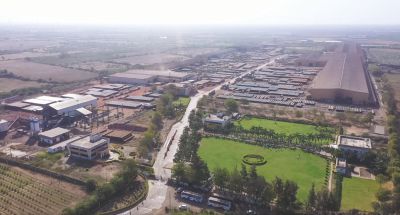
NM: The launch of our new spiral (HSAW) mill at the Anjar, Gujarat facility marks a transformative upgrade to MAN Industries’ manufacturing strength. Outfitted with advanced forming, welding, and non-destructive testing (NDT) technologies, the mill can now produce spiral pipes up to 120 inches in diameter, specifically targeting large‑scale water transmission, slurry pipelines, and low‑to‑medium pressure energy infrastructure projects. This addition significantly boosts our spiral pipe output, enabling us to efficiently meet both domestic and international demand, particularly for government-backed pipeline initiatives. As a result, MAN Industries’ overall capacity across LSAW, HSAW, and ERW segments now exceeds 1.18 million tonnes per annum, reinforcing our position in the global pipe industry.
TPI: Sustainability plays a key role in India’s manufacturing sector. How do you plan to incorporate green manufacturing into your operations?
NM: Sustainability is deeply embedded in our growth strategy at MAN Industries. We are investing in energy-efficient machinery and exploring renewable energy options like solar and hydro, particularly at our Jammu facility. New plants are being designed with low-emission infrastructure, and we are investigating the use of green steel. Water conservation initiatives, waste recycling programs, and the evaluation of zero-liquid discharge (ZLD) systems are already underway. Additionally, we are developing longer-life, corrosion-resistant pipes that reduce environmental impact. All these efforts support India’s green-transition goals and position us to contribute to infrastructure for hydrogen transport and carbon capture.
TPI: What are the latest technological advancements in your manufacturing operations and how do you ensure quality products for your clients?
NM: We’ve adopted advanced automated welding systems, ultrasonic testing, and real-time process monitoring to enhance precision and efficiency. Our plants are equipped with state-of-the-art coating and inspection facilities and comply with ISO 9001, 14001, and 45001 standards. Every product undergoes multi-stage testing and is certified by global EPCs and oil majors- ensuring consistent quality and reliability for our clients worldwide.
Our growth plans for the next 5-10 years focus on expanding manufacturing capacity, investing in advanced technology, and enhancing product quality to meet evolving customer needs.
TPI: Can you tell us about the recent trends and developments in the tube and pipe industry?
NM: The tube and pipe industry is experiencing a powerful surge driven by several converging trends. Firstly, the global energy transition is fueling demand for pipelines used in natural gas, hydrogen, and carbon capture networks.
Simultaneously, infrastructure investments- particularly in water transmission, urban utilities, and oil and gas projects across regions like the Middle East, Africa, and Southeast Asia are gathering momentum.

At the same time, many countries, especially India, are pushing for import substitution, emphasizing the importance of domestically produced, high-grade seamless and stainless-steel pipes. The industry is also undergoing a technological shift, with growing uptake of automation, advanced corrosion-resistant coatings, and intelligent monitoring systems to boost efficiency and reliability.
Finally, a heightened emphasis on sustainability is reshaping operations as manufacturers prioritize green steel, longer-lasting products, and low-emission production processes to meet environmental goals.
TPI: Please tell us about your market footprint and key clientele. What are your expansion strategies for the international market?
NM: Our global market footprint spans over 30 countries across North America, the Middle East, Africa, Southeast Asia, and Europe. We serve major oil & gas companies, infrastructure EPC firms, and government utilities, and are recognized suppliers for global giants such as ADNOC, Total, Shell, as well as leading Indian public-sector enterprises.
To expand internationally, we’re building a new manufacturing plant in Saudi Arabia, tailored not just to the local market but also to neighboring export regions. Domestically, we’re venturing into stainless-steel seamless pipe production to bolster import substitution and open export channels. We’re also enhancing our global reach through strategic alliances, certifications, and optimized logistics, ensuring faster, more reliable delivery to clients.
Also Read: Maharashtra Seamless Eyes Capacity Expansion With INR 852 Crore Investments
TPI: How do you foresee the future of the tube and pipe market in India? What are your future growth plans in the next 5-10 years?
NM: The future of the tube and pipe market in India and internationally looks very promising, driven by strong demand from infrastructure, water and oil & gas sectors. With increased infrastructure spending and a growing focus on renewables across countries, we anticipate robust growth in this segment over the next decade.
Our growth plans for the next 5-10 years focus on expanding manufacturing capacity, investing in advanced technology, and enhancing product quality to meet evolving customer needs. Additionally, we are exploring strategic expansions and partnerships including setting up new facilities internationally, such as our upcoming manufacturing plant in Saudi Arabia, to tap into high-growth markets and increase export potential. We also aim to diversify our product portfolio and strengthen our distribution network to consolidate our leadership position in India and abroad.