
GT Cargo Fittings India is strengthening its focus on the tube and pipe sector with a complete range of cargo-securing and lifting solutions designed to improve safety, reliability and convenience in pipe transportation and handling. In an exclusive interview with Tube & Pipe India, Mr. Sanjay Lokapur, CEO & Director, GT Cargo Fittings India Pvt. Ltd., highlighted the company’s integrated manufacturing capabilities, growing emphasis on product reliability and the adoption of safer, longer-life lifting solutions across the industry.
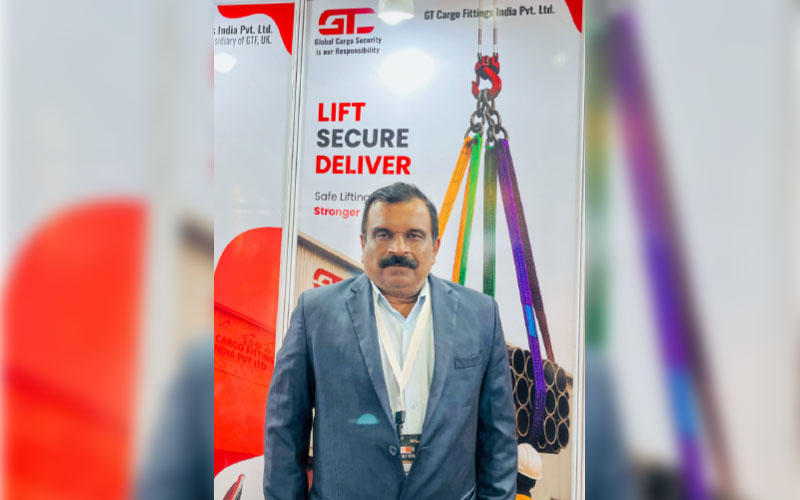
Tube & Pipe India: Please briefly introduce your company and the technologies or solutions you are showcasing at TPF Hyderabad.
Sanjay Lokapur: GT Cargo Fittings India is a company owned by a UK-based promoter who has a strong connection with India through his childhood memories. This led him to establish the company in India with the purpose of bringing cargo-securing systems to the Indian market. The first factory was set up in Noida in 2000, around 25 years ago. The company initially started manufacturing wire hooks and subsequently expanded its operations to produce a wider range of products. Today, we manufacture a complete range of cargo-securing systems, including hooks, buckles, ratchets, webbings and lifting slings.
In terms of technology, we manufacture products using steel wire rods, steel sheets and forged components, including forged buckles. We have our own weaving system and dyeing system for webbing, along with stitching facilities. For metal treatment, we have surface-treatment processes including shot blasting and vibrating machines. We also have heat-treatment facilities, electroplating and powder-coating facilities.
All these technologies are available in-house, which enables us to assure consistent quality. Around 75% of our production is exported, while 25% caters to the domestic market. The same quality that we export is also supplied to the Indian market.
TPI: What are customers currently prioritising most when investing in new equipment or upgrading existing facilities?
SL: Customers are currently focusing more on product reliability and compliance. For example, the slings we manufacture as per Indian standards are required to have a safety factor of 5:1. If you are lifting one tonne, the sling should have a capacity of five tonnes and should break at five tonnes. This is the Indian government requirement. There is now a growing tendency to follow these standards. Earlier, there was less awareness, and some products were manufactured with a 3:1 safety factor and used for shorter periods, even though the expected life should be around one year.
People are now realising that there is also a product life associated with what they purchase. Although standard-quality products may come at a slightly higher price, they offer greater reliability and longer service life. Therefore, the current trend is towards reliability and longer product life, even at a somewhat higher price.

Customers are increasingly looking at new technologies. One example is the endless sling, which has a new application for lifting pipes and placing them onto trucks. At the destination, the same sling can be used to unload the pipes. This type of technology is being appreciated by customers.
TPI: Which areas of the tube and pipe manufacturing sector are seeing the highest demand for technology upgrades today?
SL: The larger companies are already recognising the importance of these solutions. Companies such as APL Apollo are among our customers. APL Apollo, with around 17 plants in India, purchases approximately 10,000 slings per month.
These slings offer an operational advantage because they can be used to transport pipes to customers and also provide convenience during unloading. In contrast, conventional reusable slings may be used primarily for loading pipes onto the truck, while unloading at the customer’s location can be more challenging. Therefore, customer convenience is also built into this solution. When major pipe manufacturers such as APL Apollo start adopting our slings, it becomes easier for the rest of the industry to adopt them as well.
TPI: Are customers focusing more on greenfield projects or brownfield modernisation? What trends are you observing?
SL: Customers are increasingly looking at new technologies. One example is the endless sling, which has a new application for lifting pipes and placing them onto trucks. At the destination, the same sling can be used to unload the pipes. This type of technology is being appreciated by customers. At the same time, improvements are also being made to conventional sling systems, particularly in terms of increasing service life and improving reliability so that the sling does not fail during operation. Therefore, customers are looking for both new applications and improvements in existing technologies.
TPI: Looking ahead, which technologies do you believe will have the greatest impact on the tube and pipe industry over the next few years?
SL: If we look at the piping industry as a whole, pipe-manufacturing machinery has a very bright future because there is significant innovation taking place in this area. There is potential to reduce energy costs and make pipe production more economical. Pipe-manufacturing technologies are also advancing to deliver better surface finish and greater strength. This is an exciting area of development. Our contribution to the piping industry is through transportation and lifting. Making logistics more secure and reliable is important, and without quality and assured strength in the materials we supply, pipe manufacturers cannot simplify their logistics operations effectively.
Also Read: Tube & Pipe India Emagazine Jul-Sep Issue 2026
TPI: Lastly, what are your expectations from TPF Hyderabad, and what opportunities do you see in the Indian market?
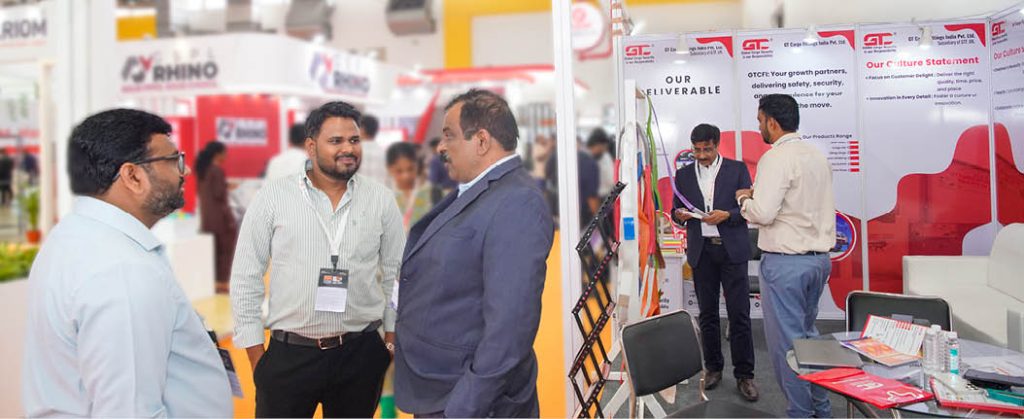
SL: We are receiving a very good response from the exhibition, beyond our expectations. Initially, we expected to meet a large number of pipe-manufacturing companies visiting the exhibition. However, we are receiving a regular flow of customers from the piping industry because we are the only exhibitor representing the logistics side of the piping industry. Most exhibitors here are from the piping industry and are competitors to each other, whereas we are the only company providing logistics-related solutions and therefore do not have direct competition at the exhibition. We believe we are in a fortunate position and are receiving much more response than anticipated. We are very happy with the exhibition and would like to continue participating over the next five years.
Customers are currently focusing more on product reliability and compliance. For example, the slings we manufacture as per Indian standards are required to have a safety factor of 5:1. If you are lifting one tonne, the sling should have a capacity of five tonnes and should break at five tonnes. This is the Indian government requirement.