
The precision steel tube market is rising on the charts of the tube and pipe industry, with its applications spread across sectors. Having grown nearly 20 times since its inception, Ferron Tubes Pvt. Ltd. is a manufacturer of precision ERW steel tubes with a production capacity of 50,000 MTPA. In an exclusive interaction with Tube & Pipe India, Mr. Danish Chakarwarty, Managing Director, Ferron Tubes Pvt. Ltd., discusses the company’s vision 2030, focused on capacity expansion, value-chain enhancement, and expanding its presence in Western and Southern India while strengthening its base in the North. Last year, the company commissioned its third manufacturing facility– a dedicated tube processing unit for cut-to-length operations and value addition. Mr. Chakarwarty sees India’s growing middle-class population as a key demand driver for the automotive sector. Speaking about his experience at Tube & Pipe Fair, he says the exhibition offered valuable opportunities to connect with industry peers, gain insights into ongoing capacity expansions, and explore a market that is relatively new for the company.
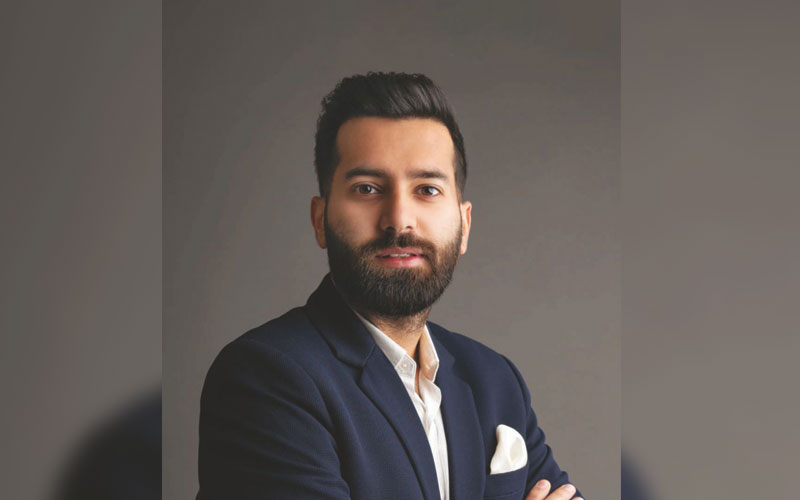
Tube & Pipe India: Ferron Tubes has steadily expanded its presence in the precision steel tube industry. Could you share the company’s journey, key manufacturing strengths, and the philosophy driving its growth?
Danish Chakarwarty: We started our journey in 2014, and Ferron was incorporated in 2015. We are engaged in manufacturing precision of precision tubes, mostly ERW steel tubes, primarily catering to the automotive industry. Our association with this business, however, goes back much further. My father has been in the steel tube business for over four decades, having started in the 1980s. That legacy inspired us to build Ferron as a modern precision steel tube manufacturer. We are headquartered in Palwal, Haryana, and operate three manufacturing facilities. These include a slitting centre for strip processing, a tube manufacturing unit, and a dedicated tube processing facility where we undertake value-added operations such as cut-to-length, bending, chamfering and other secondary processes.
TPI: Are there any capacity expansion plans or investments that you are currently working on?
DC: Yes, we are actively planning our next phase of growth to achieve our 2030 targets. Last year, we commissioned our third manufacturing facility, a dedicated tube processing unit for cut-to-length operations and value addition. Going forward, our focus is on expanding both geographically and across the value chain. We currently have two expansion projects in the ideation stage, and we are evaluating them carefully. We are committed to expanding our capabilities and strengthening our market presence over the coming years.

Going forward, our focus is on expanding both geographically and across the value chain. We currently have two expansion projects in the ideation stage, and we are evaluating them carefully. We are committed to expanding our capabilities and strengthening our market presence over the coming years.
TPI: Please tell us about your product portfolio and production capacity.
DC: We manufacture precision ERW steel tubes that are primarily used in the automotive and furniture industries. While these remain our key segments, our products find applications across a remarkably diverse range of industries.
Our customer base includes manufacturers of modular furniture, two-wheelers, four-wheelers, gym equipment, grease guns, baby toys and even bullet trains. We continue to discover new applications for precision steel tubes almost every six months, highlighting the versatility of the product. Despite this diversification, nearly 60-70 percent of our business continues to come from the automotive sector, which remains our primary focus.
Our current manufacturing capacity is around 50,000 MTPA, and we are operating at nearly 90 percent capacity utilisation. Today, we are among the largest players in India’s automotive precision steel tube segment.
TPI: Looking ahead, what are your plans for the coming years, and where do you see the tube industry heading?
DC: Our immediate focus is on geographical expansion. We are evaluating opportunities in western and southern India while continuing to strengthen our presence in the north through organic capacity expansion. At the same time, we are looking at moving further up the value chain by adding more value-added capabilities. We have a couple of projects in the ideation stage, and these will play an important role in our long-term growth strategy.
As far as the industry is concerned, I am extremely optimistic. The precision steel tube industry will continue to grow because India is growing. The country’s expanding middle-class population will continue to drive demand across sectors, particularly in the automotive industry, which remains our primary market. As two-wheeler and passenger vehicle demand increases, the precision tube segment will naturally benefit.
The tube industry as a whole also has a very bright future, supported by continued growth in construction, infrastructure and manufacturing. I believe this growth trajectory will continue well into 2050. While there will always be challenges, I feel the industry’s golden years are still ahead.
TPI: What are some of the key challenges facing the tube and pipe industry today?
DC: Every industry has its own challenges, and for us, the biggest one is volatility. Since COVID-19, steel prices have remained highly unpredictable due to several global factors beyond anyone’s control. The disruption in shipping, restrictions on imported steel, excessive dumping by various countries, and ongoing geopolitical conflicts have all affected supply chains and input costs.
The prices of consumables such as oils, packaging materials and logistics have increased significantly. Shipping continues to be a major concern, especially as we have been working to expand our export business over the last four years.
Another challenge is that Indian steel prices remain higher than international prices, making exports less competitive. On average, domestic steel prices can be around USD 100 per tonne higher than global prices, which puts Indian manufacturers at a disadvantage in overseas markets.
Despite these challenges, I remain positive. Everywhere I look, companies are expanding capacities, which reflects strong confidence in the industry’s future. The entry of new players is both an opportunity and a challenge. While it intensifies competition, it also indicates that the market itself is expanding.
The relatively low entry barriers mean businesses must continuously improve efficiency, strengthen processes and remain cost-competitive. That is the reality of doing business in India—innovation is quickly followed by competition. However, I see this as a healthy development because it encourages companies to become better.
When we started, our ambitions were modest. Today, we are nearly twenty times larger than what we initially envisioned. The same is true for many others in the industry. Growth has not come at the expense of competitors; the overall market itself has expanded. That is the most encouraging sign for the future.
Also Read: Tube & Pipe India Emagazine Jul-Sep Issue 2026
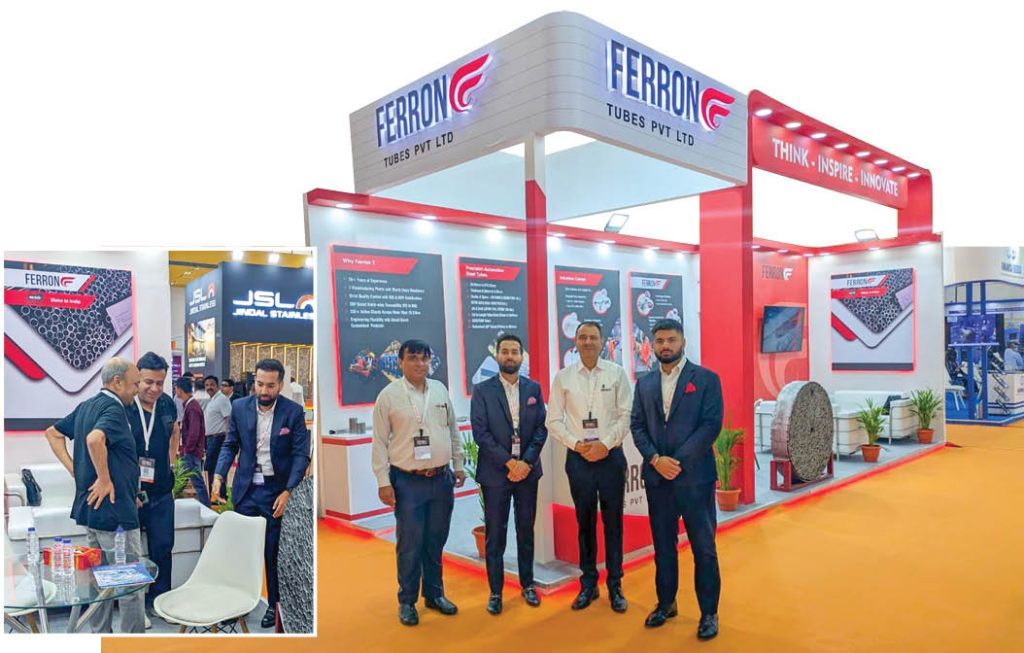
TPI: How has your experience been at Tube & Pipe Fair Hyderabad, and what are your expectations from the exhibition?
DC: It has been a good opportunity to connect with industry peers and explore a market that is relatively new for us. We have not actively explored this region before, so the exhibition provides a useful platform to understand the market and build relationships.
Our focus is not on the number of visitors but on making meaningful business connections. A few quality interactions can often translate into valuable long-term business opportunities, and we are optimistic about the outcome.
The country’s expanding middle-class population will continue to drive demand across sectors, particularly in the automotive industry, which remains our primary market. As two-wheeler and passenger vehicle demand increases, the precision tube segment will naturally benefit.